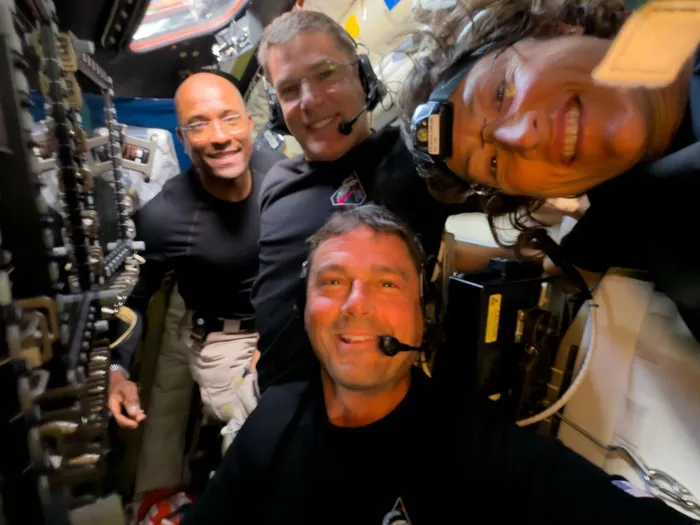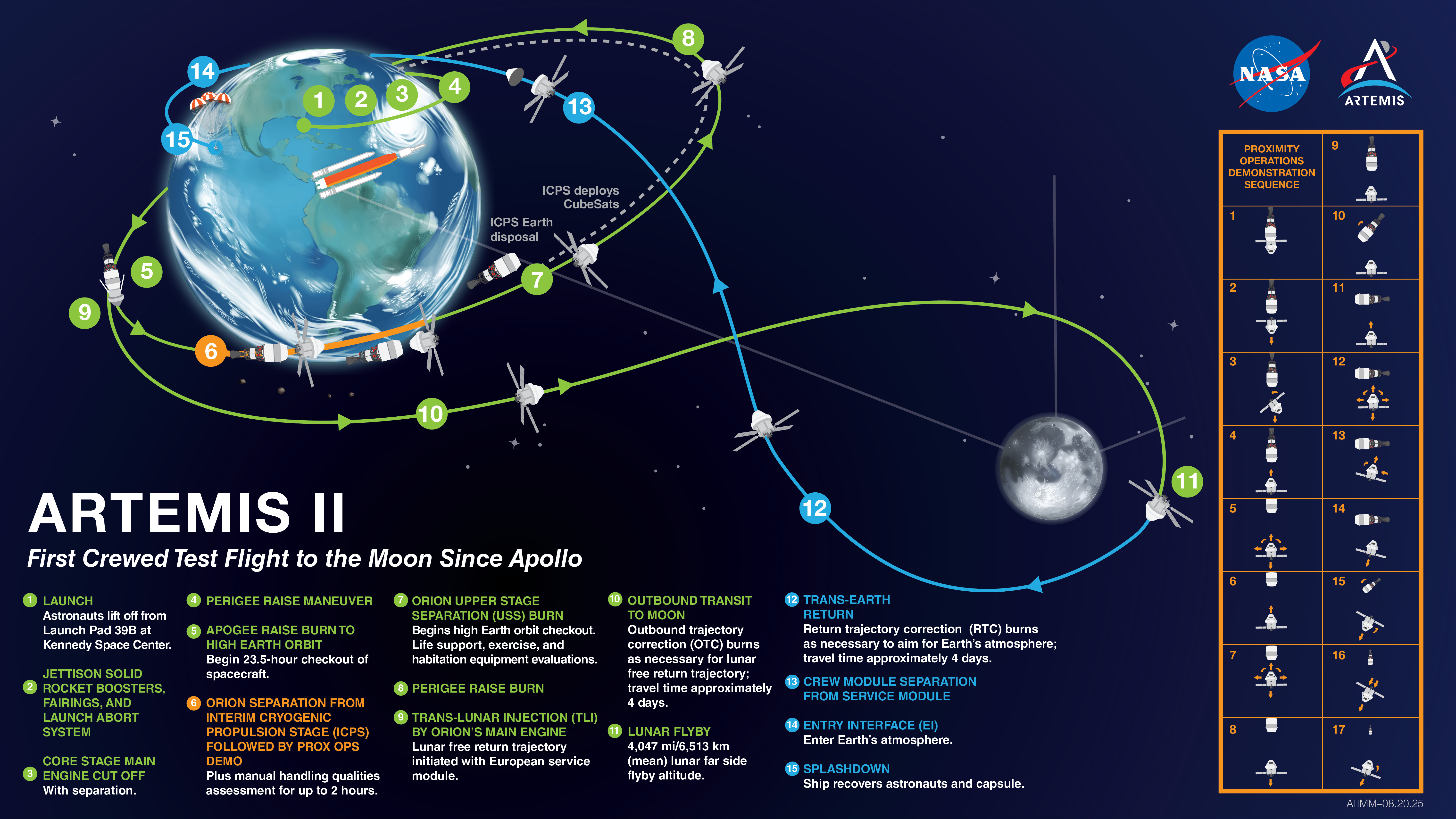
The ticker tape is already being cut. The celebratory tweets are drafted. When the Artemis II crew splashes down after their lap around the moon, the media will hail it as a "giant leap" for a new generation. They’ll talk about "returning to the lunar surface" and "opening the deep space frontier."
They are lying to you.
Artemis II isn't a leap. It’s a multi-billion dollar retreat into nostalgia, wrapped in a high-tech bow. We are spending roughly $4 billion per launch to do exactly what we did in December 1968 with Apollo 8—only this time, we’re doing it with more bureaucracy and significantly less urgency.
If you want to understand why NASA is stuck in a loop of expensive reenactments while private industry builds the actual future, you have to look past the high-definition photos of Earthrise. You have to look at the math, the physics, and the cold reality of orbital mechanics.
The SLS is a Jobs Program in a Flight Suit
The Space Launch System (SLS) is the backbone of the Artemis program. It is also a dinosaur. It uses refurbished Space Shuttle Main Engines (RS-25s) and solid rocket boosters that are essentially legacy tech from the 1970s.
Every time an SLS lifts off, we throw away four RS-25 engines. These are marvels of engineering, designed to be reused. Instead, we drop them into the ocean like disposable coffee cups. It’s the equivalent of flying a Boeing 747 from New York to London and then scuttling the plane in the Atlantic.
- Cost per launch: ~$4.1 billion (according to the Office of Inspector General).
- Launch cadence: Once every two years if we’re lucky.
- Sustainability: Non-existent.
Contrast this with the private sector. While NASA spent twenty years and tens of billions developing a non-reusable rocket, companies like SpaceX and Blue Origin are perfecting vertical landing and rapid reuse. When you see a Falcon 9 booster land on a drone ship, you’re looking at the death of the SLS business model. Artemis II is the last gasp of a cost-plus contracting era that prioritizes "distributing aerospace jobs across 50 states" over actually getting to Mars.
The Radiation Myth and the Orion Bottleneck
The "historic" nature of Artemis II is built on the premise that putting humans back in deep space is a monumental technical hurdle we haven't cleared in fifty years.
It isn't.
We know how to get to the moon. We have the maps. We have the math. The primary "challenge" cited by mission planners is life support and radiation shielding for the crew. But here is the truth: modern robotics and AI have advanced so far that putting a human in the loop for a lunar flyby actually hinders the science.
The Orion capsule is heavy. Because it has to keep four fragile biological entities alive, it requires massive heat shielding, oxygen scrubbers, water recycling, and redundant safety systems. That weight comes at a massive cost to the payload.
Imagine a scenario where we spent that $4 billion on a fleet of twenty autonomous lunar prospectors. These robots could map every square inch of the lunar south pole, identify ice deposits, and start 3D-printing a base before a human even steps foot on the ladder. Instead, we are prioritizing the "human element" because it makes for better PR and secures more funding from a Congress that doesn't understand the difference between a gravity well and a hole in the ground.
The Gateway to Nowhere
The Artemis plan doesn't just stop at a flyby. It involves the Lunar Gateway—a small space station that will orbit the moon. Critics, including the late Burt Rutan and various orbital mechanics experts, have pointed out the obvious: the Gateway is a toll booth.
It adds a massive layer of complexity to any landing. To get to the surface, you now have to:
- Launch from Earth.
- Dock with the Gateway.
- Transfer to a lander.
- Go to the moon.
This isn't about efficiency. It’s about creating a permanent infrastructure that justifies continued spending. If your goal is a Mars mission, you don't stop at the moon. You don't get stuck in a "cislunar" parking lot. You build a heavy-lift architecture that goes directly from Earth orbit to the Red Planet. Artemis is a detour designed by committee.
The "People Also Ask" Delusion
People often ask: "Why did it take so long to go back?"
The honest answer isn't "technology." It’s "incentives." During the Cold War, the incentive was "don't let the Soviets win." Today, the incentive is "don't let the program get canceled."
Safety has become a shield for stagnation. NASA’s risk tolerance is so low that they’ve spent a decade testing a capsule that is essentially a larger version of the Apollo Command Module. We aren't innovating; we are polishing.
Another common question: "What will Artemis II prove?"
The harsh reality? It proves that humans can survive a 10-day trip in a vacuum. We knew that in 1968. It proves the SLS works. We knew that after Artemis I. It doesn't prove we can live on the moon, and it doesn't prove we have a sustainable way to get there.
The Real Cost of Sentimentality
We are suffering from a romantic attachment to the 1960s. We want the grainy footage, the white suits, and the heroic splashdowns. But that sentimentality is costing us the solar system.
By tying our lunar ambitions to a non-reusable, government-owned rocket, we are ensuring that space remains a luxury for the few rather than a frontier for the many. The "Artemis Generation" is being sold a vision of the future that is actually a 50-year-old rerun.
True exploration doesn't look like a government-funded flyby. It looks like Starship. It looks like orbital refueling. It looks like a launch cost that drops from $4,000,000,000 to $10,000,000.
If we actually wanted to be a multi-planetary species, we would stop celebrating Artemis II as a triumph. We would view it as a wake-up call. We are using the most expensive possible method to achieve the most basic possible goal.
Stop Clapping for the Lap
When the Artemis II crew returns, don't just look at the smiles. Look at the balance sheet.
We are currently spending more to not land on the moon than we did to actually land on it during the Apollo era (inflation-adjusted). The "safe" return of the astronauts will be framed as a victory for the human spirit. In reality, it is a victory for the status quo. It is a signal to the aerospace giants that they can keep overcharging for obsolete hardware.
The moon isn't a destination for a weekend trip anymore; it's an industrial site waiting to happen. It’s a source of Helium-3. It’s a shipyard for deep space vessels. But we won't get any of that by flying four people in a circle and calling it history.
Artemis II is a parade. If you want a frontier, look elsewhere.
The moon is 238,000 miles away, but NASA is still stuck at the starting line, checking the mirrors on a car that costs more than the city it's parked in. Stop celebrating the lap and start demanding the race.