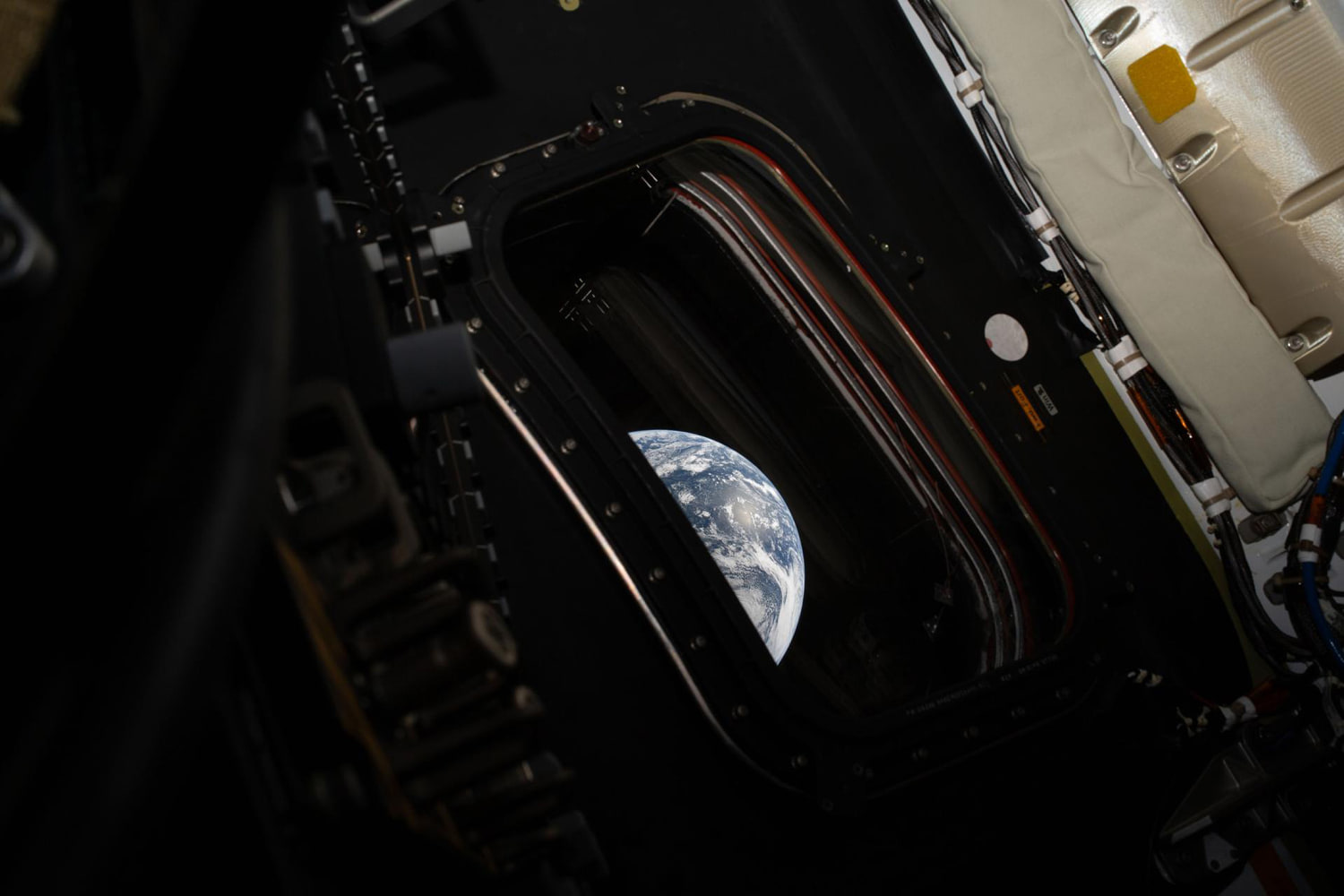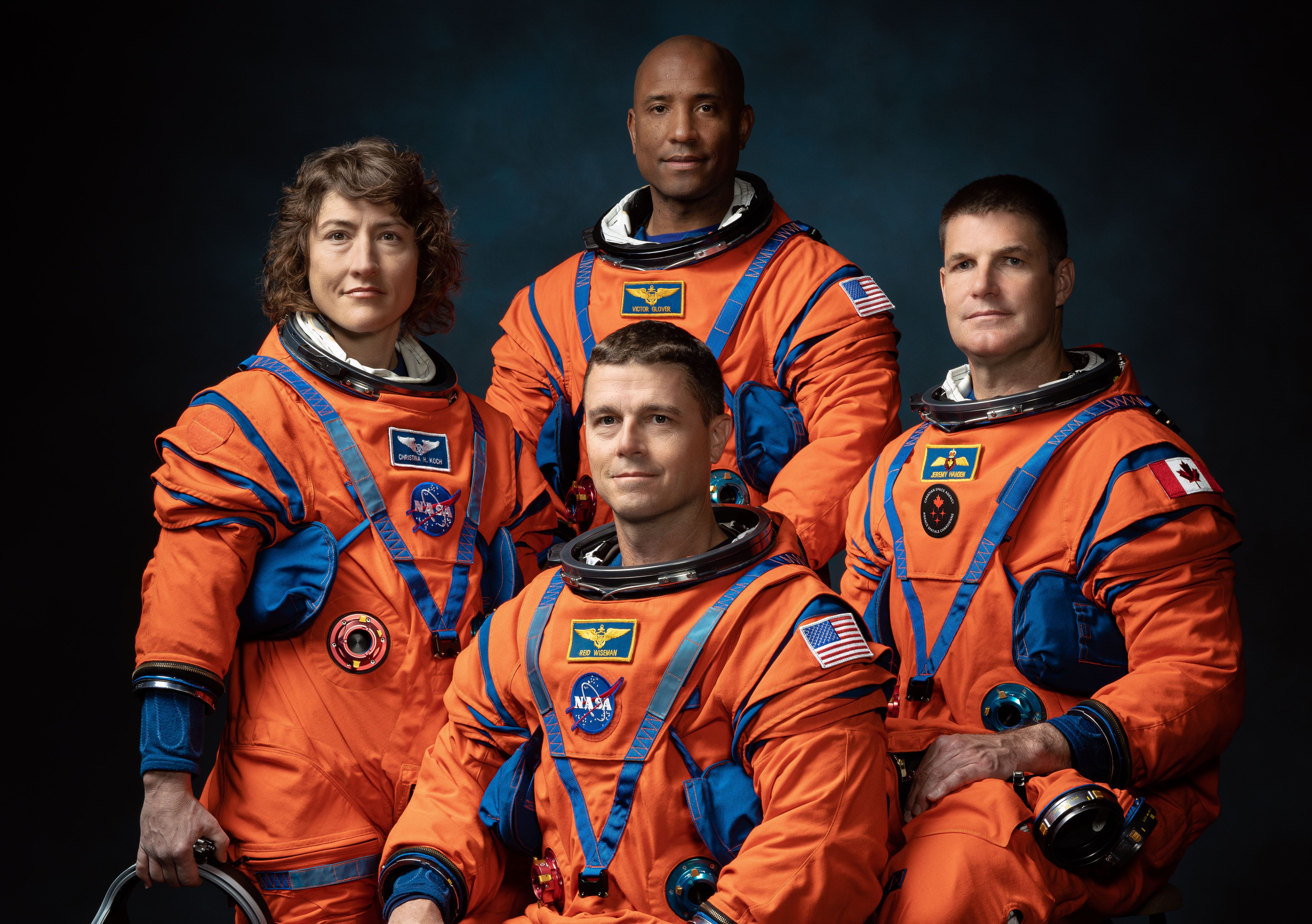
The Artemis II mission represents a shift from theoretical deep-space exploration to the operational validation of the Space Launch System (SLS) and the Orion Crew Module. As the crew passes the halfway mark to the Moon, the mission transitions from a launch-critical phase to a navigation-critical phase. Success at this juncture depends on three variables: the precision of the initial Trans-Lunar Injection (TLI) burn, the thermal management of the Orion spacecraft in a deep-space environment, and the structural integrity of the life support systems under prolonged high-radiation exposure. While public narratives focus on the distance traveled, the true metric of mission health is the delta-v ($\Delta v$) margin remaining for trajectory correction maneuvers and the stabilization of the internal atmosphere.
The Mechanics of the Trans-Lunar Injection
The mission's progress is defined by the energy state achieved during the TLI. This maneuver, executed by the SLS Interim Cryogenic Propulsion Stage (ICPS), provided the velocity necessary to escape Earth’s gravity well and enter a highly elliptical trajectory.
The efficiency of this phase is measured by the accuracy of the burnout velocity. Any deviation from the planned $V_{eb}$ (burnout velocity) necessitates corrective burns using Orion’s Service Module engines. Because every kilogram of propellant consumed during the outbound leg reduces the safety margin for the return transit, the "halfway" point is less about physical distance and more about the convergence of the predicted vs. actual trajectory.
- Trajectory Deviation Recovery: Minor errors in the ICPS burn vector translate into thousands of kilometers of drift over the 380,000 km span. The mission’s "halfway" status indicates that the primary navigation system has successfully calculated and executed necessary mid-course corrections (MCCs).
- The Gravitational Pivot: As the spacecraft moves further from Earth, the Earth’s gravitational pull ($g_e$) weakens according to the inverse-square law ($F = G \frac{m_1 m_2}{r^2}$). The halfway point represents a transition where the lunar gravitational influence begins to exert a measurable pull on the spacecraft's acceleration profile.
The Orion Life Support Synthesis
Maintaining a crew of four in a pressurized volume of roughly 9 cubic meters for an extended duration creates a closed-loop engineering challenge. The mission's success beyond the 50% distance mark validates the Environmental Control and Life Support System (ECLSS) under peak load.
Atmospheric Scrubbing and Pressure Maintenance
The removal of carbon dioxide and the regulation of oxygen partial pressures are non-negotiable. Unlike the International Space Station (ISS), which utilizes heavy, regenerative systems, Orion relies on a more compact system designed for the specific duration of the lunar flyby.
- Amine Beds: These systems utilize chemical processes to scrub $CO_2$. Passing the halfway mark proves the saturation cycles are functioning within expected parameters.
- Nitrogen-Oxygen Mix: Maintaining an 101.3 kPa (14.7 psi) environment requires precise valve actuation to prevent leakage into the vacuum of space. The structural "tightness" of the pressure vessel is confirmed by the lack of unplanned gas makeup requirements during the first 48 hours of flight.
Thermal Equilibrium in the Cislunar Void
Orion faces extreme temperature gradients. The side facing the Sun absorbs intense solar radiation, while the shaded side radiates heat into the 3 Kelvin background of space. To manage this, the spacecraft utilizes a "barbecue roll"—a slow rotation along its longitudinal axis. This passive thermal control ensures that the electronics and the crew remain within a narrow operational band. The mid-mission milestone confirms that the radiators on the European Service Module (ESM) are shedding heat at a rate that matches the internal metabolic and electronic heat generation.
Radiation Flux and Dosimetry
Passing the Van Allen radiation belts is the first significant hurdle; staying outside them is the second. In cislunar space, the crew is exposed to Galactic Cosmic Rays (GCRs) and potential Solar Particle Events (SPEs).
The Artemis II mission serves as a live-fire test for the Hybrid Electronic Radiation Assessor (HERA). Unlike previous missions, Orion is equipped with more advanced shielding in the form of stowage lockers that can be rearranged to create a "storm shelter" in the event of a solar flare. The data collected during the first half of the journey provides a baseline for deep-space radiation exposure that will inform the design of the Gateway station and future Mars transits.
Communication Latency and Deep Space Network Integration
As the distance from Earth increases, the signal-to-noise ratio of communications decreases. The mission relies on the Deep Space Network (DSN)—a global array of giant radio antennas.
- Latency: At the halfway point, the round-trip light time (RTLT) for a signal is approximately 1.2 to 1.5 seconds. While manageable, this requires the crew to operate with a degree of autonomy not required in Low Earth Orbit (LEO).
- Bandwidth Constraints: High-definition video and telemetry must be prioritized. The successful transmission of mission-critical data at this distance confirms the alignment and power output of Orion’s S-band and Ka-band phased array antennas.
The Free-Return Trajectory Constraint
The logic of Artemis II is built around the "free-return" trajectory. This is a specific orbital path that uses the Moon’s gravity to whip the spacecraft around and fling it back toward Earth without requiring a massive engine burn to exit lunar orbit.
The second half of the outbound journey is a period of passive acceleration toward the lunar limb. The critical risk here is the "Pericynthion" or the closest approach to the Moon. If the spacecraft's velocity is too high, the return trajectory will miss the Earth’s atmosphere; if too low, the entry angle will be too steep, leading to excessive G-loads and thermal failure during re-entry.
Navigational Redundancy
Orion uses an Optical Navigation (OpNav) system as a backup to the DSN. By taking images of the Earth and Moon against the star background, the onboard computer can triangulate the spacecraft’s position. The halfway point is the primary test window for this system, as the relative sizes of both celestial bodies are optimal for angular diameter measurements.
Structural Loads and Vibration Analysis
The transition from the violent vibration of the SLS launch (max-Q) to the absolute stillness of coasting allows for a structural health check. Sensors throughout the Orion capsule monitor for micro-fractures or "creep" in the metallic and composite structures.
The fact that the spacecraft has reached the 50% distance mark without a "loss of cabin pressure" or "loss of power" alarm indicates that the integration between the American-built crew module and the European-built service module is holding under the stress of the vacuum. This inter-agency hardware compatibility is a prerequisite for the more complex docking maneuvers required by Artemis III and IV.
Quantitative Analysis of the Return Window
The back half of the mission is governed by the physics of the "lunar gravity assist." The spacecraft will pass approximately 7,500 km behind the far side of the Moon.
- Velocity Gain: As Orion enters the lunar sphere of influence, its velocity relative to the Moon will increase.
- The Gravity Slingshot: The Moon's orbital velocity around the Earth will be added to the spacecraft’s velocity vector, effectively "pushing" it back toward Earth.
- Entry Interface (EI): The ultimate goal of the second half of the mission is to hit a 120 km altitude "window" at 40,000 km/h.
Strategic Risk Mitigation for the Lunar Far Side
When Artemis II passes behind the Moon, the crew will experience a "blackout" period where the Moon itself blocks all radio communication with Earth. This is the moment of maximum autonomy.
- Onboard Fault Management: The flight software must be capable of identifying and isolating hardware failures without ground intervention.
- Psychological Factors: For the first time since 1972, humans will be physically isolated from their home planet. The halfway point marks the psychological transition from "Earth-centric" to "Mission-centric" thinking.
The mission is currently operating within the "Green" zone of the propellant and consumables budget. This surplus is not merely a safety buffer; it is the currency of mission flexibility. If a solar event or mechanical anomaly occurs during the lunar approach, this extra delta-v can be used to alter the return profile, potentially shortening the mission duration at the cost of a higher-speed re-entry.
The technical success of Artemis II does not conclude with a lunar flyby. It concludes when the Orion heat shield—a dynamic structure of AVCOAT material—ablates at 2,700°C to protect the crew during the final 11 minutes of flight. Every kilometer traveled toward the Moon during this outbound leg is a buildup of potential energy that will be converted into heat and drag during the return. The strategic focus must now shift from propulsion to precision navigation, ensuring that the spacecraft’s arrival at the lunar limb sets the stage for a perfect ballistic return to the Pacific Ocean.