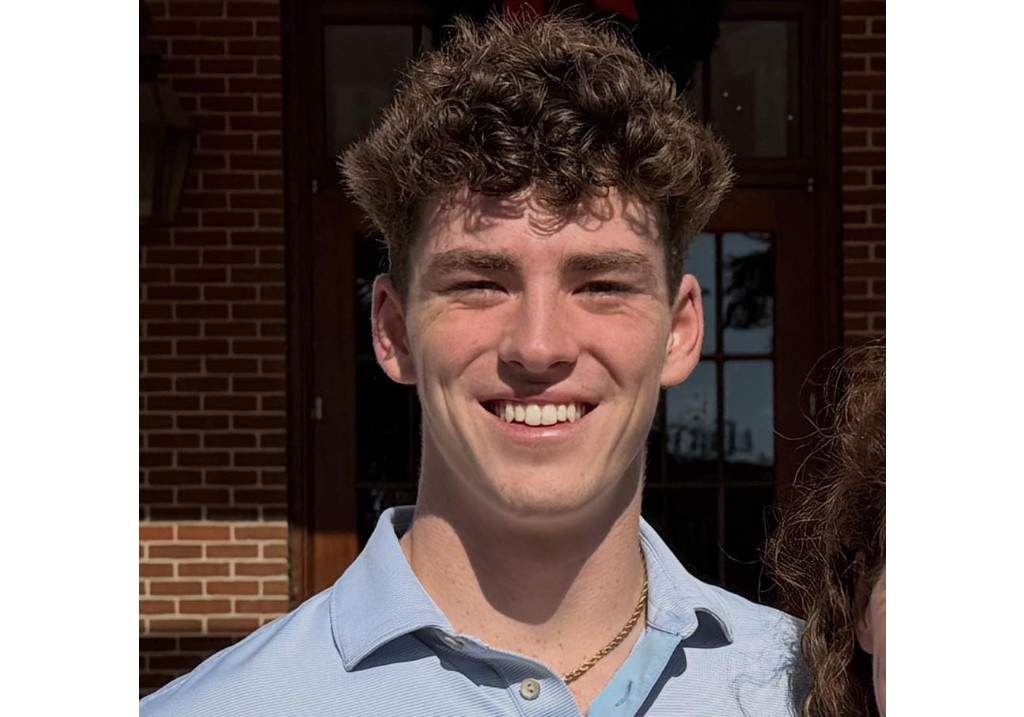
Standard media coverage of the University of Alabama student found dead in Barcelona follows a tired, predictable script. It starts with a grieving family, moves to a vague police statement about "no signs of violence," and ends with a warning to travelers to "stay in groups." This template doesn't just fail the victim; it actively obscures the reality of international safety and the systemic negligence of study-abroad programs.
The headlines treat this as an anomaly. It isn’t.
When a young American dies abroad, the institutional reflex is to sanitize the event to protect university enrollment figures and local tourism boards. We are told to wait for the autopsy, which will likely remain private or be released in a redacted format months after the news cycle has moved on. The "lazy consensus" here is that Europe is a safe playground where tragedy only strikes the reckless. The nuance we are missing is that the safety infrastructure for exchange students is a hollow shell built on liability waivers, not actual protection.
The Illusion of the Safe European Haven
American parents send their children to Barcelona, Florence, or Paris under the delusion that these cities are essentially Epcot Center with better wine. They view the "Old World" as inherently safer than a US college town. This cognitive bias is dangerous.
I have spent a decade dissecting international risk management. I’ve seen universities wash their hands of students the moment they step off campus property. In Barcelona, the tension between a massive, transient tourist population and a local infrastructure struggling with petty crime and "nightlife culture" creates a high-friction environment.
The University of Alabama, like its peers, likely provided a "pre-departure orientation." These are usually hour-long PowerPoint presentations telling students not to carry their passports in their back pockets. They rarely address the predatory nature of "promoters" in the Olympic Port or the fact that local law enforcement priorities shift toward protecting the industry, not the individual.
Why "No Signs of Violence" is a Red Herring
The phrase "no signs of violence" is used by local authorities to de-escalate international media pressure. It suggests a tragic accident or a health complication, steering the narrative away from systemic failure or foul play.
However, in the context of Barcelona’s nightlife, this phrase is often a placeholder. It ignores the reality of sophisticated theft rings and the prevalence of non-violent but lethal incidents involving substances. When a student is found dead in a city known for its "disco culture," the immediate assumption shouldn't be a random act of God. It should be an interrogation of the environment that allowed a student to become isolated and vulnerable in the first place.
Imagine a scenario where a student is separated from their group—a common occurrence in the labyrinthine streets of the Gothic Quarter. In the US, there is a "see something, say something" culture, however flawed. In high-density European tourist hubs, a lone, intoxicated, or disoriented foreigner is invisible. They are a ghost in the machine until they become a statistic.
The Failure of the "Buddy System" Advice
Every article on this tragedy will eventually tell you to "stay with your friends." This is the most useless piece of advice in the travel industry. It shifts the entire burden of safety onto 20-year-olds who are, by definition, inexperienced and often impaired.
The "buddy system" fails because:
- False Security: It creates a herd mentality where no one is actually paying attention because they assume someone else is.
- Dynamic Environments: Large clubs and crowded squares are designed to fragment groups.
- The Bystander Effect: In a foreign country, even a group of five Americans is often ill-equipped to handle a medical or legal crisis due to language barriers and a lack of local knowledge.
Instead of telling students to stay in groups, we should be demanding that universities provide 24/7 localized rapid-response teams. If a school is taking $20,000 for a semester abroad, they should have a boots-on-the-ground fixer available via a panic button, not a PDF of "emergency contacts" that leads to a voicemail in Tuscaloosa.
The Economics of Silence
Why don't we hear more about the dangers? Because the study-abroad industry is a multi-billion dollar business.
- Universities need the global "prestige" of international programs to justify tuition hikes.
- Third-party providers (the companies that actually run the housing and classes) operate on thin margins and cannot afford the insurance premiums that would come with honest risk disclosure.
- Host cities need the "student dollar" to keep their cafes and bars afloat during the shoulder seasons.
When a student from Alabama dies, the goal of these three entities is to frame it as an isolated, tragic "accident." To admit that Barcelona—or any major European hub—has predatory elements that specifically target the "American Student" demographic would be bad for business.
Dismantling the "People Also Ask" Nonsense
If you search for safety tips for Barcelona, you’ll find questions like "Is Barcelona safe for students?" The answer you’ll get is a sanitized "Yes, if you use common sense."
This is a lie. "Common sense" is a local construct. What is common sense in Birmingham, Alabama, does not apply to the El Raval district at 3:00 AM.
The honest answer is that Barcelona is a high-risk environment for anyone who lacks "situational fluency." This isn't about looking both ways before crossing the street. It’s about understanding the nuances of local crime, the specific tactics of street recruiters, and the reality that as an American student, you are a walking ATM with a target on your back.
Stop Sanitizing the Narrative
We do a disservice to the deceased when we refuse to speak bluntly about the risks. We treat these deaths as if they occurred in a vacuum, unrelated to the predatory nature of global tourism.
The University of Alabama, and every other institution, must stop selling "cultural immersion" while ignoring the "security immersion" required to survive it. They are sending kids into complex urban environments with the survival skills of a suburban mall-goer.
The autopsy might show no "signs of violence," but that doesn't mean there wasn't a violation. The violation is the systemic failure of the institutions that sent him there, the city that viewed him as a revenue stream, and a media that refuses to call out the charade of international student safety.
If you are a parent sending a child abroad, stop reading the brochures. Start asking for the crime statistics of the specific neighborhood where the housing is located. Demand to see the "extraction plan" if things go wrong. If the university can’t provide one, they aren't educators—they’re travel agents with better branding.
The tragedy in Barcelona isn't that a student died in a "safe" city. The tragedy is that we keep pretending these cities are safe just because they have pretty cathedrals.
Check the neighborhood's actual police reports, not the university’s marketing blog.