The silence in the truck cab is the heaviest part.
Liam sits in the driver’s seat of a Scania R500, parked on a roadside near the Dublin Port. The engine is off. Usually, the hum of the diesel is a comforting companion, the sound of money being made and miles being conquered. Today, that engine is a liability. Every revolution of the piston feels like a cent being drained from his daughter's university fund or the family’s grocery budget.
He looks at the digital readout on the fuel pump across the street. The numbers are spinning faster than the wheels on his rig.
This isn't just about a few extra cents at the nozzle. It is about the arithmetic of survival. When the cost of moving goods exceeds the value of the goods themselves, the gears of a nation don't just grind; they seize.
The Arithmetic of Despair
Ireland is a small island with a massive dependency. Unlike the sprawling rail networks of mainland Europe, the Irish economy breathes through its tailpipes. Everything—the milk in the carton, the bricks for the new housing estate, the medicine in the pharmacy—arrives on the back of a truck.
When global oil prices surged, sparked by a volatile cocktail of post-pandemic supply chain hiccups and the geopolitical earthquake of the war in Ukraine, the Irish government faced a choice. They could buffer the blow, or they could stick to the fiscal script. They chose the latter, and for men like Liam, that choice felt like a betrayal.
Consider the math. A long-haul trucker might spend €50,000 a year on fuel under "normal" conditions. When prices jump by 30 or 40 percent, that driver is suddenly looking at an additional €20,000 in overhead. That isn't a "margin adjustment." It is an extinction event for small operators.
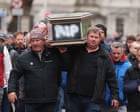
The protests started as a murmur in WhatsApp groups. Then, they became a roar of steel. Hundreds of trucks descended on Dublin, blocking the quays and choking the arteries of the city. The goal wasn't to cause "chaos" for the sake of it, though chaos was certainly the result. The goal was to make the invisible visible. Most people don't think about the logistics of their morning latte. They only notice the system when it stops working.
A Contagion of Frustration
While Dublin’s docklands were becoming a graveyard of idling engines, the sentiment began to drift north.
Norway is a different beast entirely. It is a land of paradoxes—a nation built on the vast wealth of North Sea oil, yet one that leads the world in electric vehicle adoption. You might think a country sitting on an ocean of crude would be immune to the sting of the pump.
You would be wrong.
In Oslo and Kristiansand, the frustration mirrors the Irish experience, albeit with a colder, more clinical edge. Norwegians are seeing the price of 95-octane petrol climb to levels that defy their high standard of living. It serves as a reminder that even the wealthiest "green" economies are still tethered to the old world’s energy umbilical cord.
The protest in Norway isn't just about the price of a liter of fuel. It’s a rebellion against the disconnect. Citizens look at the record profits being raked in by state-owned energy giants while their own disposable income evaporates. It’s a feeling of being a spectator in your own economy, watching the numbers go up on a screen while your wallet feels lighter.
The Human Cost of High Octane
Imagine a nurse named Elin in rural Norway. She doesn't live in the sleek, tram-accessible heart of Oslo. She lives in a valley where the bus comes twice a day, and her shift starts at 6:00 AM. For Elin, an electric car is a dream for the future, but her ten-year-old diesel Volkswagen is the reality of the present.
Every time she turns the key, she is making a trade.
- A full tank of gas or a new pair of shoes for her son?
- Heating the home for another week or visiting her parents three towns over?
This is the "invisible stake" that policy analysts often miss when they talk about "inflationary pressures" or "macroeconomic shifts." They talk about percentages. Elin talks about sacrifices.
The protests are the physical manifestation of these trade-offs. In Ireland, the "Truckers and Hauliers Association for Social Justice" became the unlikely face of a populist surge. These aren't professional activists. These are people who would much rather be working, but they have realized that working, under the current tax regime, is a form of slow-motion bankruptcy.
The Green Wall
There is a tension here that no one wants to admit.
Governments in both Dublin and Oslo have committed to aggressive carbon reduction targets. High fuel prices, in the cold logic of environmental economics, are a "good" thing. They discourage driving. They push people toward alternatives.
But there is a flaw in the logic: the transition isn't a leap; it’s a bridge. And right now, the bridge is on fire.
If you make it impossible for the current fleet of internal combustion vehicles to operate before the infrastructure for the new world is ready, you don't get a green revolution. You get a populist revolt. You get blocked ports. You get a "chaos" that threatens the very social cohesion needed to pass climate legislation in the first place.
The Irish government eventually offered a subsidy—a rebate for hauliers to take the edge off. To the protesters, it felt like putting a Band-Aid on a compound fracture. It didn't address the carbon tax or the VAT (Value Added Tax) that makes up a massive chunk of the price at the pump.
The state, in essence, is profiting from the crisis. As the price of fuel rises, the percentage-based tax revenue rises with it. The government’s coffers grow as the trucker’s savings shrink.
The Quiet After the Storm
The protests in Dublin eventually dissipated, moved along by police and the sheer exhaustion of the participants. The trucks went home. The roads cleared. The news cycle moved on to the next disaster.
But the underlying pressure didn't go away. It just went back into the cab with the drivers.
It is easy to dismiss a traffic jam as a nuisance. It is harder to ignore the reason the jam exists. We are living through a period where the fundamental costs of existence—warmth, movement, food—are being re-priced in real-time.
Liam is back on the road now. He’s driving toward the border, watching the fuel gauge with the intensity of a hawk. He’s driving slower than he used to, trying to squeeze every extra meter out of every drop of diesel. He isn't thinking about "logistics" or "geopolitics."
He is thinking about the fact that he is one more price hike away from handing over the keys for good.
The road ahead is clear, but for the first time in twenty years of driving, he has no idea where it’s actually leading.
The engine hums, but the silence in the cab remains.



