The air in the room was probably thin, filtered by the kind of high-end ventilation systems that only exist in buildings where the future is manufactured. Elon Musk and Sam Altman weren't always adversaries. Once, they were brothers-in-arms, huddled over the glowing embers of an idea that felt more like a crusade than a company. They were going to save us. They were going to build an artificial intelligence that belonged to everyone, a digital fire stolen from the gods and handed to the masses.
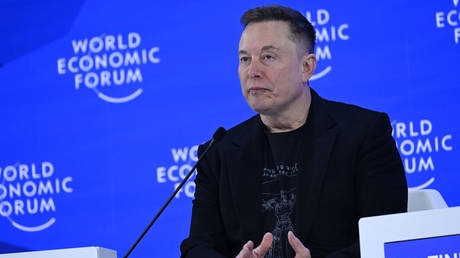
Now, that brotherhood has dissolved into a scorched-earth legal battle. Musk has filed a lawsuit to oust Altman, and in doing so, he has ripped the veil off the most important power struggle of our century. This isn’t just about board seats or stock options. It is a fight for the soul of the machine.
The Original Sin of Profit
Imagine a vault. Inside this vault sits the blueprint for a mind—an intelligence that could solve cancer, reverse climate collapse, or, if handled poorly, render the human species an evolutionary footnote. When OpenAI was founded in 2015, the vault was supposed to be glass. Transparent. Open.
Musk’s lawsuit alleges a betrayal of that foundational "Founding Agreement." He claims that OpenAI has morphed from a non-profit sanctuary into a closed-source "de facto subsidiary" of Microsoft. The irony is thick enough to choke on. A company founded to prevent a corporate monopoly on AI has, in Musk's eyes, become the very monster it was sworn to slay.
The legal filings paint a picture of a mission diverted by the siren song of billions. Musk poured tens of millions of dollars into the early days of OpenAI. He wasn't looking for a return on investment; he was buying an insurance policy for humanity. When you give money to a non-profit, you are participating in a shared belief. When that non-profit starts acting like a hedge fund, the belief breaks.
The GPT-4 Black Box
Consider the difference between a library and a locked laboratory.
OpenAI’s early models were shared. Researchers could poke them, prod them, and understand their limitations. But with the release of GPT-4, the doors slammed shut. Musk argues that this model isn't just a chatbot; it is a milestone on the road to Artificial General Intelligence (AGI).
The lawsuit contends that GPT-4 is a proprietary algorithm owned and operated for the benefit of Microsoft’s bottom line. This is the technical heart of the conflict. If GPT-4 is indeed a precursor to AGI, then under the original charter, it should be available to the public. Instead, it is a product. A subscription. A line item on a quarterly earnings report.
The Five Days in November
To understand why Musk is striking now, we have to look back at the chaos of late 2023. For five days, the world watched as Sam Altman was fired, then unfired, in a corporate melodrama that felt like a Shakespearean tragedy played out on social media.
The board that fired Altman reportedly did so because he wasn't "consistently candid" in his communications. They were the guardians of the non-profit mission, the last line of defense against the commercialization of AGI. When Altman returned, he didn't just come back to his job. He came back with a new board.
Musk’s lawsuit targets this new leadership. He describes them as hand-picked allies lacking the technical depth or the independent spine to stand up to Altman or Microsoft. The "check and balance" system that was supposed to keep OpenAI ethical has been replaced by a cheering section.
The Microsoft Shadow
Microsoft has invested roughly $13 billion into OpenAI. In the cold math of the business world, $13 billion doesn't buy you a seat at the table; it buys you the table.
While Microsoft technically holds a non-voting observer seat, their influence is gravitational. They provide the massive compute power—the literal silicon and electricity—that OpenAI needs to survive. This creates a terrifying dependency. If OpenAI chooses the "wrong" ethical path, could Microsoft pull the plug? Or, more likely, is OpenAI now forced to prioritize features that drive Microsoft’s "Copilot" sales over the safety of the general public?
Musk’s legal team is betting that a judge will see this relationship not as a partnership, but as a takeover. They are asking the court to force OpenAI to return to its open-source roots and to bar Altman and Microsoft from profiting off technology intended for the "benefit of humanity."
Why This Should Keep You Awake
It is easy to dismiss this as two billionaires fighting over a sandbox. But we are the sand.
If Musk wins, it could force a radical transparency in the AI field that hasn't existed for years. It could slow down the breakneck pace of development, giving regulators and ethicists time to catch their breath. If he loses, the precedent is set: the most powerful technology in history will be developed behind closed doors, driven by the same profit motives that gave us the social media algorithms that fractured our reality.
We are currently building a god in a corporate boardroom.
The stakes aren't just about who gets the credit or who gets the cash. It’s about who holds the leash. Musk is arguing that the leash has been handed to a corporation whose primary fiduciary duty is to its shareholders, not to the person reading this article.
Altman, meanwhile, maintains that the massive capital required to build AGI simply cannot be found in a traditional non-profit model. He argues that to save the world, you first have to be able to pay the electric bill. It is a pragmatic defense against a romantic grievance.
The Ghost in the Foundation
Behind the legalese and the talk of breach of contract, there is a fundamental human question. Can we trust ourselves to build something smarter than us without it becoming a tool of oppression or greed?
Musk remembers the 2015 version of Sam Altman—the one who talked about democratic access and safety. He looks at the 2024 version and sees a man who has traded a crown of thorns for a crown of gold. The lawsuit is an attempt to drag the ghost of that 2015 mission back into the light.
The court battle will be long. It will be expensive. It will involve thousands of pages of discovery and depositions from the smartest people on the planet. But the verdict won't just be written in a legal brief. It will be written in the code of the next generation of AI.
If OpenAI is allowed to remain a closed, for-profit entity, the "Open" in its name becomes a tombstone. It marks the spot where an ideal died and a monopoly was born. Musk is trying to perform a digital exhumation.
The silence coming from OpenAI’s headquarters in the wake of the filing is telling. There are no easy answers when your founder sues you for forgetting who you were. As the legal gears begin to grind, we are left to wonder if the fire was ever really meant for us, or if we were just the ones meant to get burned.
The machine is learning. The lawyers are arguing. And the vault remains locked.