The White House is no longer asking Tehran to negotiate; it is demanding a total surrender under the guise of a "15-point peace framework." While President Trump publicly frames the conflict as being "way ahead of schedule," the reality on the ground in late March 2026 is a grinding, multi-front war that has effectively severed the world’s most vital energy artery. With the Strait of Hormuz reduced to a trickle and Brent crude oscillating violently above $100, the administration’s "Epic Fury" campaign is an attempt to break the Islamic Republic’s back before the global economy breaks first.
Washington's latest ultimatum is less about diplomacy and more about psychological warfare. By telling Iran to "accept defeat" while simultaneously leaking reports of a "peace prize" involving Iranian oil and gas assets, the U.S. is trying to bait a fractured Iranian leadership into a public admission of weakness. It is a high-stakes gamble. If Tehran buckles, the U.S. secures a generational geopolitical victory; if they don't, the world faces a prolonged energy winter that no amount of Strategic Petroleum Reserve releases can fully thaw.
The Mirage of Substantial Talks
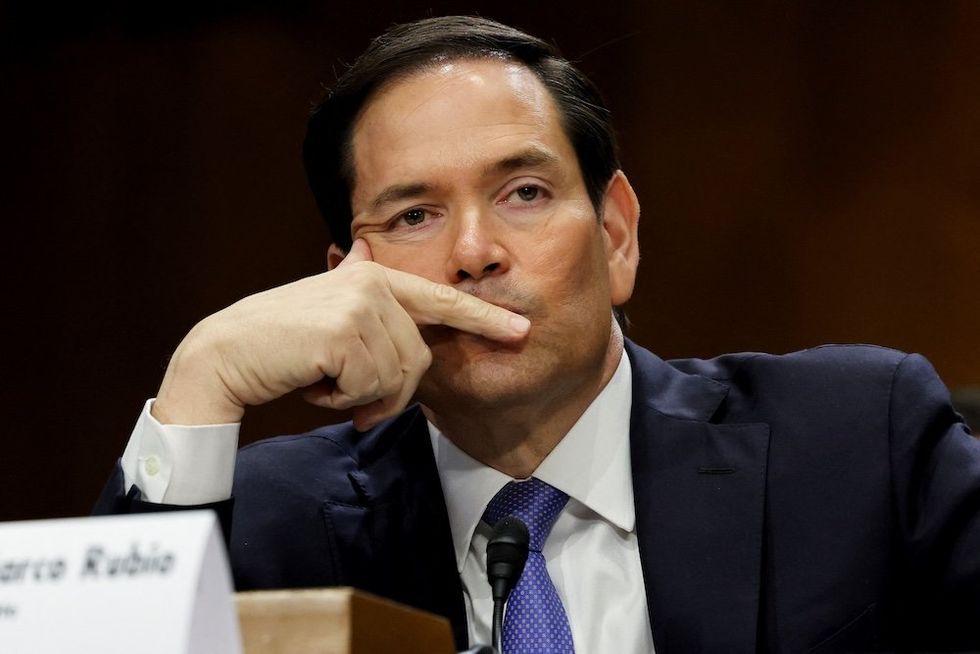
During a Cabinet meeting on March 26, the President sat flanked by Secretary of State Marco Rubio and Defense Secretary Pete Hegseth, claiming "very substantial talks" were occurring with the "right people" in Tehran. This narrative serves a dual purpose. Domestically, it soothes a jittery American public worried about $6-a-gallon gasoline. Internationally, it creates a sense of inevitability that the clerical regime is on its last legs.
However, the view from Tehran is one of defiant chaos. While the U.S. envoy Steve Witkoff and Jared Kushner are reportedly working back-channels through Islamabad, the Iranian Foreign Ministry officially denies any direct engagement. Foreign Minister Abbas Araghchi has characterized the U.S. proposal as "one-sided and unfair," insisting that no deal will be signed while American paratroopers and Marines continue to flow into the region.
The assassination of Alireza Tangsiri, the commander of the IRGC Navy, has only deepened the blood feud. Israel’s targeted strike on Tangsiri was intended to decapitate the force responsible for "throttling" the Strait of Hormuz. Instead of a white flag, the move triggered a fresh barrage of Iranian missiles toward Israeli cities and a hardening of the "tollbooth" tactics in the Gulf.
The Tollbooth in the Strait
The economic weaponization of the Strait of Hormuz has moved from theory to a brutal, daily reality. Iran has begun charging "security fees" of roughly $2 million per tanker for the handful of ships it deems "non-belligerent." This is a desperate attempt to monetize a blockade.
Why the Blockade is Different This Time
- Selective Transit: Iran is allowing vessels from "friendly" nations like India and China to pass, creating a fractured global market where some nations pay a "war tax" and others are cut off entirely.
- Infrastructure Degradation: Strikes on the South Pars gas field have crippled Iran’s domestic energy grid, but they have also ended gas exports to Turkey, proving that Tehran is willing to sacrifice its own revenue to exert regional pressure.
- The Mining Threat: Even with the IRGC Navy’s conventional fleet largely neutralized, the threat of smart mines and "suicide" drones keeps commercial insurance rates at prohibitive levels.
The math of the oil market is unforgiving. Pre-war, the Strait moved 20 million barrels per day. Current estimates suggest that bypass pipelines through Saudi Arabia and the UAE can only handle about 3 million barrels of that redirected volume. The remaining 17 million barrels are effectively trapped.
The Mojtaba Khamenei Factor
The internal power struggle in Iran is the great "unknown" that Washington is trying to exploit. With the rise of Mojtaba Khamenei into a position of ultimate authority, the U.S. believes it is dealing with a leader who is more pragmatic—or perhaps more desperate—than his predecessor.
The U.S. intelligence community is betting that the Iranian public, currently enduring a 99% drop in internet connectivity and nightly pro-government "fear rallies," is at a breaking point. But history suggests that external pressure often fuses nationalistic pride to even the most unpopular regimes. The White House’s insistence that Iran is "begging to make a deal" might be a projection of a wish rather than a reflection of the intelligence briefings.
The Cost of the Off-Ramp
The "15-point plan" is rumored to include the total dismantling of Iran’s nuclear infrastructure and the permanent cessation of support for Hezbollah and the Houthis. In exchange, the U.S. would offer a "Marshall Plan" style reconstruction of the Iranian energy sector, effectively turning Iran into a Western-aligned energy hub.
It is a "surrender-and-prosper" model that ignores the ideological DNA of the Revolutionary Guard. To the IRGC, this isn't an off-ramp; it’s an invitation to a funeral.
As the conflict enters its second month, the "little detour" the President spoke of is looking more like a permanent shift in the global order. The U.S. is preparing military options that include the seizure of strategic Iranian islands to ensure "freedom of navigation," a move that would represent the largest American amphibious operation in decades.
The global bond markets are already pricing in a long-term inflation shock. If the Islamabad talks this weekend fail to materialize, the "war premium" on oil won't just stay high; it will become the new baseline for a world economy that was never designed to function without the Persian Gulf. Washington has told Iran to accept defeat, but until the tankers are moving freely without paying a ransom to Tehran, the victory remains purely rhetorical.
Would you like me to analyze the specific 15 points of the U.S. peace proposal and their impact on regional alliances?