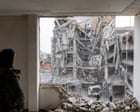
The maritime artery of the world is hemorrhaging. In the last 72 hours, the Strait of Hormuz has transformed from a vital energy corridor into a shooting gallery where merchant sailors are the moving targets. While Tehran frames its campaign as a righteous defense against Western aggression, the wreckage of the Thai-registered Mayuree Naree—struck by projectiles just 11 miles off the Omani coast—tells a different story. This is not a war of precision against military assets; it is a systematic assault on the very neighbors who tried to prevent this catastrophe.
The core premise of the Iranian strategy is failing because it rests on a fundamental lie. For weeks, the Islamic Revolutionary Guard Corps (IRGC) has claimed it is targeting American military bases in the Gulf. However, the data reveals a grimmer reality. Statistics from early March indicate that Iran has fired more than twice as many ballistic missiles and twenty times more drones at Arab Gulf states than at Israel.
The Diplomacy that Died in the Water
Just weeks ago, a diplomatic breakthrough seemed imminent. Omani mediators had signaled that a deal to curtail Iran's nuclear program was within reach. Iran had reportedly agreed to down-blend its uranium stockpiles to the lowest levels possible. But the sudden joint U.S.-Israeli strikes on February 28, which decapitated the Iranian leadership, shattered the "managed escalation" that had kept the region stable since late 2024.
The United Arab Emirates and Saudi Arabia now find themselves in an impossible position. They are being punished for a war they did not start and specifically refused to join. Anwar Gargash, senior diplomatic adviser to the UAE President, has been blunt about the betrayal. He noted that the UAE and its neighbors spent years threading a needle between Washington and Tehran, offering repeated assurances that their territory would not be used for strikes against Iran.
Tehran acknowledged these assurances as recently as March 5, yet continued to rain fire on Emirati civilian infrastructure. This isn't just a military escalation; it is a total collapse of regional trust that will take decades to rebuild.
The Geography of Hostility
The IRGC has activated what it calls its "Decentralized Mosaic Defense." This strategy disperses command structures and weapons systems across the country to ensure military functions continue even under intense bombardment. While this might protect the regime's hardware from U.S. strikes, it has made the Iranian response increasingly erratic and indiscriminate.
- Maritime Paralysis: Transit through the Strait of Hormuz is at a near-standstill. Only two outbound crossings were recorded in the last 24 hours, compared to the usual dozens.
- Infrastructure Targets: Strikes have targeted Saudi Arabia's largest refinery and Qatar’s Ras Laffan, a pillar of the global liquefied natural gas (LNG) supply.
- Civilian Casualties: In the UAE alone, Iranian strikes have killed three people and injured nearly 80, all while Tehran insists it is only hitting "invaders."
The economic fallout is no longer a theoretical risk. Oil prices breached the $100 mark this week as insurance markets for shipping went into freefall. Saudi Arabia has attempted to bypass the chaos by rerouting tankers to its East-West pipeline, aiming for a capacity of 7 million barrels a day at the Red Sea port of Yanbu. But pipelines are a bandage, not a cure. They cannot replace the sheer volume of energy that must pass through the Gulf to keep the global economy from seizing up.
The Myth of Targeted Retaliation
The sophisticated air defenses of the UAE and Saudi Arabia are currently the only things preventing a total regional meltdown. Analysts suggest that the success rate for Iranian missiles and drones is under 10 percent, largely because of advanced interception capabilities. But this is a war of attrition. Iran is betting that its "mosaic" can outlast the reserve of interceptors held by the Gulf states.
The regime’s decision to burn its bridges with the GCC is a strategic blunder of historic proportions. By attacking the neighbors who were its only potential mediators, Tehran has ensured its own isolation. The Arab Gulf states did not arrive at this crisis as enemies of Iran; they arrived as reluctant bystanders who had spent years choosing the hard road of diplomacy over the easy path of confrontation.
Military solutions generate crises that carry consequences far beyond the battlefield. The Iranian leadership, or what remains of it, is operating without a rational vision, seemingly intent on taking the entire region down with them. The solution never lay in targeting Gulf tankers or Emirati airports; it lay in working with the only states that could have brokered a negotiated settlement.
The Strait remains closed. The fires at the refineries are still smoldering. And for the 200,000 seafarers currently trapped on vessels in the Gulf, the rhetoric of "resistance" from Tehran sounds less like a political movement and more like a death sentence.
Would you like me to analyze the specific economic impact of the Ras Laffan strikes on European LNG markets?