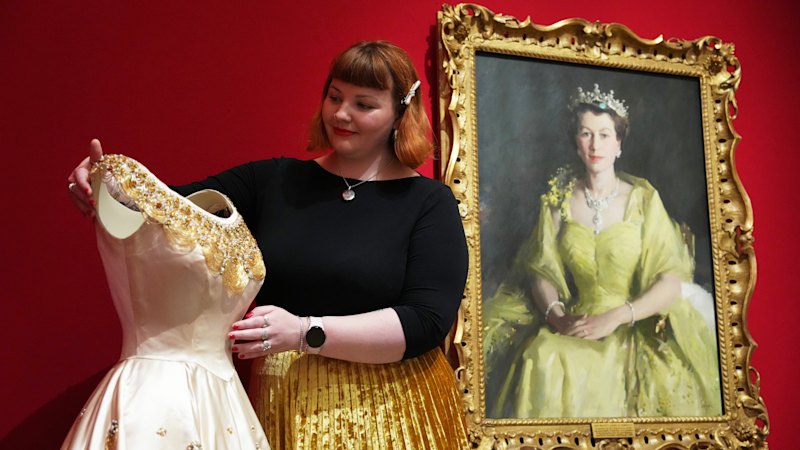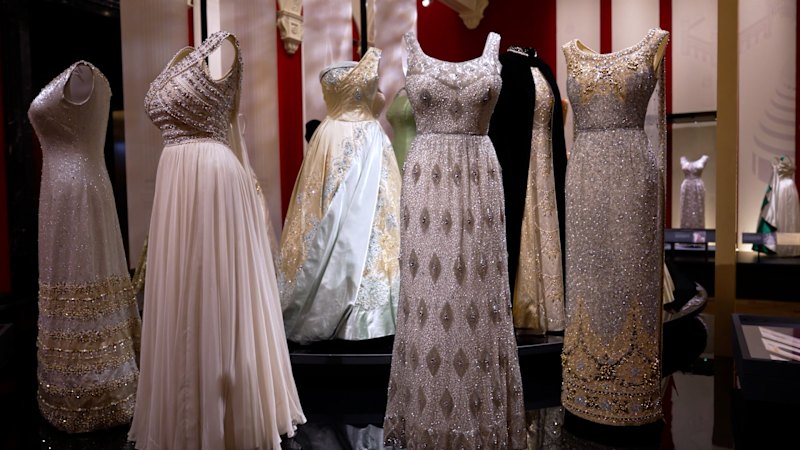
Buckingham Palace is currently patting itself on the back for a "fashion exhibition" that isn't about fashion at all.
They want you to walk through the state rooms and marvel at the rows of silk, the weighted hems, and the neon coat-and-hat combos that defined Queen Elizabeth II’s later years. The media is eating it up. They call it a "masterclass in diplomacy." They call it "iconic." For a different view, see: this related article.
They’re wrong.
What you’re actually looking at is the most successful corporate branding exercise in human history. To view Elizabeth II’s wardrobe as an evolution of style is to fundamentally misunderstand the mechanics of power. This wasn't a woman expressing herself through clothing; it was a monarch systematically erasing her humanity to become a living, breathing logo. Further insight on this matter has been shared by ELLE.
The Uniformity of Survival
The common narrative suggests that the Queen used color to stand out in a crowd so people could say they "saw her." That is the "lazy consensus" of royal reporting. In reality, the adoption of the "Rainbow Monarchy" aesthetic was a defensive maneuver against the rising tide of celebrity culture.
In the 1950s and 60s, Elizabeth still competed—unsuccessfully—with the high-fashion sensibilities of Princess Margaret or the emerging Hollywood elite. By the 1980s, the game changed. Diana Spencer brought a level of genuine, erratic, and deeply human style to the Firm that the Queen could never replicate.
The response? Total aesthetic stagnation.
While the world obsessed over Diana’s "Revenge Dress" or the shifting silhouettes of the 90s, the Queen retreated into a rigid, impenetrable template. The block-color coat, the Launer London handbag, the Anello & Davide loafers. By making her look "unchanging," the Palace tricked the public into believing the institution itself was unchangeable.
This isn't style. It’s armor. It’s the visual equivalent of a "No Comment" press release.
Precision Over Persona
Don't mistake this critique for a claim that the clothes were low-quality. They were masterpieces of engineering, not art.
If you look closely at the exhibition pieces—and I mean really look, past the sequins—you see the "battle scars" of a woman who was a professional above all else. I’ve spoken with high-end couturiers who marvel at the technical specs of these garments, but they rarely mention the "vibe."
- Lead weights in the hems: To prevent a "Marilyn moment" in the wind. This isn't fashion; it's physics.
- Zippered backs on daywear: To allow for quick changes during grueling schedules.
- Armholes cut with specific rotation: Designed so the royal wave wouldn't cause the entire coat to ride up and look messy.
Every stitch was a hedge against a PR disaster. When you strip away the "beauty" of the silk, you’re left with a highly functional tool designed for one purpose: the total suppression of the unexpected. Most people ask, "What was her favorite color?" The real question is, "Which color provided the highest level of visibility with the lowest risk of being misinterpreted?"
The answer was always "bright," because neon doesn't have a political affiliation.
The Diplomacy Delusion
The exhibition waxes poetic about the "Diplomatic Wardrobe." You’ve heard the stories: the maple leaf on the dress for Canada, the wattle blossoms for Australia, the green for Ireland.
This is often cited as a subtle, genius form of soft power. Let’s be honest: it’s the most basic form of pandering.
Imagine a CEO visiting a branch in Tokyo and wearing a tie with a sushi print. We’d call it cringe-inducing. When a monarch does it, we call it "shrewd diplomacy." In the high-stakes world of international relations, wearing a host nation’s national flower on your shoulder isn't a strategic move; it’s a polite greeting card.
The real power moves happened in the rooms, not on the fabric. By over-emphasizing these "hidden messages," the Palace keeps the public focused on the surface-level embroidery while the actual mechanics of the Commonwealth remain unexamined. It’s a distraction technique that uses sequins to blind the critics.
The Handbag as a Weapon of Silence
No discussion of the Queen’s "look" is complete without the handbag. The exhibition displays them as if they were holy relics.
But the handbag was the ultimate tool of social control. It was a communication device used to signal to her staff when a conversation was over. If she moved the bag from one arm to the other, her handlers knew to swoop in. If she put it on the floor, the meeting was terminated.
Think about that. The most "iconic" part of her wardrobe was actually a mute button for the people she found boring or difficult. This isn't the behavior of a fashion icon; it's the behavior of a woman who viewed every social interaction as a task to be managed and eventually ended.
The Cost of the "Iconic" Label
The danger in this exhibition—and the reason it’s being pushed so hard—is that it sets a standard for "Royal Style" that is inherently stagnant.
By canonizing these hundreds of looks, the Palace is effectively telling the younger generation of royals that the only way to be "successful" is to become a caricature. We see it already with the "Kate Effect." Every time the Princess of Wales wears a dress, it sells out. But is she pushing boundaries? Or is she just following the manual of "Visual Stability" written by her predecessor?
When we celebrate this exhibition, we aren't celebrating fashion. We’re celebrating the death of the individual in favor of the Brand.
The Queen's wardrobe was a triumph of discipline over desire. She wore what was required, never what she wanted. To look at these dresses and see "glamour" is to fall for the trap. You should look at them and see the weight of a crown that demanded the wearer disappear entirely behind a wall of brightly colored wool.
Stop looking for the woman in the clothes. She isn't there. She was the one who decided she didn't need to be.
Go to the exhibition. See the craftsmanship. But recognize it for what it is: the archives of a 70-year-long corporate rebranding campaign. The clothes didn't make the woman; the woman used the clothes to hide from a world that wanted too much of her. That’s not a fashion statement. It’s a disappearance act.
Burn the manual. Stop asking what the brooch "means" and start asking why we're still obsessed with a dress code designed to keep us at arm’s length.