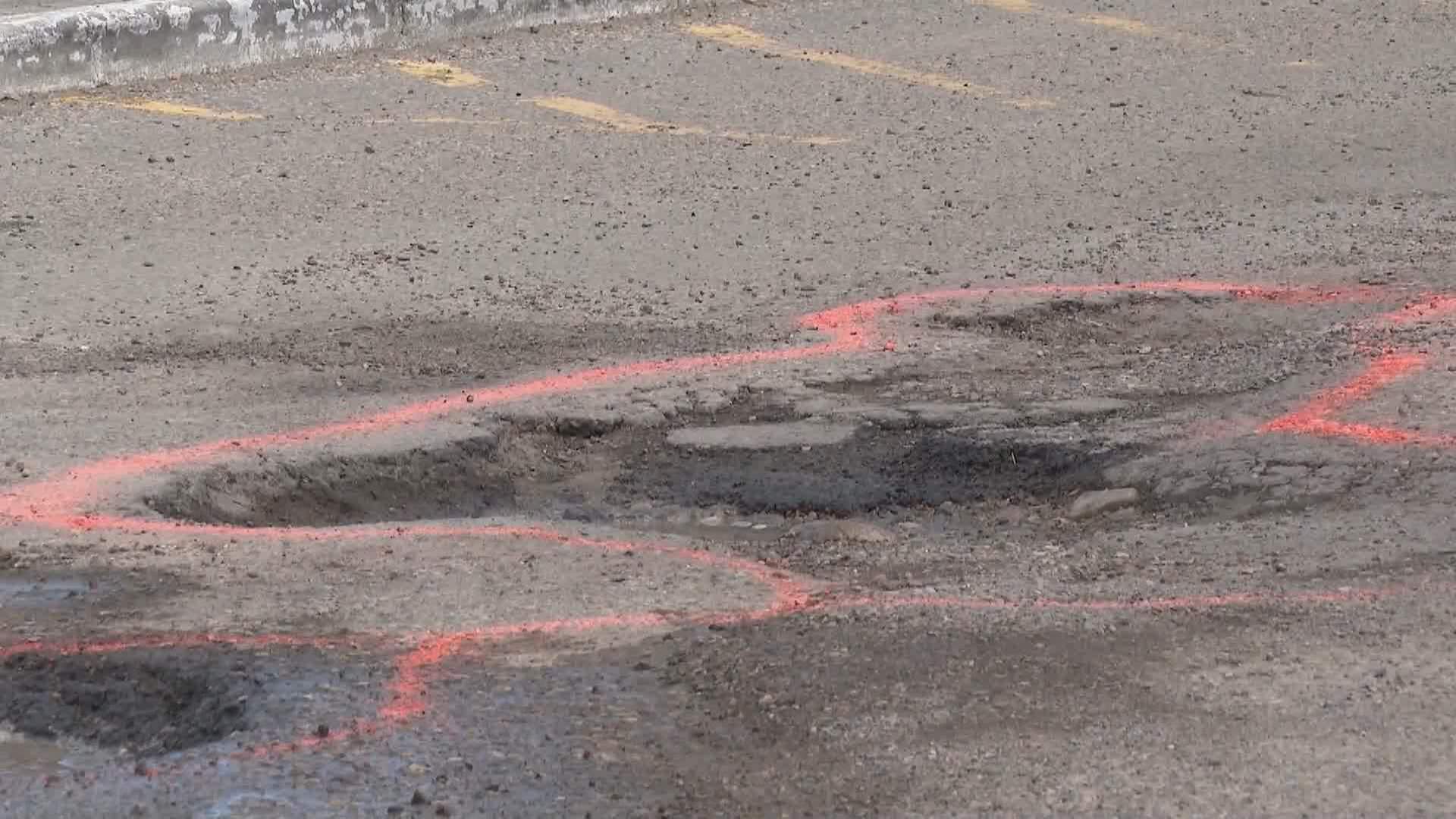
Your commute across Calgary lately has probably felt more like an obstacle course than a drive. You’re dodging craters on Glenmore Trail, swerving on Crowchild, and wondering why on earth the city hasn’t fixed that massive tire-killer near your house yet. Honestly, the City of Calgary roads department is wondering the same thing. They’re stuck in a brutal cycle where the weather changes its mind every six hours, and it's leaving repair crews in the dust.
The reality is pretty simple: the same people who plow your snow are the ones who fix your potholes. When we get hit with a late-season dump of 18 centimeters of snow—like we did in late March 2026—those crews have to drop their shovels and hop into plows. Every hour spent clearing a drift is an hour a pothole keeps growing. It's a classic case of playing catch-up with a moving target.
The Science of the Calgary Smash
Potholes aren't just a sign of "bad roads." They're the physical manifestation of Calgary’s unique climate. We live in one of the most volatile freeze-thaw environments in North America. You know the drill: it’s -20°C on Tuesday, a Chinook blows in and it’s +8°C by Wednesday afternoon, and then it freezes solid again by midnight.
When snow melts during those warm spikes, the water seeps into tiny cracks in the asphalt. Once the sun goes down and the temperature craters, that water turns to ice. Basic physics tells us ice expands. That expansion pushes the pavement up, creating a hollow void underneath. When your heavy SUV rolls over that weak spot the next morning, the surface collapses. Boom—you’ve got a brand new pothole.
Because we’ve had so many of these "weather rollercoasters" in early 2026, the roads are basically disintegrating faster than the city can patch them.
Why a Quick Fix Often Fails
You might see a crew out there tossing black gunk into a hole and wonder why it’s back three days later. During the winter and early spring, crews use what’s called "cold mix" asphalt. It’s a temporary band-aid. It doesn’t bond perfectly with the surrounding road, especially when the ground is still wet or frozen.
It isn't until the asphalt plants open up with "hot mix" later in the spring that permanent repairs actually happen. Until then, the city is just trying to keep the roads safe enough so you don't leave your entire suspension in a divot on the way to work.
- 2025 Stats: Calgary filled over 35,000 potholes last year.
- 2026 Outlook: Expecting similar or higher numbers given the "extended winter" we just crawled out of.
- The Budget: The city runs a roughly $6.9 million mobility maintenance program, but even that gets stretched thin when the snow won't stop falling in April.
What You Should Actually Do About It
Don't just complain to your steering wheel. The city actually relies on us to be their eyes. They can't monitor every side street in the NW and SE simultaneously.
- Report it via 311: Use the app. It lets you pin the exact GPS location and even attach a photo. This puts the hole on the official "to-do" list.
- Check the Map: The City of Calgary has a live Pothole Repair Status map. You can see if someone already reported "your" pothole and if it's already scheduled for a crew.
- Document Damage: If you hit a crater and blow a tire, document everything immediately. Photos of the hole, photos of your car, and the exact time. You can file a claim with the city, though fair warning: they usually only pay out if they knew about the hole and failed to fix it within a "reasonable" timeframe.
The city is currently in "pothole blitz" mode, shifting focus away from snow removal as the pavement finally dries out. But with the 2026 paving program not fully kicking off until May, the next few weeks are going to be rough. Keep your eyes on the road, keep your tires inflated to the right PSI—it helps absorb the impact—and maybe take the "long way" if it means avoiding that one street that looks like a moonscape.
If you see a crew out there working in the middle of a slushy Tuesday, give 'em a break. They're fighting a losing battle against physics until the thermometer finally decides to stay above zero.



