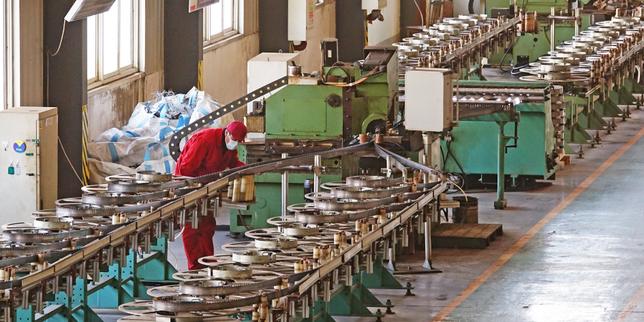
China's steel industry is rusting from the inside out. For decades, the massive blast furnaces in provinces like Hebei and Liaoning weren't just factories. They were the heartbeat of the nation's "economic miracle." They built the skyscrapers in Shanghai and the high-speed rails connecting Beijing to the world. But now, those fires are flickering. Prices have tanked. Supply is suffocating a global market that doesn't want more cheap metal. Behind the cold economic data of "overcapacity" lies a messy, human reality of workers who spent their lives breathing soot only to find out their sons won't touch the factory gates.
It's a brutal transition. We’re seeing a shift from a world where a job at a state-owned mill meant security to one where those same mills represent a dead end. If you walk through the industrial belts today, the mood isn't just low. It's resigned. Parents are telling their kids to run. They’re telling them to head to the coast, learn to code, or deliver packages—anything but stay in the shadow of the cooling towers.
Why the Steel Giant is Stumbling
The math doesn't work anymore. China produces more than half of the world’s steel. That was fine when the domestic property market was on a literal tear. You need a lot of rebar to build apartment blocks for millions. But the property bubble didn't just pop; it's deflating in a slow, agonizing crawl. When the cranes stop moving in cities across China, the steel mills lose their biggest customer.
The numbers from the China Iron and Steel Association (CISA) are grim. Profits have vanished for many mid-sized players. They're stuck in a loop of producing more just to keep the lights on and service their massive debts, which then floods the market and drives prices even lower. It's a race to the bottom.
I’ve looked at the trade data. It’s not just a local problem. China is exporting its surplus at prices that make it impossible for European or American mills to compete. This has triggered a new wave of protectionism. From Southeast Asia to the EU, countries are slapping on tariffs. The world is closing its doors to Chinese steel at the exact moment China needs those doors open to survive.
Life in the Rust Belt is Changing Fast
If you visit a city like Tangshan, the air feels different. It’s cleaner, sure, because of environmental crackdowns, but the energy is gone. For a long time, these towns were the "Iron Rice Bowl." If your dad worked at the mill, you worked at the mill. You lived in company housing. You went to company schools.
That social contract is broken.
Younger people don't want the "declassed" life of their parents. They’ve seen the layoffs. They’ve seen the "voluntary" pay cuts. They see the grime. A common sentiment among veteran workers is a strange mix of pride and regret. They’re proud they built the country, but they’re terrified their kids will be stuck in a dying town.
Basically, the "steel brat" generation is over. These kids are looking at the gig economy or service jobs in Tier 1 cities. It might be less stable, but it doesn't come with the physical toll and the smell of sulfur. The cultural prestige of the industrial worker—once the hero of Communist Party posters—has evaporated. They're now seen as remnants of an era the government is trying to move past.
The Problem of Hidden Unemployment
The government is careful with its numbers. You won't see massive spikes in official unemployment rates because many workers are kept on "standby." They might get a fraction of their salary to stay home, or they’re shuffled into low-level municipal jobs. It’s a way to prevent social unrest, but it doesn't solve the core issue. These people are underemployed and overqualified for the new economy.
The Global Ripple Effect
Don't think this stays inside China's borders. It doesn't. When the world's largest producer starts "dumping" steel to stay afloat, it breaks the global supply chain. We’re seeing an uptick in anti-dumping investigations.
- India and Vietnam are struggling to protect their own growing industries.
- The United States keeps the walls high with Section 232 duties.
- The European Union is pushing its Carbon Border Adjustment Mechanism (CBAM), which specifically targets the high-carbon footprint of Chinese blast furnaces.
Chinese mills are trying to pivot. Some are investing in "green steel" using hydrogen or electric arc furnaces. But that takes billions. It takes time. Most of the smaller, older mills don't have either. They’re the "zombie" companies that the central government wants to kill off, but local officials keep alive to avoid a total local economic collapse.
The Reality of Green Transition
Beijing wants "high-quality growth." That's the buzzword. It sounds great on paper. In reality, it means shutting down the very industries that made the country's middle class possible.
The transition to a greener economy is necessary. Nobody wants to live in a smog-choked city forever. But the "green" jobs aren't usually in the same places as the "steel" jobs. You can't just tell a 50-year-old furnace operator to go install solar panels three provinces away. The friction of this shift is creating a geographical divide between the high-tech hubs and the industrial heartlands that feel forgotten.
What Happens Next for the Workers
There's no easy fix here. The consolidation of the industry will continue. Huge state-backed giants like Baowu Steel will swallow up the smaller players. Efficiency will go up, but headcount will go down.
If you're watching this space, keep an eye on how the Chinese government handles the "re-skilling" programs. They’re trying to pump money into vocational training, but there’s a massive mismatch between what the industry needs (advanced robotics, automated systems) and the skill sets of the existing workforce.
For the families on the ground, the strategy is simple. They’re liquidating what they can and betting everything on their children’s education. They want out. The steel mills are becoming monuments to a 20th-century dream that doesn't fit in a 21st-century world. The future isn't in the forge; it's in the data centers and the logistics networks. The fire is going out, and for the people who lived by it, the cold is setting in.
Move your focus away from the macro-growth targets and look at the internal migration patterns. People are voting with their feet. The rust belt is thinning out, and the "steel city" identity is fading into history. Watch the export numbers and the tariff disputes, but remember that every percentage point of "overcapacity" represents a thousand families realizing their world is shrinking. Stay informed on the trade shifts—they'll tell you more about China's internal stability than any official GDP report.