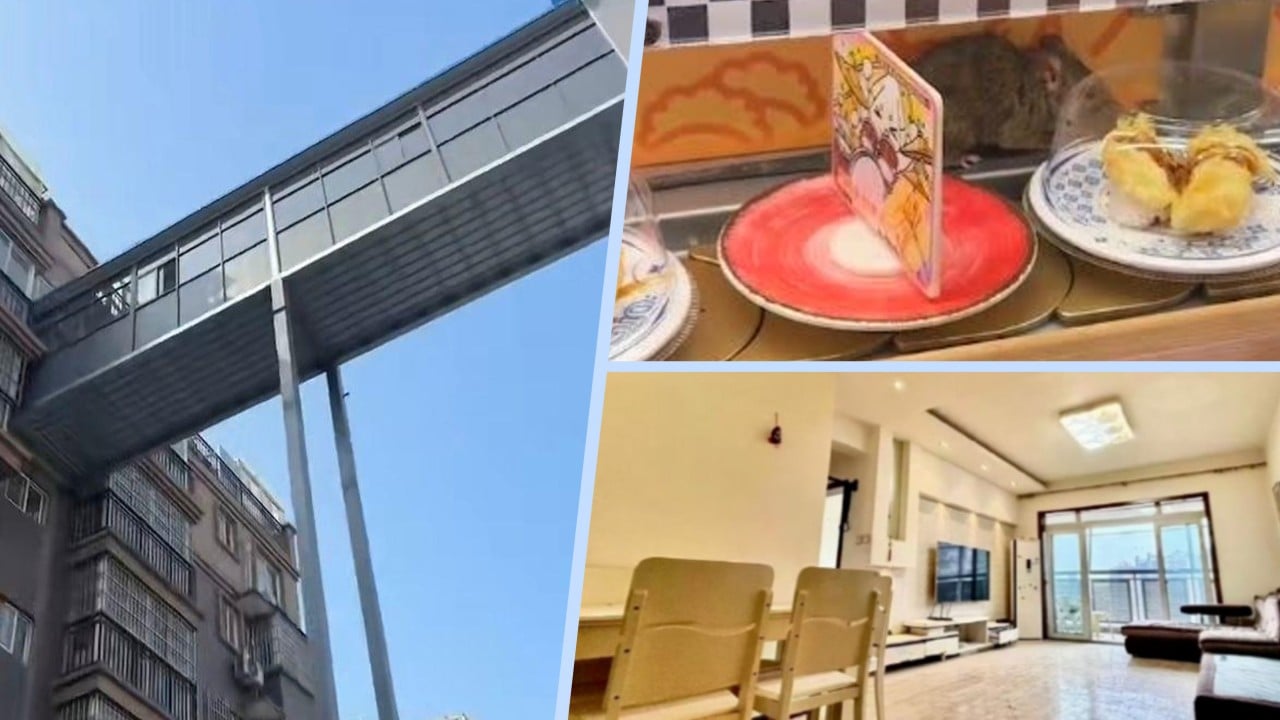
China’s internet is a goldmine for the bizarre. If you’ve spent any time on Weibo or Xiaohongshu lately, you’ve seen the headlines. A haunted house that nobody wants to buy. An elevator that travels exactly one floor. A restaurant where the "entertainment" is a literal mouse run. It sounds like a fever dream or a set of urban legends. But these stories are real, and they offer a weirdly honest look at the chaotic intersection of rapid urban growth and local superstition.
When you see a story about a "haunted" villa being auctioned for the third time in Suzhou, it’s easy to laugh and scroll past. Don't. These viral moments act as a pressure valve for a society dealing with high real estate prices and quirky architectural mistakes. They aren’t just oddities. They’re reflections of a culture trying to find humor in the absurd realities of modern life.
The Haunted Villa That Just Wont Sell
Real estate in China is usually a blood sport. People fight over square footage. They pay premiums for good school districts. Yet, a luxury villa in a prime Suzhou location recently hit the auction block for a third time with no takers. The reason? A high-profile murder happened there years ago.
In the West, we have "stigmatized property" laws, but in China, the fear of xiong zhai—or "vicious houses"—is on a different level. Even a massive discount can't convince most buyers to move into a place where "unclean" energy might reside. The starting price for this Suzhou property dropped significantly with each auction. It didn't matter. Local superstitious beliefs are often stronger than the desire for a bargain.
I’ve seen this play out in other cities too. Potential buyers sometimes bring Buddhist monks or Feng Shui masters to "cleansing" ceremonies before they even consider placing a bid. The fact that a government-run auction site has to repeatedly list a property because of "ghosts" tells you everything you need to know about how tradition still dictates the modern market. It's a clash between a high-tech society and deep-seated ancestral fears.
The Worlds Most Pointless Elevator
Then there’s the case of the one-floor elevator. In a residential complex in Xi'an, residents were baffled to find a newly installed lift that only services the first and second floors. That's it. A ten-second ride to avoid one flight of stairs.
You might think this is just peak laziness. It’s actually usually a symptom of bizarre building codes or a breakdown in communication between developers and residents. Often, these "pointless" installations happen because of accessibility mandates that weren't thought through. The developer has to check a box to get the building cleared for occupancy.
"We just walk," one resident told local media. No kidding. It’s faster. But the elevator stays, humming away, consuming electricity for a trip that most able-bodied people can finish in six steps. It’s a physical monument to bureaucratic "good enough" logic. It highlights a common theme in China's rapid-fire construction: building fast often means building without asking why.
Fine Dining With a Mouse Run Side Show
If you think a one-floor lift is weird, wait until you hear about the "mouse run" at a popular eatery. A diner in Guangdong recently filmed a mouse scurrying along a narrow ledge right above the tables. Instead of screaming and running out, the patrons just watched. The video went viral not because people were disgusted—though many were—but because of how common "wild" sightings have become in older, densely packed food districts.
Food safety is a massive talking point in China. The government cracks down hard, yet these quirky, gross videos keep popping up. Why? Because the scale of the dining industry is so vast that oversight is a game of whack-a-mole. When you’re eating at a "hole in the wall" that has been there for thirty years, the mice are sometimes viewed as part of the furniture.
This isn't an excuse for poor hygiene. It’s a reality of urban density. These stories gain traction because everyone has had that "wait, what was that?" moment while eating out. The "mouse run" became a meme because it tapped into a shared, slightly uncomfortable experience of city life.
Why We Cant Look Away From the Weirdness
These stories aren't just filler. They serve a purpose. In a media environment that can be quite rigid, "quirky China" stories provide a safe space for social commentary. Discussing the "haunted house" is a way to talk about the absurdity of the housing market without getting too political. Laughing at a one-floor elevator is a way to vent about poor urban planning.
The viral nature of these events also shows how much people value "authentic" weirdness over polished corporate content. We’re tired of seeing the same perfect skylines. We want to see the weird villa, the pointless lift, and the mouse on the ledge. It’s messy. It’s human.
Spotting the Pattern in the Chaos
If you look closely, you’ll see these stories follow a specific trajectory. They start on a local Douyin (TikTok) account, get picked up by a regional news outlet, and then explode nationally. By the time they hit English-language media, they’ve often lost the cultural context that makes them so fascinating.
- The Real Estate Angle: Ghost stories are almost always about the plummeting value of haunted assets.
- The Infrastructure Angle: Weird builds are usually the result of "malicious compliance" with weird laws.
- The Social Angle: These videos are the "water cooler" moments for a billion people.
Understanding this helps you see through the "clickbait" veneer. You aren't just looking at a weird story; you're looking at a country evolving so fast that its shadows—and its ghosts—are struggling to keep up.
If you’re ever in Suzhou and see a deal on a villa that looks too good to be true, ask about its history. If you're in an elevator that only goes up one floor, take the stairs. And if you see a mouse on a ledge while eating dim sum, maybe just ask for the check. These quirks aren't going away anytime soon. They're part of the fabric of the place. Stay skeptical of the "perfect" version of any city and look for the cracks. That’s where the real stories are hiding.