In the basements of Isfahan and the jagged valleys of the Zagros Mountains, there is a sound that defines a generation. It is not the roar of a jet or the static of a broadcast. It is the rhythmic, industrial hum of a nation that has spent forty years learning how to live underground.
Western analysts often look at a map of Iran and see a target. They see dots representing refineries, power grids, and launch pads. They compare these dots to Caracas or Baghdad, assuming that if you strike the right nerve, the entire body will go into shock and collapse. This is a profound misunderstanding of geography, engineering, and the stubborn nature of survival.
Venezuela is a house of cards built on a single, shaky table: oil. When the wind blew, the table buckled. Iran is not a house of cards. It is a sprawling, ancient banyan tree with roots that have turned into concrete and steel.
The Architect in the Dark
Imagine a man named Abbas. He is hypothetical, but his work exists in every province from the Caspian to the Gulf. Abbas is a structural engineer. He doesn’t build glass skyscrapers that catch the sun. He builds "cities" three hundred meters beneath the granite.
When he looks at a mountain, he doesn't see a scenic vista. He sees a shield.
The logic of Iranian defense is built on the reality of "deep hardening." While a Venezuelan refinery sits exposed on the coast, vulnerable to a single well-placed cruise missile, Iran’s most critical strategic assets—its centrifuges, its missile silos, its command centers—are tucked away in tunnels that would make a mole feel claustrophobic.
This isn't just about hiding. It’s about the physics of the earth itself. To destroy a facility buried under hundreds of feet of solid rock requires a specific kind of violence—kinetic energy so focused and sustained that it defies standard military doctrine. You can break the surface. You can scorch the earth. But the heart keeps beating in the dark.
The Myth of the Fragile State
We have a habit of treating all sanctioned nations as the same. We see bread lines and currency fluctuations and assume the end is near. But the economic DNA of Iran is fundamentally different from the petro-states of Latin America.
When Venezuela’s oil industry began to rot, the country didn't have a backup. It didn't have a domestic manufacturing base to build its own spare parts, its own cars, or its own medicine. It relied on a global straw to drink, and when that straw was pinched, the nation gasped for air.
Iran has been gasping for forty years, and in that time, it developed gills.
Walk through the industrial parks on the outskirts of Tehran. You will find engineers who have spent their entire careers "reverse-engineering" the world. They take apart German turbines and American jet engines. They fail. They try again. Eventually, they build a version that works. It might not be as sleek as the original. It might be loud and inefficient. But it belongs to them.
This "economy of defiance" means that a strike on a major port or a refinery, while devastating, does not result in the immediate paralysis of the state. There is a secondary, tertiary, and quaternary layer of local production that keeps the lights on. They have learned to thrive in the gaps of the global system.
The Invisible Network
Distance is the enemy of any invader, but it is the best friend of the defender. Iran is a fortress of geography.
To reach the heart of the country, an aircraft must traverse vast deserts and climb over mountain ranges that reach toward the heavens. This isn't the flat, predictable terrain of the Iraqi desert. This is a jagged, vertical world where every valley can hide a mobile radar unit or a locally made surface-to-air missile battery.
Consider the "Khordad-15" or the "Bavar-373." These are names that sound like bureaucratic filler to a casual reader. To a pilot, they are a nightmare of indigenous tech. By developing their own air defense systems, Iran removed the "kill switch" that often exists when a country buys its weapons from a superpower. You can’t pressure a foreign supplier to send a deactivation code if the code was written in a basement in Shiraz.
It is a decentralized defense. If you cut off the head, the limbs have enough intelligence to keep fighting. This is the "Mosaic Defense" doctrine—a military philosophy that assumes the central command will be destroyed and empowers local commanders to wage their own private wars.
The Human Cost of Miscalculation
Behind the cold calculus of "strike packages" and "collateral damage" are people who have grown up in the shadow of the Iran-Iraq War.
That conflict is the ghost that haunts every decision made in Tehran. It was a war of trenches and chemical weapons, a war where the world stood by and watched a generation bleed. It created a psychological scar that translated into a national obsession: never again will we be defenseless.
This history creates a social cohesion that is often invisible to outsiders. When a foreign power strikes, the internal bickering—the protests, the anger at the government, the desire for change—often takes a backseat to an ancient, tribal reflex of self-preservation.
In Venezuela, the crisis led to a mass exodus, a draining of the country’s lifeblood. In Iran, the pressure has historically compressed the population, forging a harder, more resilient core. It is the difference between a ceramic pot that shatters and a piece of heated steel that becomes a blade.
The Logistics of the Long Game
A strike is a moment in time. Survival is a marathon.
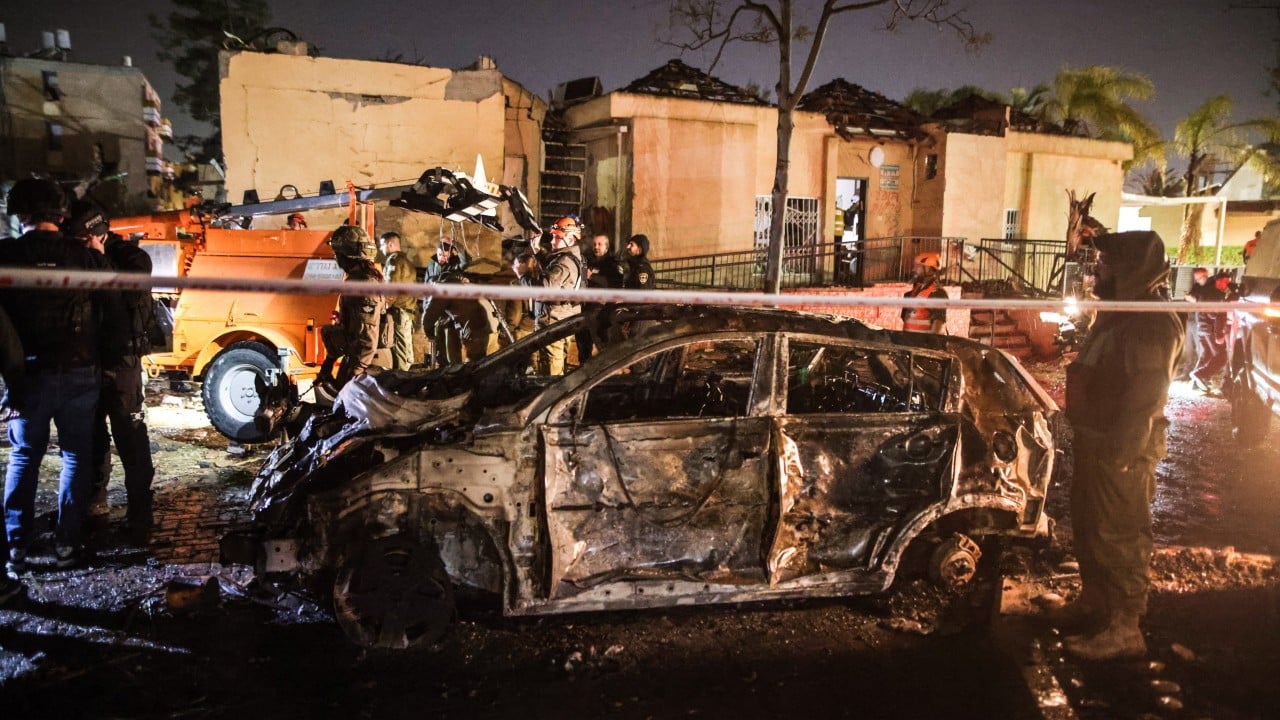
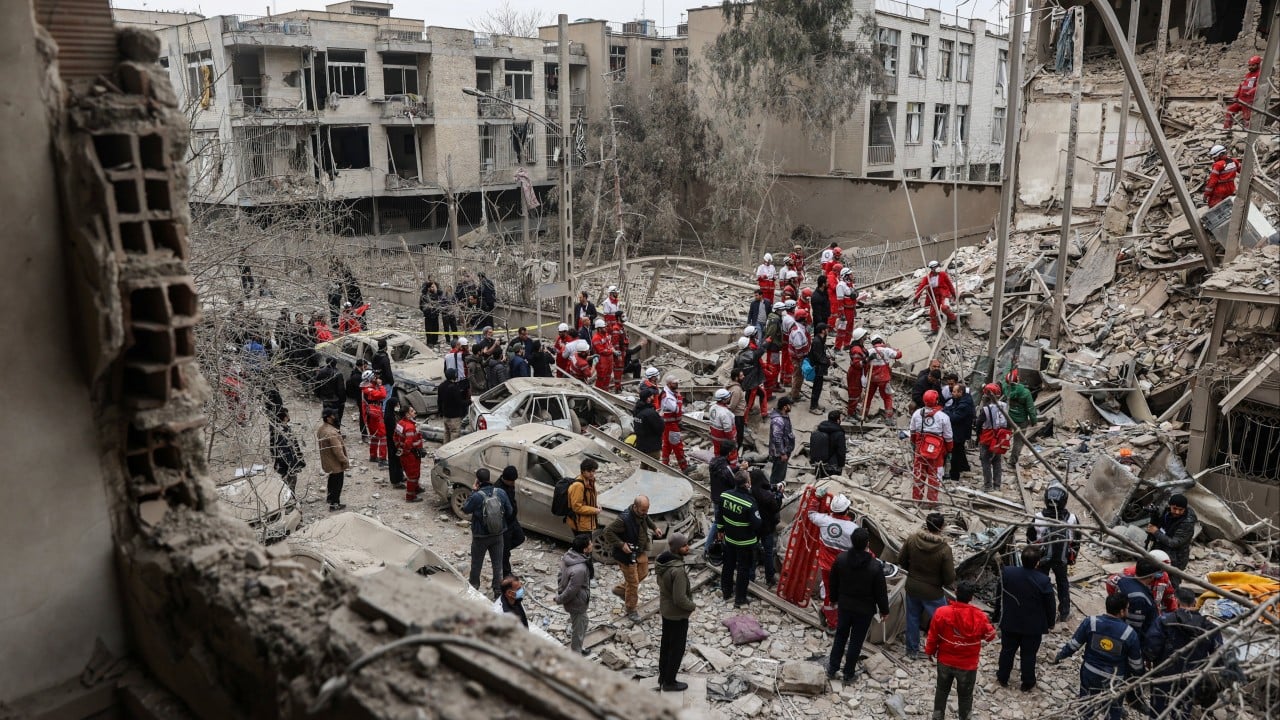
The US and Israel possess the most sophisticated weaponry in human history. They can hit a window from a thousand miles away. They can turn a drone into a surgical scalpel. But bombs cannot occupy a culture. They cannot rewrite the collective memory of a people who view themselves as the heirs to the Persian Empire.
The "survivability" of Iran doesn't come from its ability to win a conventional dogfight in the sky. It comes from its ability to absorb the blow and remain standing.
If the oil stops flowing, they have the mines. If the mines are closed, they have the agriculture. If the internet is cut, they have a domestic intranet that has been prepared for that exact "blackout" scenario. They have spent decades building a redundant civilization.
The Weight of the Granite
We are often told that technology has made geography irrelevant. We are told that "cyber" and "stealth" have changed the nature of power forever.
But as the sun sets over the Alborz mountains, casting long, purple shadows over the concrete bunkers below, those theories feel thin. The earth is still the ultimate armor. A nation that has learned to breathe through stone is not easily suffocated.
The danger of the Venezuela comparison is that it breeds a false sense of simplicity. It suggests that a few days of shock and awe will lead to a new era. It ignores the reality of a country that has built its entire identity around the expectation of the strike.
They are waiting. They have been waiting for half a century. And in the silence of those deep, granite tunnels, the hum continues.
It is the sound of a root system that refuses to let go, no matter how hard the wind blows or how many branches are lopped off by the storm.