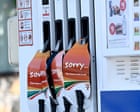
The headlines are screaming about a "food crisis" that makes the pandemic look like a picnic. Farmers are on the news warning of year-long price hikes. Consumers are clutching their receipts like they’re evidence in a murder trial.
Stop the melodrama.
The narrative that high food prices are an unmitigated disaster is a lazy consensus built on a fundamental misunderstanding of how value works. We’ve spent forty years living in a hallucination of artificially cheap calories, and now that the bill is finally coming due, everyone is acting like the sky is falling.
High food prices aren't the problem. They are the long-overdue correction.
The Myth of the Cheap Steak
For decades, the Australian consumer has been subsidized by a brutal, extractive relationship between supermarket duopolies and a farming sector forced into a race to the bottom. We got used to milk that cost less than bottled water. We demanded year-round avocados and strawberries regardless of the season or the soil's health.
When farmers warn that prices will stay high, they aren't threatening us. They are finally admitting that the old model was a lie.
The "tea party" comparison isn't just hyperbolic; it's geographically illiterate. During the pandemic, supply chains broke because of logistics. Today, prices are rising because of biological reality. We are seeing the true cost of production—energy, fertilizer, labor, and risk—finally being reflected at the checkout. To suggest we should return to "pre-crisis" pricing is to suggest that farmers should continue to go bankrupt to subsidize your Wednesday night stir-fry.
The Duopoly Diversion
Everyone loves to hate Coles and Woolworths. It’s easy. It’s cathartic. But blaming the duopoly for high prices misses the point entirely. While their margins are healthy, they aren't the primary engine of the current price surge.
The real driver is resource competition.
We are competing with global markets for every grain of wheat and every liter of diesel. If an Australian grain grower can get a better price in Jakarta than in Sydney, the local price goes up. That’s not a "crisis"; that’s a market signal. For years, we’ve treated our domestic food supply as a guaranteed right rather than a premium commodity.
If you want lower prices, you’re essentially asking for a closed economy, which would destroy the very farmers you claim to support. You cannot have a world-class export industry and "cheap" domestic groceries simultaneously. Pick one.
The Efficiency Trap
The industry insiders crying about input costs are often the same ones who doubled down on high-input, industrial monoculture. They’re addicted to synthetic fertilizers and global supply chains for parts and chemicals.
When those inputs spike, their business models shatter.
A "contrarian" take that actually holds water: The farmers who aren't panicking are the ones who decoupled from the industrial machine years ago. I’ve seen operations that focused on soil health and local inputs survive these "price shocks" with barely a scratch. But the broad-scale industry is built on a foundation of cheap oil.
- Logic Check: If your business requires $1.20 of inputs to create $1.15 of value, you don't have a "price crisis." You have a bad business.
- The Reality: High prices act as a Darwinian filter. They force the transition from "maximum volume" to "maximum efficiency."
Why You Should Want to Pay More
This is the part where the average shopper wants to throw their $9 lettuce at me. But hear me out.
Cheap food is expensive. It costs us in soil degradation, rural mental health crises, and a massive healthcare burden from processed garbage. When food is cheap, we waste it. Australians throw away roughly 7.6 million tonnes of food every year. That’s not a sign of a struggling population; it’s a sign of a population that doesn't value what it eats.
Higher prices lead to:
- Reduced Waste: You don’t let a $6 cauliflower rot in the crisper drawer.
- Seasonal Realism: People stop expecting mangoes in July, reducing the carbon footprint of unnecessary imports.
- Capital Reinvestment: High prices at the gate mean farmers can actually afford to invest in the technology required to handle the next drought.
If prices stay high for the next year, or the next ten, it forces a shift in the Australian diet away from processed, logistics-heavy junk toward local, nutrient-dense staples. That is a net win for the country's long-term health and sovereignty.
The False Hope of Subsidies
The "solution" usually offered by politicians is some form of subsidy or price cap. This is economic illiteracy.
Imagine a scenario where the government caps the price of beef. Demand stays high because the price is "fake." Supply drops because farmers can't cover their costs. Result? Empty shelves and a black market. We saw this play out in various forms throughout the 20th century, and it never ends with a well-fed populace.
The "People Also Ask" crowd wants to know: "When will food prices go down?"
The honest, brutal answer is: Hopefully, never. Not to the levels we saw in 2019. If they do, it means we’ve found a new way to exploit the land or the people working it. We should be aiming for a "High-Value, High-Stability" food system, not a "Cheap-At-All-Costs" one.
The Actionable Pivot
Stop looking for the "cheapest" option and start looking for the "shortest" option.
Every hand that touches your food between the farm and your plate takes a cut. If you’re worried about Coles’ profit margins, stop shopping there. Find a local butcher, join a CSA (Community Supported Agriculture), or buy direct.
The "crisis" only exists for those who are completely dependent on a centralized, industrial distribution network. If you can’t handle a 15% increase in grocery costs, the problem isn't the price of bread—it’s your lack of supply chain diversity.
- Stop buying "value-added" trash. If it comes in a box with more than five ingredients, you’re paying for marketing and manufacturing, not food.
- Buy the ugly fruit. The obsession with aesthetic perfection is a hidden tax on your wallet.
- Eat the season. If it’s expensive, it’s probably because it shouldn't be growing right now.
The era of the "tea party" is over. Welcome to the era of reality.
Pay the farmer, or pay the doctor later. There is no third option.
The supermarket receipt isn't a grievance; it's a mirror. If you don't like what you see, change where you look.