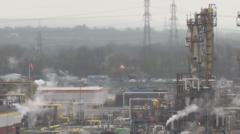
When a single oil company registers nearly 500 environmental violations in a condensed timeframe, the public reaction usually follows a predictable script. Outrage flares on social media. Regulators issue sternly worded press releases. Small fines are levied, often amounting to less than a day’s worth of operational profit for the firm in question. But viewing these incidents as a series of unfortunate accidents or "oversights" misses the cold, mechanical reality of modern energy production. These are not glitches. They are an integrated part of a business model that treats the environment as a line item on a balance sheet where the cost of compliance is weighed against the speed of extraction.
The math of modern drilling is brutal and unforgiving. To understand how a firm reaches hundreds of breaches—ranging from illegal methane venting to toxic water runoff—one must look at the pressure of the quarterly earnings report. In the current energy market, speed is the only metric that truly matters to shareholders. If stopping production to repair a faulty valve costs $500,000 in lost output, but the fine for letting it leak is only $50,000, the "rational" business decision is to keep the oil flowing. This is the calculated gamble that defines the industry today. Don't forget to check out our earlier post on this related article.
The Infrastructure of Negligence
Most people imagine environmental violations as catastrophic oil spills that coat coastlines in black sludge. While those events capture headlines, the reality of these 500 violations is far more mundane and, in many ways, more insidious. The vast majority of these breaches involve "minor" leaks, permit "exceedances," and reporting "failures."
The cumulative impact of hundreds of minor leaks is often greater than a single high-profile disaster. When a company ignores small maintenance tasks across thousands of miles of pipeline, they are essentially subsidized by the local ecosystem. The soil absorbs the chemicals. The local water table bears the burden of the runoff. The air quality in nearby communities takes the hit. By the time a regulator notices the pattern, the profit has already been banked and moved into new capital expenditures. If you want more about the history of this, Reuters Business provides an informative summary.
The legal framework currently in place was designed for a different era of industry. It assumes that companies are acting in good faith and that violations are anomalies. It does not account for a systematic approach where breaking the law is simply a "cost of doing business." When a company hits their 100th or 400th violation, the "accidental" narrative loses all credibility.
Why Regulators Are Failing to Stop the Pattern
If the system worked as intended, a company with a triple-digit violation record would face more than just fines. They would face a revocation of their right to operate. However, the relationship between big energy and the state is a complex web of dependency. Many regions rely so heavily on the tax revenue and employment provided by these firms that they lack the political will to enforce meaningful consequences.
The regulatory bodies themselves are often outgunned. An agency might have a handful of inspectors tasked with overseeing thousands of active wells and miles of aging infrastructure. These inspectors are often looking at data provided by the companies themselves. It is a system built on self-reporting, which is inherently flawed when the incentives for honesty are nonexistent.
The Paper Trail of Inaction
When you look at the logs of these violations, a pattern of "repeat offenses" emerges. The same facility will be flagged for the same issue—perhaps a leaking storage tank—multiple times over several years.
- Year One: The leak is identified. A small fine is issued.
- Year Two: The repair is "delayed" due to supply chain issues or budget constraints.
- Year Three: The leak continues, now at a higher volume. Another fine is issued, which is still lower than the cost of a full tank replacement.
This cycle continues until the facility is eventually decommissioned, leaving the cleanup costs to the public while the company moves its assets into a new subsidiary to shield itself from further liability.
The Financial Shield of Corporate Layering
One reason these companies can rack up hundreds of violations without facing a "corporate death penalty" is the use of complex holding structures. A major oil firm is rarely a single entity. It is a collection of hundreds of smaller LLCs and subsidiaries. When a particular operation becomes too bogged down in environmental lawsuits or violations, the parent company can simply starve that subsidiary of capital or declare it bankrupt.
This shell game makes it nearly impossible for local governments to hold the actual decision-makers accountable. The person signing the checks in a skyscraper in Houston or London is insulated from the environmental devastation occurring in a rural field or a coastal marsh. They are protected by layers of legal shielding that treat each drilling site as an independent risk, rather than part of a coordinated corporate strategy.
The Myth of Modern Technology as a Cure-All
Industry advocates often point to "smart" monitoring and automated shut-off valves as the solution to environmental breaches. They claim that technology will make these 500 violations a thing of the past. This is a half-truth at best. Technology is only effective if it is maintained and if the data it produces is acted upon.
We have seen cases where automated sensors flagged a leak, but the alerts were ignored by human operators who were under orders to meet production quotas. Technology cannot fix a culture that prioritizes volume over safety. In fact, reliance on automation can sometimes lead to a "set it and forget it" mentality that allows small problems to snowball into massive environmental liabilities.
The High Cost of Cheap Energy
The public often views these environmental violations as a problem for "the environment," as if that were something separate from human health and economic stability. But there is a direct line from a leaking methane valve to rising respiratory issues in nearby towns. There is a direct connection between contaminated groundwater and falling property values.
When an oil firm breaks the rules 500 times, they are essentially taking a loan from the future. They are extracting value today and leaving the bill for someone else to pay tomorrow. The "cheap" energy we consume is only cheap because the true costs—the healthcare costs, the cleanup costs, the climate costs—are not included in the price at the pump.
Dismantling the Status Quo
To stop this cycle, the consequences for environmental negligence must move beyond the financial realm. Fines are not enough when they can be budgeted for.
- Mandatory Operational Halts: Any facility that records more than three major violations in a twelve-month period should be legally required to cease operations until an independent audit is completed.
- Executive Liability: If a company reaches a certain threshold of systemic violations, the executive leadership should be held personally liable. The "I didn't know" defense should not hold up when the data clearly shows a pattern of hundreds of breaches.
- Transparency in Ownership: We need to pull back the curtain on the subsidiary model. Parent companies must be held responsible for the environmental records of every entity they control, regardless of the legal "firewalls" they have built.
The era of treating the Earth as a free disposal site for industrial waste is ending, but it will not go quietly. The companies currently racking up hundreds of violations are betting that they can outrun the law and outlast the public's attention span. They believe that as long as the lights stay on and the fuel keeps flowing, no one will look too closely at the trail of destruction they leave behind. They are wrong. The data is clear, the damage is visible, and the patience of the public is wearing thin.
The next time a report surfaces showing a company has broken the rules hundreds of times, don't ask how it happened. Ask why we continue to let them get away with it. The solution isn't better technology or more "dialogue" with industry stakeholders. It is the simple, rigorous application of the law to those who believe they are above it.