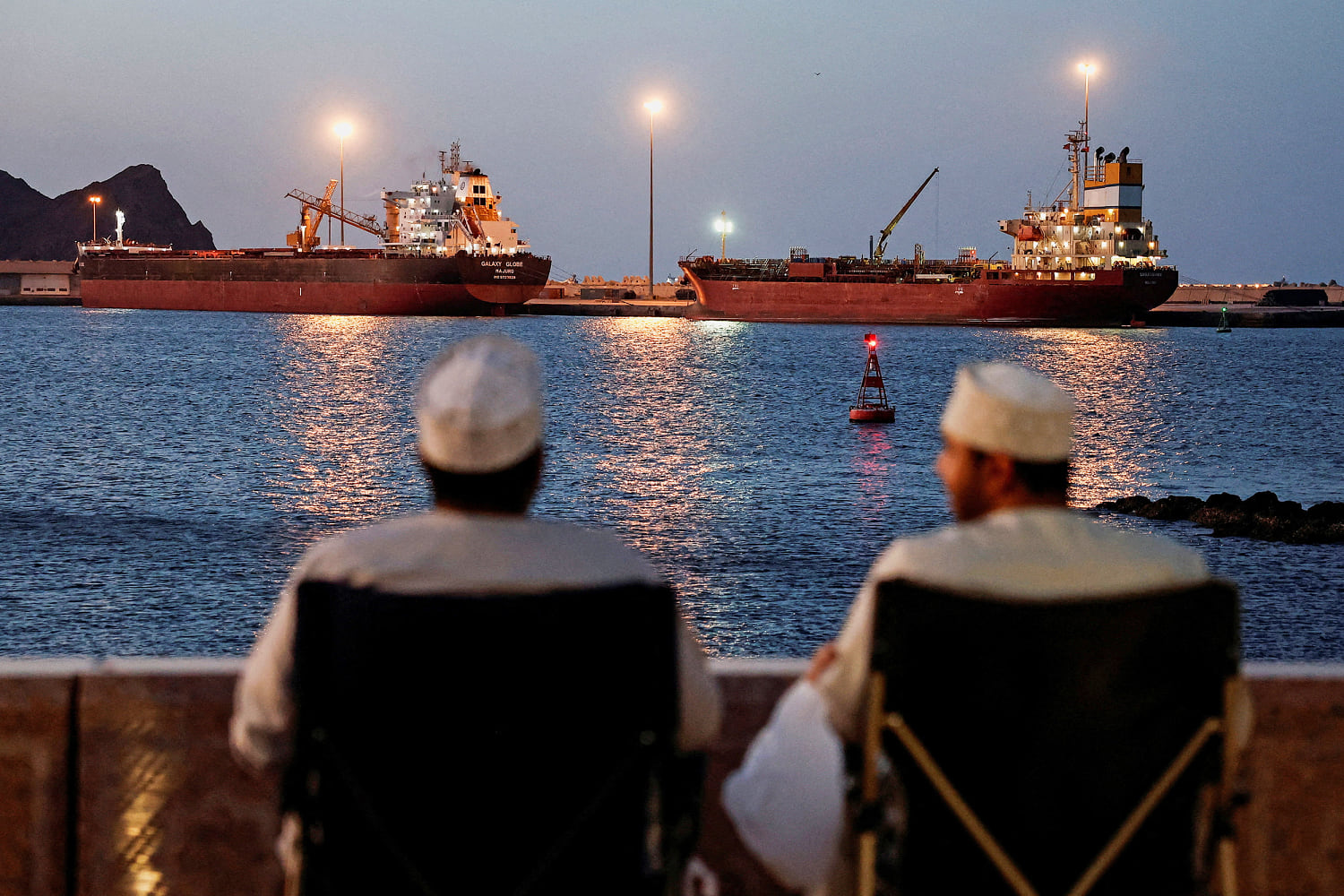
The Strait of Hormuz is not merely a geographic waterway; it is the single most critical failure point in the global energy supply chain, where 21 million barrels of oil—roughly 21% of global consumption—must pass through a shipping lane only two miles wide in each direction. While media narratives often focus on "tension," a structural analysis reveals that the difficulty of moving oil through this corridor is a function of three intersecting vectors: kinetic risk saturation, insurance premium elasticity, and asymmetric naval doctrine. When these three factors align, the cost and logistical complexity of transit scale exponentially rather than linearly.
The Architecture of Transit Constraints
The physical reality of the Strait dictates the operational limits of global energy markets. Ships do not simply "sail through" the Gulf; they navigate a strictly defined Traffic Separation Scheme (TSS).
- The Geographic Bottleneck: The strait narrows to approximately 21 miles at its thinnest point. However, the width of the shipping lanes is even more restrictive. To prevent collisions, the TSS consists of two-mile-wide inbound and outbound lanes, separated by a two-mile-wide buffer zone.
- Territorial Overlap: Most of the navigable depth for deep-draft Supertankers (VLCCs) lies within the territorial waters of Iran and Oman. This creates a legal friction point where the right of "transit passage" under the United Nations Convention on the Law of the Sea (UNCLOS) is constantly tested by domestic maritime enforcement.
- Volume Density: Because such a massive percentage of the world’s seaborne oil originates from just five ports (Ras Tanura, Umm Said, Das Island, Kharg Island, and Mina al-Ahmadi), the concentration of high-value targets in a narrow space makes traditional convoy protection statistically difficult for naval forces to maintain 24/7.
The Cost Function of Kinetic Risk
The difficulty of transit is best quantified through the "War Risk Premium." In stable periods, insurance is a negligible line item in a voyage charter. In periods of heightened kinetic risk—characterized by drone strikes, limpet mine attachments, or boarding actions—this cost function shifts toward a "per-transit" surcharge.
Insurance and Indemnity Volatility
When a vessel enters a "Listed Area" as defined by the Joint War Committee (JWC) in London, the base hull and machinery insurance no longer applies. Owners must purchase a "breach" premium.
- Premium Spikes: During active conflict windows, these premiums can jump from 0.01% to 0.5% of the ship's value. For a VLCC valued at $120 million, a single seven-day trip through the Strait can cost $600,000 in insurance alone before a drop of fuel is burned.
- The Reinsurance Trap: If primary insurers cannot find backup in the reinsurance market, they stop issuing coverage entirely. Without insurance, a vessel cannot dock at most international terminals, effectively "bricking" the fleet regardless of whether the Strait is physically blocked.
Asymmetric Maritime Doctrine and the "Swarm" Variable
The difficulty of securing the Strait stems from a mismatch in naval philosophy. Western navies are built around "Blue Water" dominance, utilizing large, multi-role destroyers and carrier strike groups. Conversely, regional actors—specifically the Islamic Revolutionary Guard Corps Navy (IRGCN)—utilize a "Green Water" asymmetric doctrine.
The Swarm Logic
The IRGCN employs hundreds of Fast Attack Craft (FAC) and Fast Inshore Attack Craft (FIAC). These vessels are small, highly maneuverable, and armed with anti-ship missiles or rocket launchers.
- Saturation Attacks: A single billion-dollar destroyer can track and engage multiple targets, but it can be overwhelmed by a coordinated swarm of 50 low-cost boats. The "cost-to-kill" ratio is heavily skewed in favor of the asymmetric actor.
- The Drone Integration: The introduction of One-Way Attack (OWA) Unmanned Aerial Vehicles (UAVs) adds a vertical dimension to the chokepoint. These assets are launched from mobile land-based platforms, making them nearly impossible to neutralize via preemptive strikes without significant escalation.
The Myth of Total Blockage vs. The Reality of Friction
A common misconception is that the Strait must be physically "closed" with sunken ships to disrupt the market. In reality, the "Hard to Get Through" factor is driven by Operational Friction.
The Tactical Delay Factor
If a shipping company decides to implement "Defensive Measures," the entire supply chain slows down.
- Deviation and Slow Steaming: Ships may wait outside the Gulf of Oman for naval escorts to form. A three-day wait for a convoy formation reduces the global effective fleet capacity by a measurable percentage, tightening the charter market.
- Nighttime Transit Suspension: During high-threat periods, many operators refuse to transit at night to avoid stealthy mine-laying or small-boat approaches. This effectively halves the throughput capacity of the Strait.
The Shallow Water Acoustic Challenge
The Strait’s hydrography complicates anti-submarine warfare (ASW) and mine counter-measures (MCM).
- Acoustic Shadowing: High ambient noise from heavy commercial traffic and varying salinity levels create "dead zones" for sonar. This allows small, diesel-electric submarines to sit on the seafloor and remain virtually invisible to surface ships.
- The Mine Menace: Modern smart mines can be programmed to ignore small patrol boats and only detonate when the specific acoustic signature of a laden oil tanker passes overhead. Clearing these requires specialized vessels that move at 2-3 knots, turning the Strait into a parking lot.
Alternative Infrastructure Limitations
The argument that pipelines mitigate the difficulty of the Strait is structurally flawed. While Saudi Arabia and the UAE have invested in bypass infrastructure, the math does not support a total redundancy.
- The East-West Pipeline (Petroline): Spanning Saudi Arabia to the Red Sea, it has a nameplate capacity of roughly 5 million barrels per day (mbpd). Even at full surge, it handles less than 25% of the volume currently transiting Hormuz.
- The Abu Dhabi Crude Oil Pipeline (ADCOP): This bypasses the Strait to the port of Fujairah but only handles about 1.5 mbpd.
- The Red Sea Paradox: Even if oil is diverted to the Red Sea to avoid Hormuz, it then enters the Bab el-Mandeb strait, another high-risk chokepoint. This does not eliminate risk; it merely relocates it to a different geographic constraint.
Strategic Operational Forecast
The difficulty of moving oil through the Strait of Hormuz will remain high because the "chokepoint" is now digital and psychological as much as it is physical. Cyber-spoofing of Automatic Identification System (AIS) signals is the new frontier of this friction. By broadcasting false GPS coordinates, regional actors can lure tankers into contested territorial waters, providing a legal pretext for seizure.
Strategic Recommendation for Market Operators:
Energy entities must shift from a "Just-in-Time" maritime model to a "Resilient Buffer" model. This requires:
- On-Shore Storage Expansion: Increasing inventory at the destination (e.g., Strategic Petroleum Reserves in Asia) to decouple daily consumption from daily transit.
- Contractual Hardening: Redesigning Force Majeure clauses to specifically address "Asymmetric Maritime Friction" rather than just "Acts of War," as the latter is often too high a legal bar to trigger during low-intensity gray-zone conflict.
- Electronic Warfare Hardening: Investing in redundant, non-GNSS navigation systems for the commercial fleet to counter signal spoofing during the 21-mile transit window.
The Strait of Hormuz is not a problem to be solved, but a permanent geographic tax on the global economy. Understanding the specific mechanics of its friction—rather than reacting to the rhetoric of its closure—is the only way to navigate the volatility of the coming decade.