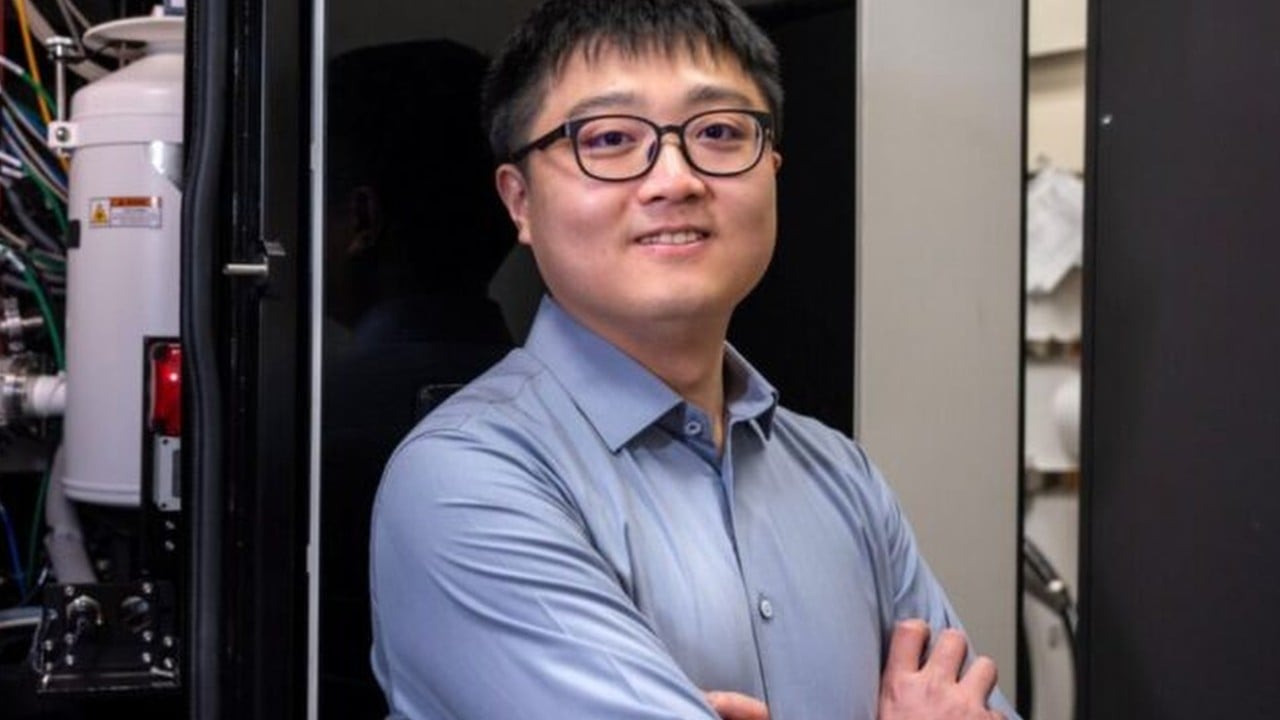
Science isn't just about laboratory breakthroughs and shiny rockets anymore. It’s messy, political, and lately, it’s getting tragic. This week, the headlines feel more like a geopolitical thriller than a research journal. Between a brilliant mind lost in a Michigan stairwell and a "game-changing" rocket falling out of the sky, it's clear that the friction between nations is starting to burn the very people pushing us forward.
If you're looking for the pulse of where we stand right now, these seven stories don't just show progress—they show the price of it.
The Tragic Death of Wang Danhao
The most sobering news of the week comes from the University of Michigan. The Chinese embassy recently confirmed the death of Wang Danhao, a postdoctoral researcher who was, by all accounts, a rising star in semiconductor physics. Wang didn't die of natural causes; he took his own life on March 19, just a day after being questioned by U.S. federal law enforcement.
The details are chilling. Wang fell from an upper level of the George G. Brown Building on campus. Chinese officials are rightfully furious, accusing the U.S. of "overstretching" national security concerns to harass scholars. Wang's research focused on wide bandgap III-nitride materials—tech that's essential for the next generation of high-power electronics and light-detecting devices.
His Google Scholar profile had over 4,000 citations. He was only in his late 20s. Whether you call it "national security" or "academic profiling," the result is a massive loss for global science. When we turn researchers into suspects, the whole world loses the breakthroughs they were supposed to find.
China's SpaceX Challenger Stumbles
While SpaceX usually hogs the spotlight, China's private space sector has been sprinting to catch up. Space Pioneer (also known as Beijing Tianbing Technology) tried to launch its Tianlong-3 rocket on Friday. This is China's answer to the Falcon 9—a heavyweight, reusable workhorse designed to help build China’s version of the Starlink constellation.
It didn't go well. The rocket suffered a "flight anomaly" and failed. This is a significant setback for China’s hopes of breaking the satellite internet bottleneck. If they want to compete with Starlink’s 6,000+ satellites, they need the Tianlong-3 to work. For now, the road to a Chinese megaconstellation just got a lot longer.
The Yale Exodus and the Brain Drain
It’s not just about who’s dying; it’s about who’s leaving. Zhang Kai, a tenure-track scientist at Yale University, has officially resigned to join the University of Science and Technology of China (USTC).
Zhang is a heavy hitter in life sciences, and his departure follows a growing trend of Chinese-born researchers feeling "impossible" pressure in the U.S. system. We're seeing a literal reversal of the 1990s brain drain. China is aggressively recruiting, and the U.S. is making it easier for them by creating a climate of suspicion.
Gravity Detectors and the End of Stealth
Chinese researchers just unveiled a gravity-detecting SQUID (Superconducting Quantum Interference Device) with world-leading precision. Why should you care? Because this tech could make the ocean "transparent."
Current sonar can be tricked or silenced. Gravity cannot. A SQUID-based detector picks up the tiny gravitational pull of a massive object—like a U.S. nuclear submarine. If China perfects this, the tactical advantage of deep-sea stealth vanishes. This isn't just a science highlight; it's a total shift in naval warfare.
The Missing Link in Brain Health
On a more hopeful note, scientists have finally solved a 30-year mystery regarding a micronutrient called queuosine. We’ve known for decades that we need this stuff for brain health and cancer defense, but we didn't know how our bodies actually absorbed it.
Researchers at the University of Florida and Trinity College Dublin identified a gene called SLC35F2 as the "gatekeeper" that allows queuosine to enter our cells. This opens the door to new therapies for schizophrenia and memory decline. It’s a reminder that even while the world is fighting over chips and rockets, some people are still doing the quiet work of figuring out how we stay alive.
Jam-Proof Navigation
GPS is surprisingly easy to jam. Ask anyone who has flown a drone near a conflict zone. Tsinghua University researchers have built an 11-satellite network that uses coded light signals instead of radio waves.
They’re calling these "lighthouses in space." Because they use optical signals, they’re virtually impossible to jam with traditional electronic warfare. This tech is aimed at self-driving cars and deep-space missions where losing a signal means losing a multi-million dollar asset.
The Singaporean Shift
In another win for Tsinghua, they’ve managed to snag Seeram Ramakrishna, Singapore’s most cited scientist. Ramakrishna is a legend in materials science and nanotechnology.
Moving from the National University of Singapore to a full-time role in Beijing is a massive statement. It signals that the center of gravity for high-end research is shifting toward the East. It’s no longer about "copying" Western tech; it’s about owning the minds that create it.
What You Should Do Next
The world is changing fast, and the barrier between "science" and "politics" has disappeared. If you're a student or a researcher, stay mobile but stay aware. The days of "borderless science" are under threat.
Keep an eye on the Tianlong-3 re-test; that will tell us if China can actually challenge SpaceX this decade. More importantly, watch the funding. If the U.S. keeps losing minds like Zhang Kai, the "science highlights" of 2027 won't be coming from Ivy League labs.