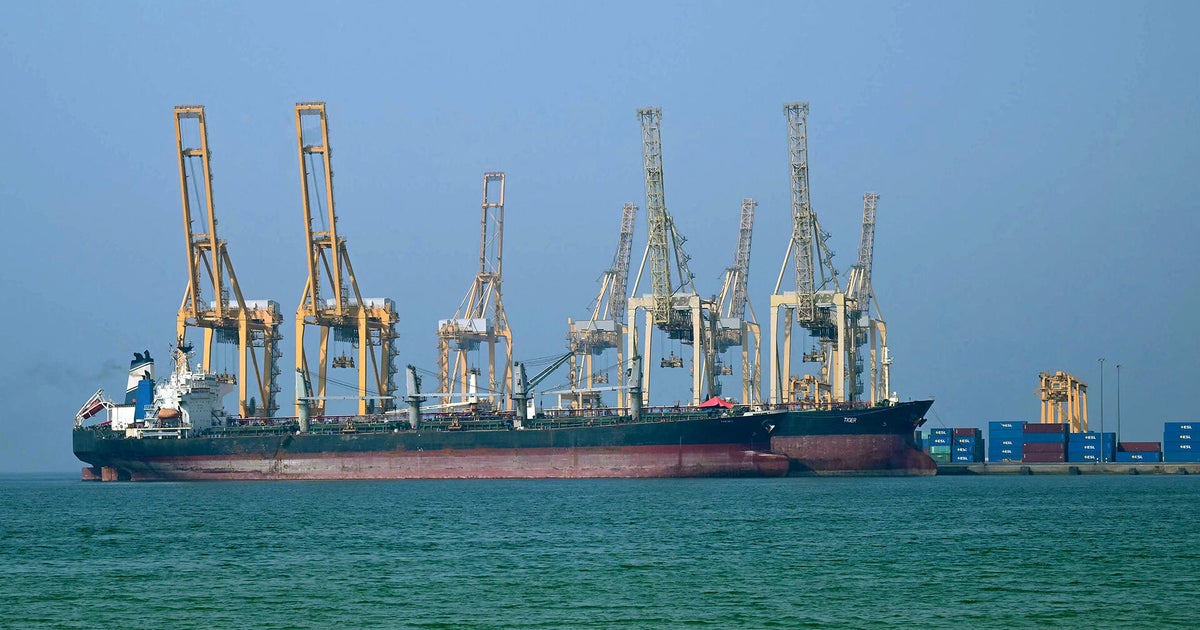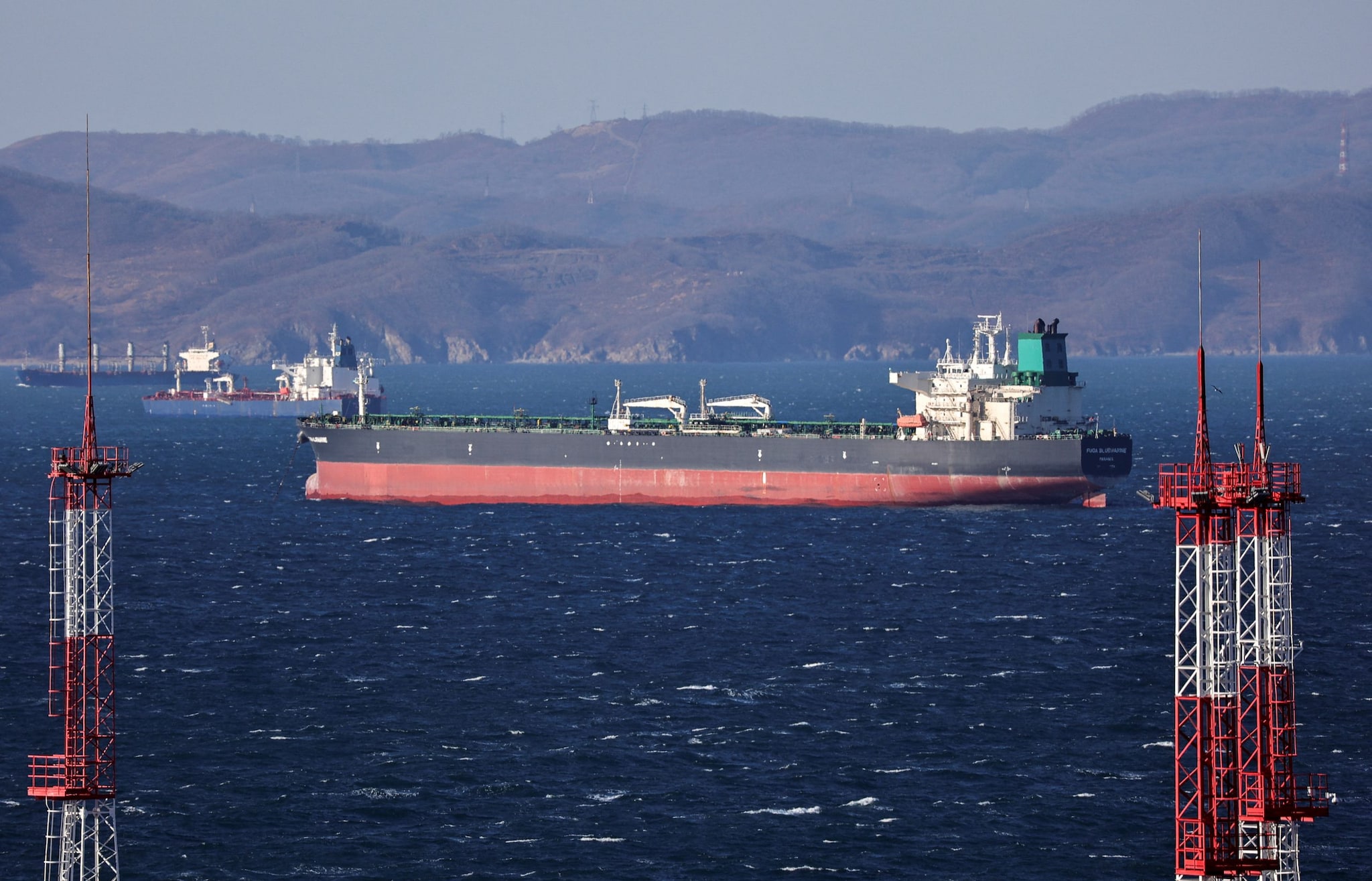
The headlines are screaming about evacuation. They want you to believe that a few hits on tankers near Oman and a cleared-out oil port signify the end of the modern energy era. They are selling you fear because fear gets clicks, but the reality is far more mundane. The "crisis" in the Gulf isn't a supply catastrophe; it is a stress test that the market has already passed.
Most analysts are stuck in 1973. They see a tanker on fire and immediately start drawing parallels to the Great Oil Shock. They are wrong. The structural mechanics of the global oil trade have shifted so fundamentally that these regional skirmishes are little more than a temporary tax on insurance premiums. If you are panic-buying energy stocks or hoarding fuel based on the evacuation of an Omani port, you are the victim of a shallow narrative.
The Myth of the Chokepoint
The prevailing wisdom suggests that the Strait of Hormuz is a binary switch for the global economy. The logic goes: if the ships stop moving, the world stops spinning.
This ignores the massive expansion of internal pipelines and alternative routes that have been quietly built over the last two decades. Saudi Arabia’s East-West Pipeline (Petroline) can move five million barrels per day to the Red Sea, bypassing the Gulf entirely. The Abu Dhabi Crude Oil Pipeline (ADCOP) can shunt 1.5 million barrels per day to Fujairah, outside the Strait.
When a port in Oman evacuates, it isn't because the oil is gone. It's because the logistical overhead of operating in a high-friction zone briefly outweighed the immediate spot-market gain. The oil finds another way. The global supply chain is no longer a fragile glass straw; it is a decentralized web.
The Insurance Premium Mirage
You’ll see the "Brent Crude jumps 4%" headlines every time a drone flies near a hull. Watch the charts. Those spikes are almost always "paper" moves driven by algorithmic trading bots reacting to sentiment, not physical shortages.
I have watched traders burn through millions trying to play these geopolitical swings. They forget that the physical market is flooded with hidden inventories. We are currently living in an era of structural oversupply. Between US shale, Guyana’s emerging dominance, and Brazil’s offshore surges, the world is swimming in crude.
A localized evacuation in the Gulf is a boon for shipping insurers and private security contractors. It is not a death knell for the consumer. The "War Risk" surcharges you see applied to freight rates are a transfer of wealth from oil majors to insurance syndicates. They do not represent a lack of oil; they represent the cost of doing business in a messy world.
Why the "Oil Weapon" is Blunted
In the 1970s, the Middle East held the world hostage. Today, the hostage has a gun and a back door.
If any regional power actually succeeded in closing the Gulf for an extended period, they would be committing financial suicide. The countries most dependent on those shipping lanes aren't the Western nations—who are increasingly energy-independent—but the very nations doing the exporting.
Imagine a scenario where the Strait is actually blocked for thirty days.
- The exporters lose 100% of their primary revenue stream.
- The price spike accelerates the global transition to renewables and nuclear by a decade.
- The US releases the Strategic Petroleum Reserve (SPR), flooding the market and keeping the lights on.
The "crisis" is a theatrical performance. Both sides know exactly how much pressure to apply without breaking the mechanism that feeds them. The evacuation of a port is a tactical repositioning, not a strategic collapse.
The Real Threat is Boredom, Not Blockades
The danger isn't that we run out of oil. The danger is that the constant "crisis" narrative masks the real shift: the irrelevance of the Gulf as the sole arbiter of global energy prices.
While the media focuses on Omani evacuations, the real story is happening in the Permian Basin and the deep waters of the Atlantic. The Atlantic Basin is becoming the new center of gravity. We are seeing a "de-risking" of energy geography.
People also ask: "Will gas prices double if the Gulf closes?"
The answer is a flat no. Refineries have diversified their slates. A disruption in the Gulf might lead to a temporary $10-15 bump in the barrel price, but the idea of $200 oil because of a regional skirmish is a fantasy used to sell newsletters.
Stop Watching the Tankers, Watch the Inventories
If you want to know the truth about the "worsening crisis," stop looking at videos of smoke on the horizon. Look at the global commercial stock levels.
If inventories are high, a hit ship is an anomaly. If inventories are low, a hit ship is a problem. Right now, inventories are comfortable. The "evacuation" is a safety protocol being followed by a risk-averse corporation. It is standard operating procedure being framed as an apocalypse.
The market has priced in the chaos. It has built scar tissue around the Strait of Hormuz. We have reached a point where geopolitical instability is the baseline, not the exception. When you treat the exception as the rule, you lose the ability to see the actual trends.
The Actionable Truth
For those looking to navigate this volatility:
- Ignore the "Breaking News" banners. If the oil isn't stopped for more than 72 hours, the price movement is purely speculative.
- Bet on logistics, not just the commodity. The companies that own the pipelines bypassing the Gulf are the real winners when the ports close.
- Understand the "Fear Discount." Often, the best time to buy is when the headlines are at their most hysterical. The recovery is usually faster than the panic.
The Gulf is a theater of shadows. The ships will return. The ports will reopen. The oil will flow because it has nowhere else to go and the world has too many other places to get it.
Stop treating every flare-up like the end of the world. It’s just Tuesday in the energy sector.
Don't buy the hype. Buy the dip when the panicked masses sell their energy ETFs because they saw a grainy video of a Coast Guard vessel. The real power move is recognizing that the world is far more resilient than the news cycle wants you to believe.
Stop asking if the Gulf is closing and start asking why you’re still listening to people who have been predicting a 1973-style collapse every year for the last three decades. If they were right, we'd all be riding bicycles by now.
Instead, look at the spread between Brent and WTI. Look at the VLCC (Very Large Crude Carrier) rates. If the owners of the actual ships aren't scuttling their fleets, you shouldn't be scuttling your portfolio.
The crisis is a distraction. The reality is a glut.
Move your eyes away from the smoke and look at the storage tanks. That’s where the truth is buried.
Would you like me to analyze the specific pipeline capacities of the Middle East to show you exactly how much oil can bypass the Strait of Hormuz today?