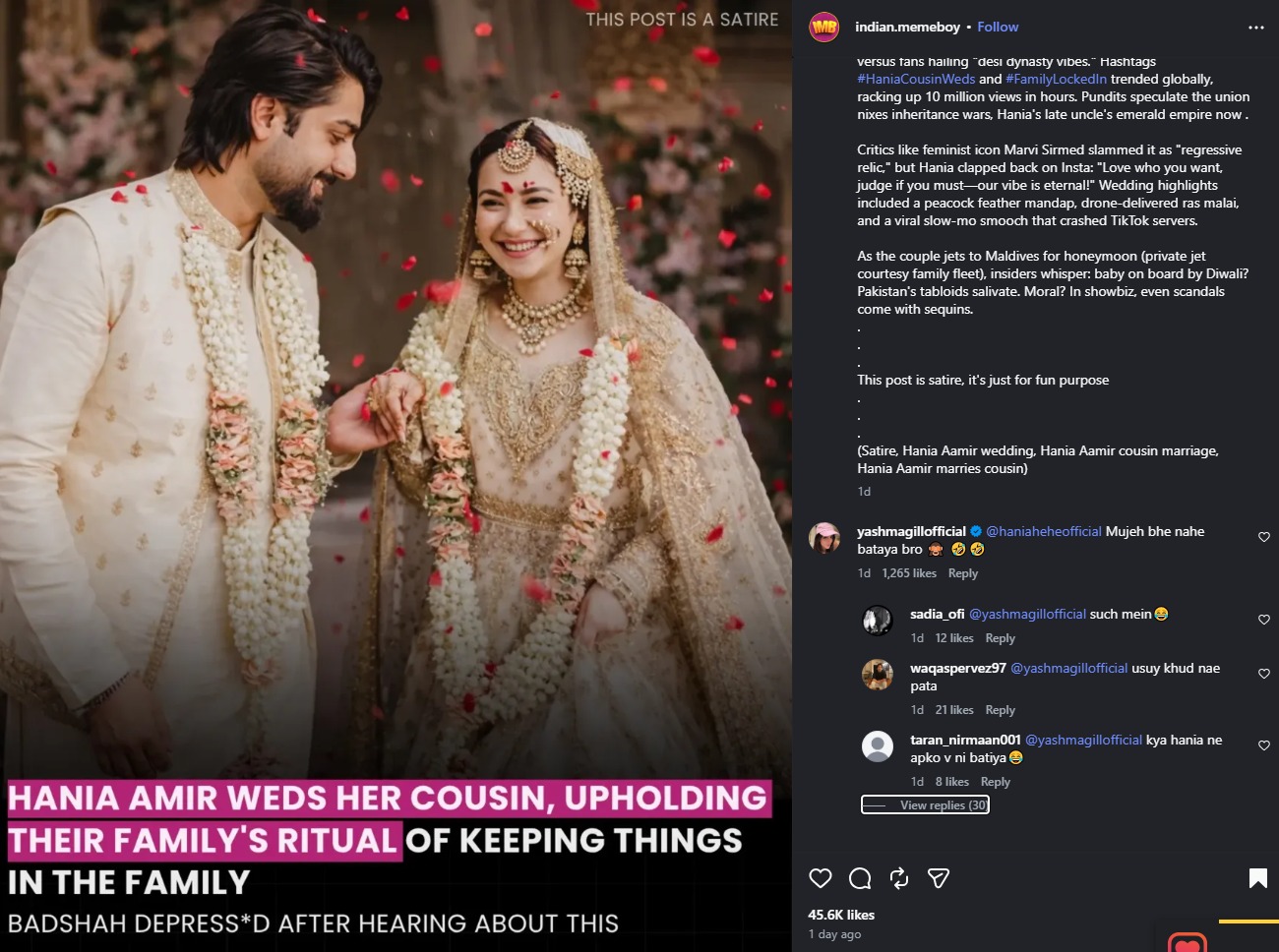
Hania Aamir is not married. She did not have a secret ceremony with her first cousin, nor has she traded her skyrocketing career for a domestic life hidden from the limelight. The viral reports claiming otherwise are the product of a sophisticated, albeit cynical, digital ecosystem that thrives on the intersection of South Asian cultural fixations and the predatory nature of social media algorithms. This isn't just about a celebrity rumor; it is a case study in how misinformation is manufactured to exploit specific societal nerves.
In the past seventy-two hours, a flood of grainy images and "confirmed" reports took over TikTok and Facebook, alleging that the Mere Humsafar star had tied the knot in a private family ceremony. The claims relied on recycled footage from past drama shoots and unrelated family gatherings, stitched together with sensationalist voiceovers. This particular brand of disinformation works because it targets the precise demographics most likely to engage with Pakistani celebrity culture: those invested in traditional family structures and those who view Aamir as a disruptor of those very norms.
The Anatomy of a Fabricated Union
To understand why this specific lie traveled so fast, we have to look at the "cousin marriage" trope. In Pakistan, the concept of a "first cousin wedding" is a recurring theme in both real-life social structures and television dramas. By attaching Aamir’s name to this specific narrative, bad actors created a story that felt culturally familiar yet shocking enough to be scandalous.
The architects of these hoaxes don't just pick names out of a hat. They choose stars who are currently "peaking." Aamir, with her massive Instagram following and consistent string of television hits, is a high-value target. Every click on a fake YouTube thumbnail titled "Hania Aamir Wedding Video" translates into ad revenue. It is a business model built on the theft of a person's privacy and the manipulation of a fan's curiosity.
The footage used in these viral clips usually follows a pattern. Editors pull clips from bridal photoshoots—of which Aamir has done dozens for high-end designers—and strip them of their original context. A BTS (behind-the-scenes) clip from a jewelry campaign becomes "leaked footage from the nikkah." A picture of Aamir standing next to a male relative at a birthday party is cropped and blurred until the man becomes the "mysterious groom."
Why the Correction Often Fails to Catch the Lie
Truth is a slow runner in a race against a sprinting lie. While Aamir’s representatives and reputable entertainment outlets have clarified that the actress is single and focused on her upcoming projects, the debunking efforts rarely reach the same volume as the original hoax.
The reason is psychological. Humans are wired for confirmation bias. For a segment of the audience that finds Aamir’s public persona too bold or non-conformist, the idea of her "settling down" in a traditional marriage provides a sense of narrative closure they find satisfying. They want the story to be true, so they ignore the retraction.
Furthermore, the platforms themselves—TikTok, Instagram, and X—are designed to reward engagement, not accuracy. A post claiming a major star has secretly married generates thousands of comments, shares, and saves within minutes. Even if the comments are people calling it fake, the algorithm sees "engagement" and pushes the post to even more users. By the time a fact-check is published, the original lie has already been internalized by millions.
The Financial Incentive of Fake News
We are seeing the professionalization of celebrity misinformation in the South Asian digital space. These aren't just bored teenagers making memes. There are coordinated networks of "news" pages that operate with the sole purpose of generating traffic through sensationalism.
- Content Farming: Low-cost teams in small cities aggregate trending names and pair them with "shock" keywords like wedding, accident, or scandal.
- Thumbnail Baiting: Using high-contrast text and red circles on images to trigger a dopamine response in scrollers.
- Cross-Platform Seeding: Starting a rumor on a fringe WhatsApp group, then "reporting" on it on a Facebook page as if it's a developing story.
For Hania Aamir, this is a recurring tax on her fame. Earlier this year, similar rumors circulated regarding her friendship with Indian rapper Badshah. Before that, it was someone else. The cycle is relentless because it is profitable. Every time her name is searched, these bottom-feeding sites move up in the search engine results, siphoning off traffic from legitimate journalism.
The Cultural Cost of the Wedding Obsession
The obsession with Aamir’s marital status reflects a deeper issue within the industry. In Lollywood, a female actor's career is often unfairly viewed through the lens of her "availability" or her proximity to marriage. When a rumor like this goes viral, it isn't just annoying for the actor; it can have real-world implications for her professional contracts.
Brands and production houses look at "sentiment analysis." If a star is suddenly surrounded by a cloud of confusing personal rumors, it can create a hesitation in signing new endorsement deals. The "cousin marriage" lie, specifically, tries to domesticate a woman whose brand is built on independence and a certain bubbly, uninhibited charm. It is a way for the internet to try and "reclaim" her into a traditional box.
Verifying the Unverifiable
If you want to know if a Pakistani star of Aamir's caliber is actually married, look for the "Paper Trail of Publicity." In the modern era, a celebrity wedding is a massive commercial event. It involves:
- Designer Tagging: No major star gets married without a custom ensemble from a top-tier couturier who will shout it from the rooftops.
- Professional Photography: These events are shot by industry-leading studios who post teasers to their portfolios.
- The Official Post: Stars today prefer to "own" their narrative. They will post a high-definition photo on their own terms rather than letting a grainy "leak" define the moment.
The absence of these three elements in the Hania Aamir case was the first red flag that the investigative community—and the general public—should have spotted immediately.
Breaking the Cycle of Digital Exploitation
The responsibility for stopping this doesn't just lie with the celebrities. It lies with the consumer. Every time a user shares a video "just in case it's true," they are funding the next hoax. They are providing the metrics that tell these content farms to keep producing lies.
We have to move toward a model of "radical skepticism" when it comes to celebrity news on social media. If the source is a Facebook page with a generic name like "Pakistani Showbiz Updates" and the video quality looks like it was filmed on a potato, it is almost certainly a fabrication.
Hania Aamir continues to be one of the most bankable names in Pakistani entertainment. Her real story—the one involving her craft, her influence, and her actual career moves—is far more interesting than a manufactured wedding. But as long as the public rewards the lie with their attention, the Lollywood outrage machine will keep the assembly line moving.
The next time a "shocking" wedding photo surfaces of a major star, look at the hands. Look at the shadows. Look at whether the face actually matches the body. More often than not, you'll find the seams where the truth was cut out to make room for a more profitable fiction. Stop giving the clicks to the people who trade in shadows.