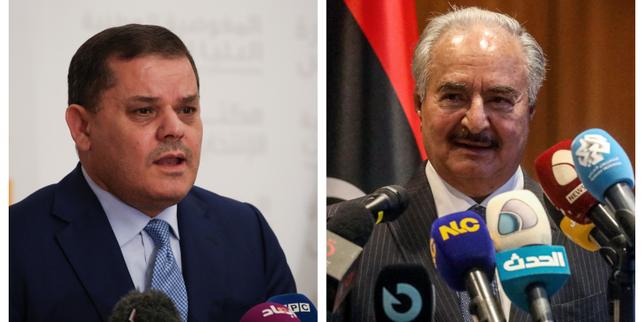
Libya doesn't have a functioning constitution or a unified parliament, so the physical heartbeats of two men have become the country’s most reliable political indicators. When rumors swirled recently about the failing health of Khalifa Haftar in the east and Abdulhamid Dbeibeh in the west, the Libyan dinar didn't just flicker. It shuddered. That’s the reality of a state built on personas rather than institutions. If you're looking for stability in Tripoli or Benghazi, you won't find it in policy papers. You’ll find it in hospital records and the frequency of televised appearances.
The sudden focus on the medical charts of Libya’s "big men" isn't just tabloid gossip. It’s a survival mechanism for a population that’s seen every attempt at elections stall since 2021. When a leader’s health becomes a state secret, it usually means the succession plan is non-existent. Expanding on this topic, you can also read: Why the Green Party Victory in Manchester is a Disaster for Keir Starmer.
Why a Simple Flu Can Trigger a National Crisis
In most places, a leader catching a cold is a footnote. In Libya, it’s a catalyst for militia mobilization. Take Khalifa Haftar, the commander of the Libyan National Army (LNA). He's in his 80s. For years, every time he vanishes from the public eye for more than forty-eight hours, the rumors of a stroke or a heart attack reach a fever pitch.
The reason is simple. Haftar has spent a decade consolidating power within a tight family circle. His sons, Saddam and Khaled, have been fast-tracked through military ranks, but they don't possess their father’s specific brand of charismatic authority over the various tribes and brigades that form the LNA coalition. If Haftar’s health fails, the glue holding eastern Libya together dissolves. You’re not just looking at a change in leadership. You’re looking at a potential civil war within a civil war as different factions scramble to fill the vacuum. Analysts at Associated Press have provided expertise on this trend.
Across the metaphorical border in Tripoli, the situation with Prime Minister Abdulhamid Dbeibeh is different but equally fragile. Dbeibeh represents the "status quo" billionaire class. His power relies on a complex web of patronage and uneasy alliances with powerful western militias. When reports emerged of him seeking medical treatment abroad, the tension in the capital was tactile. Without Dbeibeh at the helm to sign the checks and balance the interests of the Misrata and Tripoli armed groups, the precarious peace in the west could vanish overnight.
The Transparency Problem and the Rise of Disinformation
Libyan political communication is stuck in the 1970s. Official statements are rare, and when they do come, they’re often defensive or demonstrably false. This creates a massive opening for "health weaponization."
I’ve watched how rival factions use social media to kill off their opponents twice a week. A grainy photo of an airplane at a Swiss airport or a fake memo from a French clinic can send the black-market exchange rate into a tailspin.
- The Ghosting Tactic: Leaders stay silent to test the loyalty of their subordinates.
- The Weekend Resurrection: A sudden, high-profile public appearance—often visiting a construction site or a military graduation—to debunk death rumors.
- The Media Blackout: Strict control over local journalists to prevent any mention of "fatigue" or "illness."
This lack of transparency doesn't just annoy diplomats. It actively prevents foreign investment. No company is going to sign a twenty-year oil contract if they think the person signing it might not last twenty weeks. The "Health Premium" is a real tax on the Libyan economy.
Succession by Blood or Succession by Bullet
The most dangerous part of this medical obsession is the lack of a "Plan B." Libya's institutions are hollowed out. The High State Council and the House of Representatives spend more time arguing about who gets to argue than actually legislating.
In the East, the "Haftar Dynasty" is the plan. By promoting his sons to key positions, Haftar is trying to institutionalize his family’s control. But the military officers who fought alongside him for years aren't necessarily keen on taking orders from his children. If Haftar’s health forces a transition, the internal friction could be more violent than any conflict with Tripoli.
In the West, Dbeibeh’s "Government of National Unity" is a misnomer. It’s a government of shifting alliances. There is no clear deputy who could step in and maintain the delicate balance between the various militia leaders who actually control the streets of Tripoli. If Dbeibeh is incapacitated, the various armed groups won't wait for a parliamentary vote. They’ll take to the streets to secure their interests.
The International Community’s Blind Spot
Foreign powers—Turkey, Russia, Egypt, the UAE—all have a stake in the health of these two men. They’ve spent years building relationships with specific individuals rather than the state. This is a massive strategic error.
By backing "strongmen" instead of building resilient institutions, the international community has tied its own regional interests to the biological clock of two aging politicians. It’s a fragile way to run a foreign policy. If you’re an energy company looking at Libyan gas, you’re basically betting on the longevity of a few specific cardiovascular systems. Honestly, it’s a miracle the country hasn't seen more volatility given how much is riding on these individual health outcomes.
Real Steps for Navigating the Libyan Vacuum
If you’re tracking the Libyan situation, stop looking at the official government websites. They won't tell you anything until it's too late.
Start by monitoring the flight paths of executive jets leaving Benina or Mitiga airports. Follow the localized exchange rates for the dinar in the backstreets of Tripoli. These are your real-time indicators. The moment the currency dips without a clear economic reason, someone’s health has taken a turn for the worse.
The only way out of this "health trap" is a return to the electoral process, but the current leaders have zero incentive to organize a vote that might remove them from power. They’d rather rule until their bodies give out than risk a ballot box. For the average Libyan, this means their future is literally tied to the medical reports of men who refuse to tell them the truth. Keep your eyes on the hospital wings, not the parliament halls. That’s where the real power transition will happen.