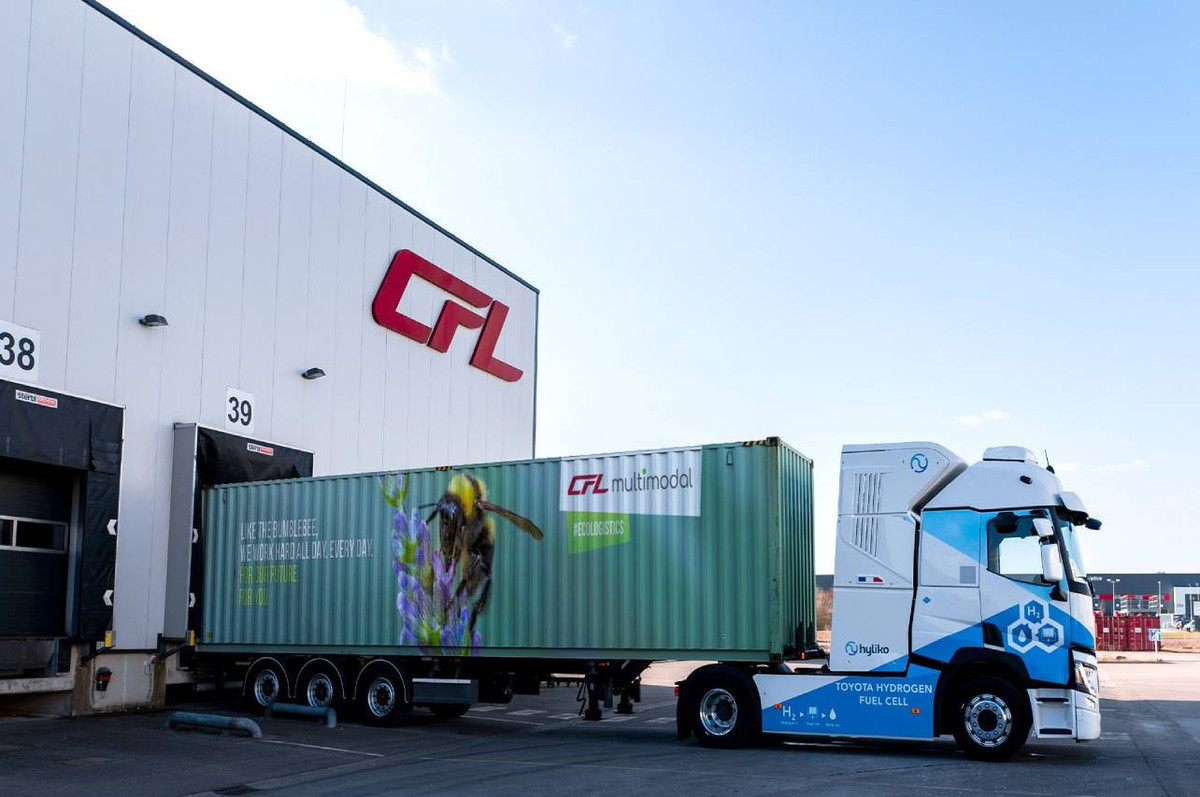
Toyota Motor Corporation’s persistent commitment to hydrogen fuel cell technology is not a sentimental attachment to a legacy R&D project, but a calculated capital allocation strategy designed to mitigate the systemic risks of a monocultural battery electric vehicle (BEV) economy. By maintaining a diversified powertrain portfolio, Toyota is effectively shorting the assumption that global energy infrastructure, resource extraction, and geopolitical stability will align perfectly to support a 100% BEV transition by 2035. This strategy rests on three distinct pillars: thermodynamic efficiency in heavy-duty cycles, supply chain resilience against lithium-ion bottlenecks, and the utilization of hydrogen as a grid-scale energy storage buffer.
The Thermodynamic Limit of Battery Weight Penalties
In passenger vehicles, the energy density of lithium-ion batteries is sufficient for daily commutes. However, as the Gross Vehicle Weight Rating (GVWR) increases, the physics of energy storage begins to favor hydrogen. This is the Logistics Payload Paradox. For every additional kilowatt-hour of battery added to a long-haul truck to increase range, the vehicle’s maximum cargo capacity decreases due to the weight of the battery itself.
[Image of hydrogen fuel cell]
A hydrogen fuel cell system (FCEV) decouples energy and power. To increase range in an FCEV, an engineer adds lightweight carbon-fiber tanks; to increase range in a BEV, an engineer must add heavy battery cells. The crossover point where hydrogen becomes more efficient than batteries typically occurs at the Class 8 trucking level and in high-utilization industrial equipment. By focusing on the Mirai technology as a modular power plant for heavy-duty applications rather than just a sedan, Toyota is positioning itself to dominate the commercial logistics sector where downtime for charging is a direct hit to Net Present Value (NPV).
Supply Chain Geopolitics and Mineral Scarcity
The BEV transition creates a singular point of failure: the rare earth and battery mineral supply chain. The concentration of lithium processing and cobalt mining in specific geographic regions presents a "Key Person Risk" at a global scale. Toyota’s hedge is a response to the following market realities:
- The Lithium Deficit: Even with aggressive recycling, the projected demand for lithium carbonate equivalent (LCE) by 2030 exceeds currently planned extraction capacity.
- Resource Intensity: A single 100kWh BEV battery requires significantly more mineral mass than the 1.6kWh battery in a hybrid or the small buffer battery in an FCEV.
- Price Volatility: Battery prices are susceptible to "Greenflation," where the cost of raw materials offsets the gains made in manufacturing efficiency.
Toyota’s "Multi-Path" approach allows the firm to pivot production based on raw material availability. If lithium prices spike or supply is throttled by geopolitical friction, Toyota can shift its marketing and production focus toward Hybrid Electric Vehicles (HEVs) and FCEVs, which use a fraction of the critical minerals per unit. This is a Real Options strategy, providing the company the right, but not the obligation, to scale different technologies as the external environment dictates.
Hydrogen as a Grid Management Mechanism
The standard critique of hydrogen is its "well-to-wheel" efficiency. Critics point out that converting electricity to hydrogen via electrolysis, compressing it, transporting it, and converting it back to electricity in a fuel cell loses roughly 60% of the initial energy. This analysis is fundamentally flawed because it assumes a static, perfectly balanced grid.
The utility of hydrogen lies in its capacity for Seasonal Energy Storage. Renewable energy sources like wind and solar suffer from intermittency and overproduction. When the grid has a surplus of energy that it cannot store in short-duration batteries, the marginal value of that electricity drops to zero or even becomes negative. Hydrogen production via electrolysis serves as a "demand response" tool. It captures this wasted energy and converts it into a storable, transportable liquid or gas.
Toyota’s involvement in the Woven City project and partnerships with energy providers demonstrate a move toward the "Hydrogen Society" where the vehicle is merely one node in a larger energy ecosystem. In this model, the FCEV acts as a mobile power plant, capable of providing backup power to homes or the grid during peak demand, leveraging the high energy density of compressed H2.
The Infrastructure Bottleneck and the "Chicken or Egg" Resolution
The primary friction point for FCEVs is the lack of refueling infrastructure. Toyota is bypassing the consumer refueling problem by focusing on Clustered Industrial Hubs. By deploying hydrogen trucks and buses in specific corridors—ports, warehouses, and fixed municipal routes—they create predictable demand. This "Hub and Spoke" deployment model allows for the installation of high-capacity refueling stations that operate at high utilization rates from day one, solving the CAPEX recovery problem that plagues scattered consumer-facing stations.
This structural approach mirrors the early days of diesel infrastructure. It does not require a nationwide network to be viable; it only requires viability within high-volume commercial loops. Once the industrial backbone is established, consumer infrastructure can be added as a secondary, lower-risk layer.
Operational Realities: Refueling vs. Recharging
For commercial operators, the metric of success is Total Cost of Ownership (TCO), of which "Time to Refuel" is a critical variable. A BEV semi-truck requires a multi-megawatt charging station to achieve a 30-to-60-minute charge time. The electrical infrastructure required to support a fleet of 50 such trucks is equivalent to the peak load of a small city.
Conversely, a hydrogen truck can refuel in 10 to 15 minutes, mimicking the operational cadence of internal combustion engines. This allows for:
- Higher vehicle utilization (more miles driven per 24-hour cycle).
- No requirement for massive grid upgrades at every depot.
- Consistency in extreme climates, where BEV range can drop by 30-40% due to battery thermal management requirements.
Strategic Vulnerabilities and Technical Limitations
A rigorous analysis must acknowledge the "Hydrogen Trap." The current cost of Green Hydrogen (produced via renewables) is significantly higher than Gray Hydrogen (produced from natural gas via steam methane reforming). For Toyota’s strategy to achieve mass-market solvency, the cost of electrolysis must continue its current downward trajectory, driven by the scaling of Proton Exchange Membrane (PEM) electrolyzers.
Furthermore, hydrogen storage remains a material science challenge. Storing H2 at 700 bar requires expensive, high-strength tanks, and liquid hydrogen requires cryogenic temperatures of -253°C. These are not insurmountable obstacles, but they represent a "Complexity Tax" that BEVs do not pay. Toyota is betting that the "Resource Tax" on batteries will eventually exceed the "Complexity Tax" of hydrogen.
The Final Strategic Play
The automotive industry is currently in a state of Technological Divergence. While competitors like Tesla and Volkswagen have committed to a "Battery Only" path, Toyota is operating as a diversified energy conglomerate. The move is a classic hedge: if the battery supply chain stabilizes and solid-state batteries arrive ahead of schedule, Toyota’s HEV and PHEV (Plug-in Hybrid) line remains profitable. However, if the grid fails to scale, or if mineral shortages cripple BEV production, Toyota will be the only OEM with a mature, commercialized hydrogen alternative.
The tactical move for observers is to stop viewing the Mirai as a competitor to the Model 3. Instead, view Toyota’s hydrogen stack as a modular energy solution being piloted in the passenger sector to be perfected for the heavy-duty, maritime, and stationary power sectors. The ultimate winner will not be the company with the best battery, but the company that best manages the transition from fossil fuels to a diverse array of energy carriers. Toyota is not keeping hydrogen as a "hedge" in the sense of a backup plan; they are building the infrastructure for a post-lithium-constraint economy.