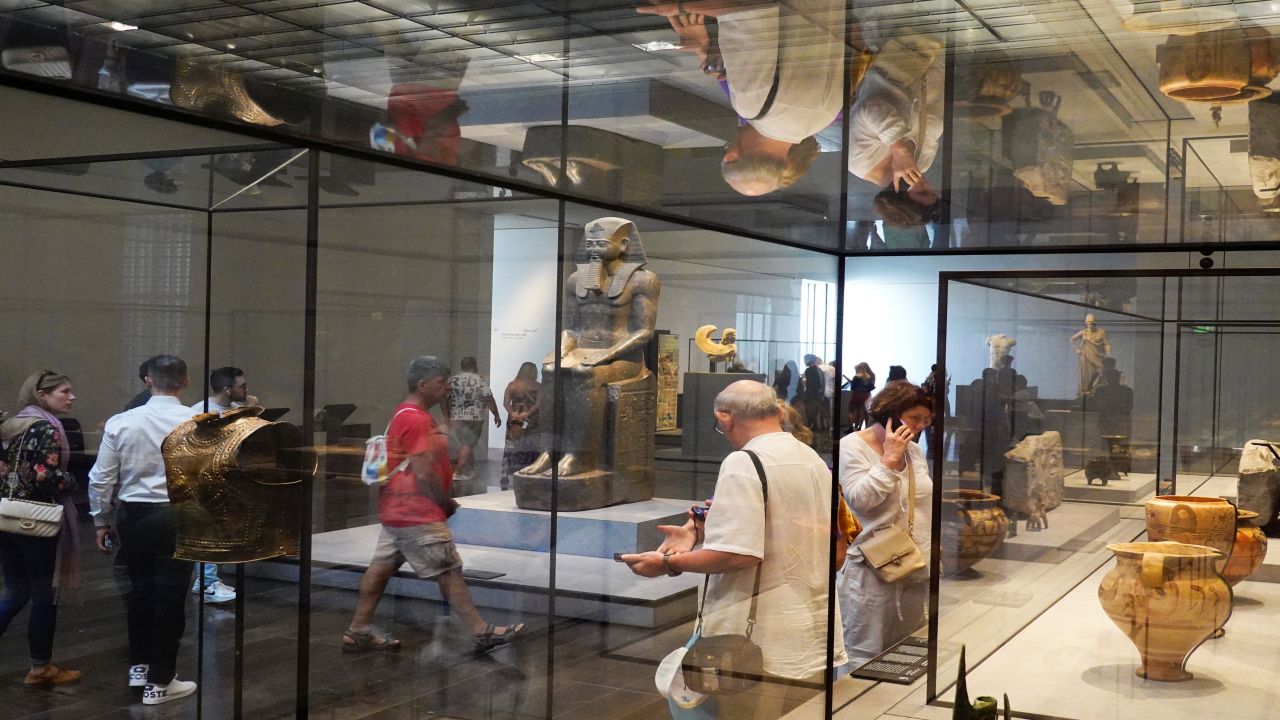
Louvre Abu Dhabi isn't just a museum for old relics. It's a stage. Right now, the museum's 'Art Here' 2026 exhibition is calling for entries from Indian artists. This isn't just some local gallery show. It’s a massive opportunity for contemporary creators from India to place their work alongside global masterpieces. If you’re an artist in India or part of the diaspora, you’ve got a real chance to see your work under that iconic rain-of-light dome.
Most people think of the Louvre as a French institution. While it’s born from that heritage, the Abu Dhabi branch has spent years carving out its own identity as a bridge between cultures. This specific open call proves they're serious about looking East. India has one of the most vibrant contemporary art scenes on the planet, but getting that specific Middle Eastern spotlight is a career-defining move.
What makes the Art Here 2026 call different
The 2026 edition of Art Here marks a shift. Usually, these calls focus heavily on the GCC (Gulf Cooperation Council) region. Including India as a primary focus area changes the math. It acknowledges the deep historical and modern ties between the UAE and the Indian subcontinent.
You aren't just competing for wall space. The winner of the Richard Mille Art Prize, which is tied to this exhibition, walks away with $60,000. That’s a serious injection of capital for any studio. But honestly, the money is secondary to the prestige. Imagine having "Exhibited at Louvre Abu Dhabi" on your CV. That stays with you forever.
Why this matters for the Indian art scene
India’s art market has been booming, but international visibility often stays stuck in traditional hubs like London or New York. The Middle East is different. It’s a crossroads. By opening doors to Indian talent, Louvre Abu Dhabi is tapping into a specific energy that’s been overlooked by some Western institutions.
I’ve seen plenty of incredibly talented painters and sculptors in Mumbai and Delhi who struggle to get their work across borders because of logistical or bureaucratic nightmares. This exhibition streamlines that. It provides a formal, high-profile channel. It’s a blunt instrument for breaking into the international circuit.
The theme you need to nail
You can't just send in a random sketch and hope for the best. These exhibitions always have a core concept. For 2026, the focus is on the idea of 'Transmissions.' Think about what that means. It’s about how ideas, culture, and history move from one person to another or from one geography to another.
Indian artists are uniquely positioned to talk about this. India is a land of movement. Whether it’s the transmission of ancient Vedic chants into modern digital art or the way the Indian diaspora carries its identity across the Arabian Sea, the stories are there. If your work doesn't speak to this theme, it won't matter how technically proficient you are. The jurors want a narrative.
How the selection process actually works
Don’t expect a quick email back. The selection process for Art Here is notoriously rigorous. It’s handled by a jury of heavyweight curators and art world professionals. They aren't just looking for "pretty" objects. They want work that challenges the viewer and fits the architectural gravity of the museum itself.
Usually, the jury selects a shortlist of artists who then get to display their work in the museum’s Forum. This is a semi-outdoor space that interacts with the elements. If you’re a sculptor, you need to think about light, wind, and the way the sun moves through Jean Nouvel’s geometric roof.
Common mistakes Indian artists make in global calls
I’ve talked to curators who look at thousands of these applications. The biggest mistake? Being too literal. If the theme is 'Transmissions,' don't just draw a radio tower or a literal bridge. Dig deeper.
Another pitfall is poor documentation. You might have a masterpiece in your studio, but if your photos are grainy or your artist statement is filled with academic jargon that says nothing, you’re out. Keep it sharp. Keep it honest. Tell them why your work needs to exist in that specific museum at this specific time.
Logistics and the practical side of things
Shipping art to the UAE isn't like sending a postcard. If you make the shortlist, the museum usually handles a lot of the heavy lifting, but your initial proposal needs to be realistic. Don't propose a ten-ton granite block if you don't have a plan for how it stays upright.
The deadline is firm. In the art world, "fashionably late" doesn't exist for grant or exhibition applications. You miss the window, and you wait years for the next cycle. Get your digital portfolio in order now.
The Richard Mille Art Prize connection
Let’s talk about Richard Mille. The luxury watchmaker partners with the museum for this prize. This partnership brings a level of private-sector eyes to the table that you won't find at a standard government-run biennial. Collectors who follow Richard Mille are the same people who buy high-end contemporary art.
Even if you don’t win the $60,000, being one of the finalists puts your work in front of people who can fund your next five years of production. It’s about the network.
The deadline you can't ignore
The call for entries is live, and the clock is ticking. You’ve got until the end of the year to get your submission in. That sounds like a long time. It isn't. Good work takes time to document, and a good proposal takes weeks to refine.
Start by visiting the official Louvre Abu Dhabi website. Look at the past winners from the GCC editions. See what they did. You’ll notice a trend: they all used the space of the museum as a character in their work. Your art shouldn't just sit in the Louvre Abu Dhabi; it should belong there.
Your immediate next steps
- Read the full brief on the Louvre Abu Dhabi website. Don't skim. Read every word about the 'Transmissions' theme.
- Audit your current work. Does anything you’ve already made fit? If not, do you have time to create something new?
- Hire a professional photographer. If you can’t afford one, borrow a high-end camera and learn how to light your work properly. High-resolution images are non-negotiable.
- Refine your artist statement. Strip out the fluff. Speak directly about your connection to the theme and why an Indian perspective matters for this specific 2026 show.
- Submit early. Technical glitches happen on deadline day. Don't be the person crying over a 404 error at 11:59 PM.
This is your moment to move from the local gallery to the global stage. Don't overthink it. Just get the work done.