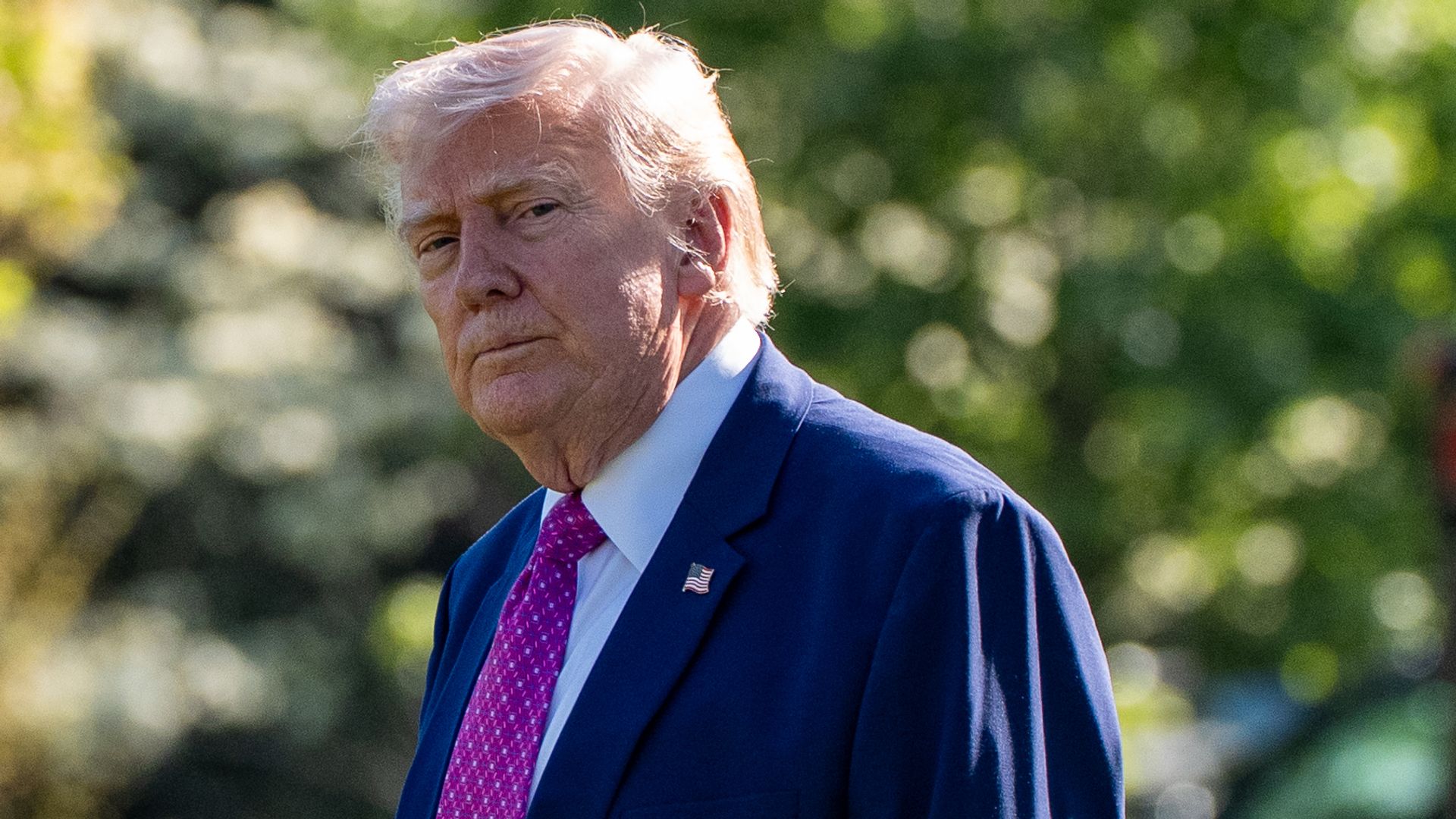
The friction between Donald Trump and the North Atlantic Treaty Organization has transitioned from diplomatic tension into a dangerous public spectacle. When the head of the Dutch armed forces, General Onno Eichelsheim, characterizes recent presidential rhetoric regarding the alliance as “not a wise thing to say,” he is not merely offering a personal opinion. He is articulating the mounting frustration of military professionals who operate within a reality of finite resources and escalating global threats. The core issue is not simply the political bombast; it is the corrosive effect such statements have on the credibility of collective deterrence.
The Dutch military, like many of its European counterparts, has been systematically increasing defense spending to reach the two percent of GDP threshold. These are not symbolic budgetary adjustments. They represent concrete shifts in procurement, training, and operational readiness aimed at bolstering a security architecture that has relied heavily on the United States for decades. When the leader of that primary guarantor questions the commitment of his own administration to the alliance, it injects profound instability into the strategic calculations of every member nation.
Strategic analysts recognize that deterrence functions on the perception of resolve. If an adversary perceives cracks in the foundation of the alliance, the incentive for aggression increases. General Eichelsheim’s blunt assessment highlights a broader anxiety across European capitals: the fear that the bedrock of Western security is being treated as a negotiable asset rather than a shared obligation.
Consider a hypothetical scenario where an incident occurs on the eastern flank of the alliance. In this situation, the speed and unity of the response are paramount. If regional commanders must pause to question whether the political leadership in Washington will honor its treaty commitments, the entire defensive posture weakens. This is not about the specific merit of a political disagreement; it is about the operational consequence of delegitimizing a treaty structure that has served as the backbone of global order since 1949.
The historical irony is stark. The only time Article 5 was ever invoked was by the United States, following the attacks on September 11, 2001. Nations across the alliance, including the Netherlands, deployed troops to Afghanistan in response. Thousands of soldiers from these countries fought and died alongside American forces. When that sacrifice is belittled, or when the commitment of allies is framed as transactional, it creates real-world political blowback that limits the room for maneuvering in parliaments across Europe.
These tensions are further complicated by protectionist maneuvers. Threats of tariffs targeting European allies—whether over disputes in the Arctic or unrelated trade issues—function as a secondary pressure point. When military alliances are leveraged for economic concessions, the functional cooperation required for logistics, intelligence sharing, and joint training suffers. The military machine requires predictability. It operates on long-term procurement cycles and established defense relationships. Injecting volatility into these channels does not force allies to spend more; it forces them to question whether the entire apparatus is worth the sustained investment.
Europe is currently moving toward a model of strategic autonomy, not necessarily by choice, but by necessity. The realization is dawning that relying exclusively on the political stability of any single partner is an unsustainable risk. This does not mean the end of the alliance, but it does mean a fundamental alteration of the internal power dynamics. The Netherlands, for instance, has focused its defense efforts on specialized capabilities, recognizing that it cannot protect every inch of its own infrastructure. It prioritizes key logistics hubs like the port of Rotterdam, accepting that internal trade-offs are required. These choices are made within the context of a collective defense agreement. If that agreement becomes fluid, the internal defense strategies of every member nation must fundamentally pivot.
We are witnessing the slow, grinding erosion of the consensus that post-war security was guaranteed. This transition is not occurring in a vacuum. Adversaries are observing the fraying diplomatic fabric with intense interest. Every public jab, every threat to exit the alliance, and every dismissal of collective security duties serves as a strategic gift to those who benefit from a fractured West.
The military leadership knows that the current path is unsustainable. They are caught between the political demands of their civilian governments and the pragmatic necessity of maintaining combat-ready forces that can actually function in a theater of war. When the rhetoric from the top of the United States government contradicts the foundational promise of the alliance, it forces military commanders into a position where they must prepare for multiple, often conflicting, strategic realities.
Stability in the North Atlantic region has never been guaranteed by mere parchment. It has been held together by the consistent, unwavering demonstration of common purpose. When that common purpose is undermined for domestic political signaling, the security of the entire continent is placed at risk. The message from the Dutch military establishment is clear. It is time to treat the security of the alliance as an existential requirement rather than a talking point. The alternative is a return to an era where individual nations are left to fend for themselves in a increasingly volatile world. That is a reality the continent has worked for eighty years to avoid. Whether it can continue to do so depends less on the public posturing of leaders and more on the quiet, often ignored, work of maintaining the actual mechanisms of defense. The window for such maintenance is narrowing.