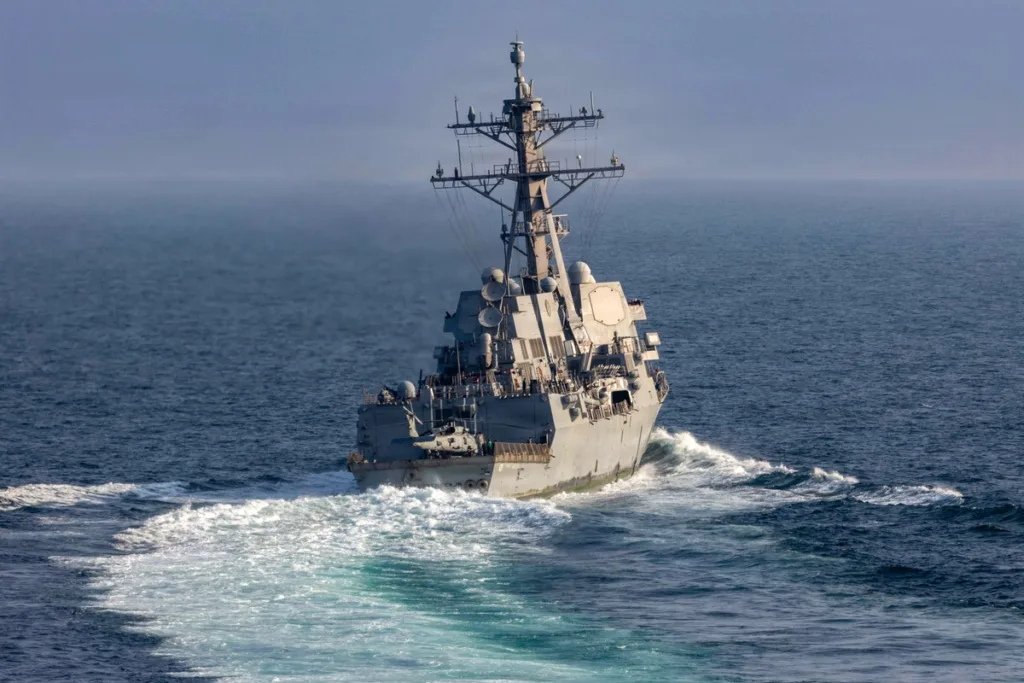
The headlines are screaming about a "stranglehold" on Iranian energy. Maritime monitoring groups are sounding the alarm, and the markets are twitching as if a noose has finally tightened around the Persian Gulf. They want you to believe the US military has successfully corked the bottle at Bandar Abbas and Assaluyeh.
They are wrong. If you liked this article, you should read: this related article.
What the mainstream press describes as a "blockade" is actually a high-stakes theater production. I have spent years tracking "dark fleet" logistics and the messy reality of sanctions enforcement. If you think a few gray hulls in the Strait of Hormuz can stop the flow of Iranian hydrocarbons, you don’t understand how the modern energy underground operates. This isn't the 1940s. You cannot block a nation that has mastered the art of the "ghost trade."
The Myth of the Hard Stop
The conventional wisdom suggests that a naval blockade works like a physical wall. The logic goes: park a destroyer in the shipping lane, turn back the tankers, and the Iranian economy collapses by Tuesday. For another look on this event, check out the latest coverage from The New York Times.
This ignores the reality of Ship-to-Ship (STS) transfers.
Most of Iran's oil doesn't travel in a straight line from the Kharg Island terminal to a refinery in China. It moves via a shell game of mid-ocean transfers. A VLCC (Very Large Crude Carrier) leaves Iranian waters, turns off its AIS (Automatic Identification System) transponder, and meets a "clean" vessel in the middle of the Indian Ocean or the South China Sea. By the time that oil reaches its destination, the paperwork says it originated in Malaysia, Oman, or the UAE.
The US military knows this. To truly "blockade" Iran, you would have to board and seize every suspicious vessel in international waters, sparking a series of kinetic escalations that neither Washington nor Beijing is prepared to manage. Instead, we get "maritime advisories" and occasional seizures that make for great B-roll on cable news but do nothing to stop the millions of barrels still leaking through the cracks.
The China Factor: Why the Blockade is Leaking from Day One
You cannot talk about an Iranian blockade without talking about the buyer. China is the primary destination for this "discounted" crude. For Beijing, Iranian oil is a strategic necessity and a massive middle finger to Western hegemony.
The competitor articles suggest that "increased pressure" will force China to comply. This is a fundamental misunderstanding of the Tehran-Beijing axis. China isn't paying in USD. They are using the digital yuan or bartering for infrastructure and telecommunications equipment.
- The "Teapot" Refineries: Small, independent Chinese refineries—often called "teapots"—don't care about US secondary sanctions. They don't have US-based assets to freeze. They don't use the SWIFT banking system.
- Energy Arbitrage: Iran sells its oil at a steep discount—sometimes $10 to $15 below the Brent benchmark. In a cooling global economy, China will never walk away from that margin.
By "blocking" the ports, the US isn't stopping the oil; it is merely increasing the "risk premium" that middlemen collect. We aren't starving the Iranian regime; we are subsidizing a shadowy network of maritime fixers and Greek shipping magnates who thrive on the complexity of sanctioned trade.
The Strategic Failure of "Maximum Pressure"
I’ve watched Western administrations try to "bankrupt" regimes through maritime interdiction for decades. It almost always backfires.
When you block a legitimate port, you don't stop the trade; you drive it underground. This "dark fleet" now consists of over 600 vessels—aging, poorly maintained tankers with dubious insurance and even more dubious ownership structures. By forcing Iran to use these vessels, the US isn't just failing to stop the oil; it is actively creating an environmental catastrophe waiting to happen.
Imagine a scenario where an uninsured, 25-year-old "ghost" tanker carrying 2 million barrels of crude has a mechanical failure in the Malacca Strait. Who pays for the cleanup? Not the US Navy. Not the Iranian Revolutionary Guard. The global maritime commons pay the price for a policy that prioritizes "looking tough" over functional diplomacy.
The Mathematics of Defiance
Let's look at the actual numbers that the "blockade" enthusiasts ignore.
- Storage Capacity: Iran has massive onshore and floating storage. They can withstand months of reduced exports while their engineers find new routes.
- Land Routes: We talk about "ports," but we ignore the burgeoning land-based energy corridors through Iraq and into Turkey. You can't block a truck with a destroyer.
- Refined Products: While the world focuses on crude, Iran has significantly increased its domestic refining capacity. They are no longer just a raw material exporter; they are shipping gasoline and petrochemicals to regional neighbors who couldn't care less about US maritime law.
The Ghost Fleet is the New Standard
The maritime industry has reached a tipping point where sanctioned trade is no longer an outlier; it’s a sophisticated, parallel economy.
When the US Navy announces a "blockade," the "dark fleet" simply updates its spoofing software. Modern AIS spoofing can make a ship appear to be docked in Dubai while it is actually loading crude at Bandar Abbas. I have seen satellite imagery where the "digital" location of a ship is miles away from its physical presence.
The US is fighting a 21-century cyber-logistics war with 20th-century naval tactics. It's like trying to stop a hacker by putting a padlock on their front door.
The Economic Backfire: Boosting the Enemy's Margin
The most counter-intuitive result of these blockades? They often make the target more resilient.
By forcing Iran to build its own domestic supply chains, insurance companies, and tanker fleets, the West is inadvertently stripping away its own leverage. Ten years ago, Iran needed the Western maritime infrastructure to function. Today, they have built a "sanction-proof" ecosystem.
Every time we "tighten the noose," we provide Iran with the data they need to find the remaining holes in the system. We are literally training them to be invisible.
Why the "Experts" are Lying to You
The maritime groups quoted in these articles have a vested interest in sounding the alarm. It drives up insurance premiums. It justifies larger defense budgets. It sells subscriptions to "risk intelligence" platforms.
But if you look at the crude-on-water data from independent analysts like Vortexa or TankerTrackers, you’ll see the truth: the oil is still moving. The "blockade" is a sieve.
The False Choice of Maritime Power
We are told the choice is between "allowing Iran to fund terror" or "shutting down the ports." This is a false dichotomy.
The real choice is between a porous, performative blockade that enriches middlemen and an actual, kinetic war that no one wants. By choosing the "blockade," the US is opting for a stalemate that allows it to maintain the moral high ground at home while failing to achieve any of its strategic objectives abroad.
The Iranian regime isn't shaking in its boots because of a few carrier strike groups. They are laughing all the way to the "teapots" of Shandong.
Stop reading the press releases from maritime monitoring groups as if they are gospel. They are tracking the ships that want to be seen. The real economy—the one that keeps the lights on in Tehran and the factories running in China—is happening in the shadows, far away from the reach of a naval patrol.
The blockade isn't a wall. It's a toll booth where the only people paying are the taxpayers funding the patrol ships.
Buy the dip in oil if you must, but don't buy the lie that the tap has been turned off.