The escalating rhetorical exchange between the United States and Iran regarding the destruction of critical infrastructure ignores a fundamental reality of modern engineering: the Middle East’s industrial backbone is a single, interconnected system where the disruption of one node triggers a nonlinear collapse of the whole. If either state executes a "total destruction" doctrine, they are not merely attacking a sovereign enemy; they are dismantling the thermodynamic and logistical equilibrium of the global energy market. To understand the gravity of these threats, one must look past the political posturing and analyze the three specific vectors of systemic vulnerability: caloric export dependency, desalinization fragility, and the "chokepoint" feedback loop.
The Calculus of Caloric Export Vulnerability
Iran’s primary economic defense and offense rest on its ability to internalize the costs of regional instability while externalizing the impact on global markets. However, the physical infrastructure of the Iranian oil sector—specifically the Kharg Island terminal, which handles roughly 90% of Iranian crude exports—represents a single point of failure.
In a kinetic exchange, the destruction of pumping stations and manifold systems at Kharg would not just halt revenue; it would create a "wellhead backup" crisis. When export capacity drops to zero instantaneously, the pressure differential in aging pipelines can lead to catastrophic mechanical failure at the extraction point. Unlike a software patch, a physical manifold destroyed by a precision munition requires specialized alloy components and global supply chain coordination to repair—resources that vanish during active hostilities.
The United States, while less physically vulnerable in its own geography, faces a "cost-per-barrel" symmetry. The global oil market functions on a marginal utility curve. Even a 5% reduction in global supply—easily achieved by disabling a few key Iranian processing plants—results in a disproportionate spike in Brent Crude prices. This is the Elasticity Trap: the attacker pays for the destruction of the target through domestic inflation and surging energy costs.
The Hydro-Electric Fragility Framework
Infrastructure in the Middle East is defined by an extreme reliance on desalinization and power-intensive water management. This creates a "Life-Support Bottleneck" that the current rhetoric fails to quantify.
Most Gulf states, and increasingly Iran’s coastal regions, depend on Multi-Stage Flash (MSF) or Reverse Osmosis (RO) plants. These facilities are high-energy consumers and are physically massive, making them impossible to harden against modern bunker-busting or cruise missile technology.
- The Energy-Water Nexus: If the power grid is neutralized, water production stops within minutes. Most urban centers in the region maintain less than 72 hours of potable water reserves.
- The Salinity Feedback Loop: Heavy industrial damage often results in chemical or petroleum leaks into the Persian Gulf. Because desalinization plants pull raw seawater from this basin, a significant oil spill acts as a functional "denial of service" attack on the region's water supply. The filters in RO plants are hypersensitive to hydrocarbons; once fouled, they are rendered useless.
Targeting infrastructure is therefore not a tactical maneuver to reduce military capacity; it is a bio-political strike that renders geography uninhabitable for civilian populations. This creates a refugee migratory pressure that neither the US nor its regional allies are equipped to contain.
The Logistics of the Strait of Hormuz and the Minesweeping Deficit
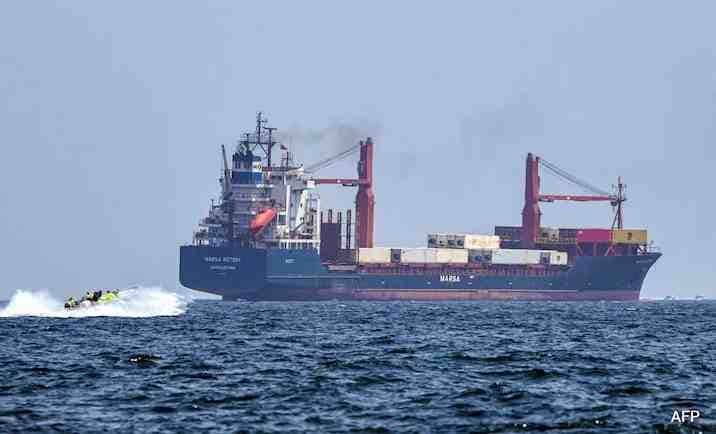
The threat to "destroy infrastructure" extends to the maritime "pipes" of the Strait of Hormuz. Analysis of Iranian asymmetric doctrine reveals a shift from conventional naval engagement to "Saturation Denial." This involves the deployment of uncrewed underwater vehicles (UUVs) and smart mines designed to target the specific acoustic signatures of VLCCs (Very Large Crude Carriers).
The logistical bottleneck here is not just the presence of mines, but the Minesweeping Deficit. The US Navy and its allies possess a finite number of littoral combat ships and specialized mine-countermeasure (MCM) assets.
- The Search-to-Neutralization Ratio: It takes approximately 10 to 20 times longer to find and neutralize a mine than it does to deploy one.
- The Insurance Barrier: Even if the Strait is "99% clear," Lloyd’s of London and other maritime insurers will pull coverage for the region. Without insurance, commercial shipping ceases entirely.
This mechanism turns the Strait of Hormuz into a "frozen asset." Iran’s threat to destroy infrastructure isn't just about blowing up buildings; it’s about making the water itself economically toxic.
Cyber-Kinetic Convergence and the SCADA Vulnerability
The most misunderstood component of the US-Iran threat matrix is the vulnerability of Supervisory Control and Data Acquisition (SCADA) systems. Modern refineries and power grids are not manually operated; they are managed by complex software layers that bridge the gap between digital commands and physical valves.
A "destruction" campaign would likely begin with a cyber-offensive aimed at the "safety Instrumented Systems" (SIS). By disabling the digital failsafes, an attacker can induce a physical explosion without firing a single missile. This is the Stuxnet Legacy: the realization that infrastructure can be turned against itself.
The limitation of this strategy is its unpredictability. Once a worm or malware is released into a regionally interconnected power grid, it does not respect national borders. A strike on Iranian logic controllers could theoretically "hop" through shared vendor vulnerabilities to affect UAE or Saudi Arabian grids, leading to an unintended regional blackout.
The Attrition of Maintenance and the "Repair Gap"
Strategic planners often ignore the "day after" metrics of infrastructure destruction. In a high-intensity conflict, the "Repair Gap" becomes the primary determinant of long-term sovereign viability.
Iran operates under a legacy of "Creative Maintenance" due to decades of sanctions. They have become experts at cannibalizing parts and reverse-engineering components. However, this creates a Structural Fragility: their systems have zero redundancy. A single strike on a bespoke turbine or a specialized transformer cannot be bypassed.
Conversely, the US and its allies rely on "Just-in-Time" logistics. Their infrastructure is more modern but relies on a globalized supply chain that is easily disrupted by maritime instability. If a specialized component for a Saudi refinery is manufactured in Europe and shipped through the Red Sea, and that shipping lane is contested, the "destruction" of that infrastructure becomes permanent through the inability to maintain it.
Strategic Realignment: The Transition to Decentralized Hardening
Given the mutual vulnerability of centralized infrastructure, the only viable strategic move for regional actors is a shift away from "Giga-projects" toward decentralized utility nodes.
- Distributed Energy Resources (DERs): Moving toward localized solar and modular nuclear power to reduce the impact of a single grid failure.
- Hardened Digital Air-Gaps: Decoupling critical infrastructure safety systems from any network connected to the public internet.
- Strategic Redundancy: Investing in "Dark Capacity"—infrastructure that remains offline and hidden, only to be activated when the primary nodes are neutralized.
The current threats to "destroy" Middle East infrastructure are based on a 20th-century understanding of warfare—one where the goal is to break the enemy's will by burning their factories. In the 21st century, the factories are part of a global circulatory system. To cut the enemy's throat is to ensure your own heart stops beating. The only logical path forward is the immediate prioritization of "Infrastructure Diplomacy," where the shared risk of a dry and dark Middle East forces a de-escalation of kinetic threats.
Establish a "Redline Protocol" that explicitly excludes desalinization and civilian power grids from targeting lists, acknowledging that their destruction is an act of regional suicide rather than tactical victory.