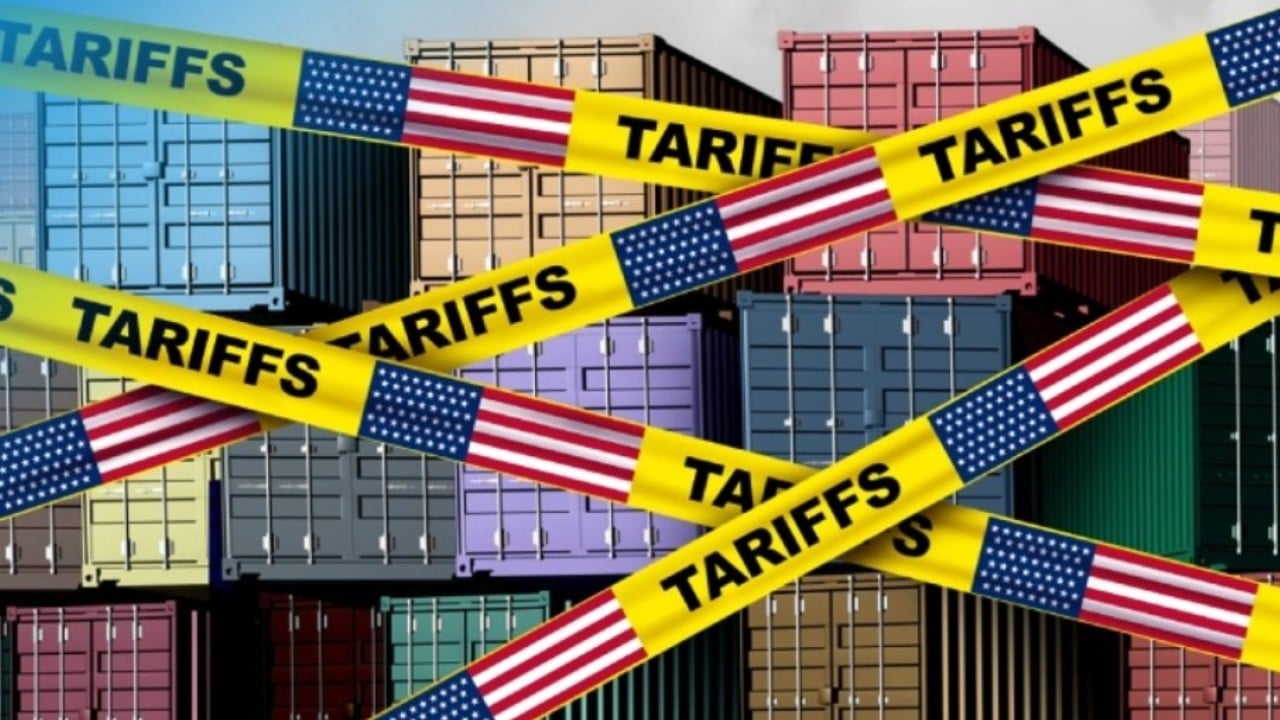
The federal judiciary is currently dismantling the executive branch’s favorite economic weapon. For years, the White House has treated Section 232 of the Trade Expansion Act of 1962 as a blank check for global trade wars, but a recent confrontation in the U.S. Court of International Trade suggests the era of unchecked "national security" justifications is hitting a hard wall. At the center of this battle is a simple, uncomfortable question: Can a president legally tax foreign goods just because he doesn't like a trade deficit?
If the courts rule no, the centerpiece of the Trump-era trade doctrine—and its potential resurgence—could be rendered toothless.
Judges are now scrutinizing whether the government overstepped its bounds by linking the "national security" mandate of Section 232 to purely economic metrics like the bilateral trade deficit. This isn't just a technicality for trade lawyers to argue over in mahogany-rowed offices. It is a fundamental challenge to how modern American presidents exercise power over the global economy. By framing a lopsided balance sheet as a security threat, the executive branch found a way to bypass Congress’s constitutional authority to regulate commerce. That shortcut is now being blocked.
The National Security Loophole
To understand the current crisis, one has to look at the mechanics of Section 232. Originally designed during the Cold War, the law allows the president to adjust imports if they threaten to "impair the national security." For decades, this was used sparingly—think iron, steel, or oil—situations where a domestic industry was so depleted it couldn't support the military during a hot war.
Under the Trump administration, the definition of security was stretched until it snapped. Tariffs were slapped on steel and aluminum not because the U.S. lacked the metal for tanks, but because the administration argued that a weakened domestic industry caused by "unfair" trade deficits was a systemic threat.
The judges aren't buying the math anymore. In recent oral arguments, members of the court expressed open skepticism about the government’s logic. They questioned whether the Department of Commerce can simply point to a spreadsheet showing a deficit and declare an emergency. If "economic well-being" is synonymous with "national security," then there is effectively no limit to what a president can tax. That is the definition of an unconstitutional delegation of power.
The Deficit Obsession vs The Rule of Law
The trade deficit has long been the North Star of Trump’s economic policy. He views it as a scoreboard where a negative number means the United States is "losing." However, most economists view the deficit as a reflection of investment patterns and consumer habits rather than a security vulnerability. By trying to codify this obsession into law, the administration created a massive target for litigation.
Importers and domestic manufacturers who rely on global supply chains have fought back. They argue that the "investigative reports" used to justify these tariffs are often thin, lacking the rigorous evidence required by the statute. They aren't just arguing that the tariffs are bad for business; they are arguing that the tariffs are illegal because the "security" threat was manufactured to fit a political narrative.
The court’s aggressive questioning of the "deficit" justification indicates a shift in the judicial mood. For years, judges were hesitant to second-guess a president on matters of national defense. But when defense looks suspiciously like protectionist industrial policy, that deference evaporates.
A System Built on Vague Definitions
The danger for the executive branch is that Section 232 has no clear definition of "national security." This was once seen as a strength, giving the president flexibility to react to unforeseen crises. Now, it is a liability.
If the Court of International Trade rules that a trade deficit alone does not constitute a security threat, the legal foundation for several existing and proposed tariffs will crumble. We are looking at a scenario where billions of dollars in collected duties might have to be refunded. More importantly, it would strip the presidency of its most effective tool for bypassing the House and Senate on trade policy.
The Industry Fallout
Manufacturers are caught in the crossfire. Consider a hypothetical American factory that makes specialized machinery. If the steel it needs is hit with a 25% tariff based on a shaky "national security" claim, its costs skyrocket, making it less competitive against foreign rivals who don't pay that tax. When the justification for that tax is revealed to be a flawed interpretation of a 60-year-old law, the frustration in the boardroom turns into a lawsuit.
These companies aren't anti-American; they are pro-certainty. The current legal volatility makes long-term planning impossible. No CEO wants to invest $500 million in a new facility if the cost of its raw materials depends on whether a judge thinks a trade deficit is a "threat" this week.
The Congressional Power Grab
While the courts deliberate, Congress is watching from the sidelines with a mix of anxiety and opportunism. For years, lawmakers were happy to let the president take the heat—and the glory—for trade actions. It saved them from having to vote on controversial tariffs that might upset their local donors.
That era of passivity is ending. If the courts strike down the broad use of Section 232, Congress will be forced to reclaim its role. We could see a return to the days where trade policy was hammered out in committee rooms rather than via social media posts. This would be a return to the constitutional order, but it would also be a slower, more grinding process that could paralyze American trade strategy in an era of rapid global shifts.
The reality is that Section 232 was never meant to be a general-purpose tool for managing the economy. It was a scalpel intended for emergencies. Using it as a sledgehammer to fix the trade deficit was a gamble that relied on the courts looking the other way. They are no longer looking away.
The Looming Precedent
If the "deficit" justification is officially tossed out, it creates a massive hurdle for any future administration—Republican or Democrat—that wants to use trade as a geopolitical lever. The government would be forced to provide granular, undeniable proof that an import directly harms the military’s ability to function.
This isn't just about Trump. This is about the limits of the administrative state. The judges are signaling that the White House cannot simply use "national security" as a magic phrase to bypass the law.
Why the Evidence is Thin
The government’s defense often relies on the idea that a "healthy economy" is essential for national defense. While true in a broad sense, this logic is a slippery slope. If every profitable industry is a "security asset," then every import is a "security threat." The courts are now demanding a more direct line of sight between the product being taxed and the actual defense of the realm.
In the steel and aluminum cases, the administration struggled to show that military needs weren't being met. In fact, the U.S. military accounts for a tiny fraction of domestic steel consumption. The vast majority goes to cars, cans, and construction. Labeling a tax on beer cans as a "national security" necessity was always a stretch; now, it looks like a legal fantasy.
The Specter of Retaliation
The domestic legal battle has international consequences. Every time the U.S. uses Section 232 to justify a tariff, it gives every other country a green light to do the same. If we can tax French wine or Japanese cars in the name of "security," they can tax American medical devices or software using the same logic.
By pushing the boundaries of the law, the U.S. has effectively weakened the World Trade Organization and the global rules-based system. A court ruling that reels in the president's power wouldn't just affect domestic law; it would send a signal to the world that the U.S. is returning to a more predictable, evidence-based trade policy.
The Impact on Global Supply Chains
Supply chains are not built on whim. They are built on the cold calculation of cost, speed, and reliability. The weaponization of Section 232 introduced a "political risk" variable that many companies simply cannot calculate.
When a judge questions the "deficit" justification, they are essentially questioning the stability of the entire American trade regime. If the rules can be changed overnight based on a metric as volatile as a trade deficit, the "Made in America" push actually becomes harder to achieve. Why move a factory to a country where the trade laws are currently being litigated in high-stakes courtrooms with no clear outcome?
The irony is that the very tariffs meant to protect American industry may be the thing that ultimately drives investment away due to the sheer unpredictability of the legal environment.
The End of the Blank Check
The current litigation is a reality check for the "Trade Warrior" archetype. It proves that even in matters of national interest, the executive branch is not an island. The Constitution gives the power to "lay and collect Taxes, Duties, Imposts and Excises" to Congress, not the President. Section 232 was a limited delegation of that power, not a total abdication.
We are entering a phase where "national security" will no longer be an all-access pass for protectionism. The courts are demanding data, not rhetoric. They are demanding a definition of security that involves soldiers and ships, not just balance sheets and ballots.
The trade deficit is a macroeconomic reality, but it is not a legal emergency. By trying to treat it as one, the government has invited the judiciary into the one room it usually avoids: the war room of trade policy. The judges have arrived, they have questions, and they don't seem satisfied with the answers.
If the "deficit" justification fails, the entire strategy of using executive orders to reshape global commerce fails with it. The trade war is no longer being fought at the ports; it is being fought in the benches of the D.C. circuit, and the government is losing ground.
Stop expecting a quick resolution. This is the beginning of a long-overdue correction of executive overreach. The blank check has bounced.



