The current state of US air travel is not a series of isolated delays but a predictable failure of throughput elasticity. When passengers describe airport conditions as "insane," they are witnessing the literal breaking point of a rigid supply chain attempting to process a liquid demand. The fundamental problem lies in the Throughput Paradox: as passenger volume approaches 90% of a terminal’s theoretical capacity, the time required to recover from a single five-minute disruption scales non-linearly, often requiring hours of "clear-out time" for every thirty minutes of stalled processing.
The Mechanics of the Bottleneck
Airport operations function as a series of dependent events. If we treat the passenger journey as a discrete manufacturing process, the security checkpoint serves as the primary constraint (the "Drum"). The current "rage" cited in headlines is the result of three specific structural failures:
- Labor-Elasticity Deficit: The Transportation Security Administration (TSA) and airline ground crews operate on "just-in-time" labor models. This works during steady-state operations but fails during "burst" periods—holidays or post-weather-event surges. Because onboarding federalized or specialized airport staff takes months rather than days, the system cannot scale labor to meet temporary spikes in demand.
- Processing Heterogeneity: Modern security protocols are optimized for a homogenous flow of "known travelers." When the ratio of infrequent flyers to PreCheck-enrolled travelers shifts—typically during summer or holiday peaks—the average processing time per passenger increases. A 15-second delay in removing electronics or footwear, multiplied by 2,000 passengers, creates a theoretical backlog that physically exceeds the square footage of the queueing area.
- The Feedback Loop of Missed Connections: When a passenger is delayed at security, they miss their "slot" on an aircraft. This creates a secondary bottleneck at the gate, where customer service agents must manually rebook travelers into a system already operating at 95% load factor. There is no "slack" in the seat inventory to absorb these errors.
The Cost Function of Lost Time
To understand why passengers describe the situation as "absolutely insane," one must quantify the economic and psychological cost of a missed flight. This is not merely an inconvenience; it is a destruction of capital.
- Sunk Costs: Non-refundable hotel bookings, pre-paid event tickets, and lost wages.
- Opportunity Costs: The value of the "intended purpose" of the trip (e.g., a business closing, a family milestone).
- Logistical Friction: The price of "distress" purchases—last-minute airport meals, overnight hotel stays near the terminal, and premium-fare replacement tickets.
The "insanity" is a rational response to a system that externalizes its operational risks onto the consumer. The airline collects the fare regardless of whether the passenger makes the flight, provided the aircraft departs. This creates a moral hazard where the incentive to over-schedule flights exceeds the incentive to ensure the terminal infrastructure can actually process the resulting human volume.
Structural Misalignment of Infrastructure
The physical architecture of most major US hubs (JFK, ORD, LAX) was designed for a pre-9/11 regulatory environment. The insertion of massive security apparatuses into "liminal spaces"—hallways and lobbies never meant for long-term standing—creates a hazardous environment.
The density of the crowd itself becomes an impediment to flow. In fluid dynamics, this is known as "clogging." Once the density of a crowd exceeds roughly 2 people per square meter, individual movement becomes dependent on the collective. At this stage, even if a security lane opens up, the "shockwave" of movement takes minutes to reach the back of the line. This lag is what generates the visual of empty lanes while hundreds of people remain trapped at the entrance.
The Myth of Digital Solutions
Airlines frequently point to mobile apps and self-service kiosks as "game-changers" (to use their own parlance), yet these tools often exacerbate the problem. By automating the "easy" parts of travel (check-in), they accelerate the rate at which passengers arrive at the "hard" parts (security and gate boarding).
Digital tools have effectively removed the "natural buffers" that used to slow down the influx of people into the terminal. When everyone checks in at home, the surge at the security gate is more concentrated and more volatile. The system has traded a distributed delay (check-in counters) for a centralized failure point (the checkpoint).
Strategic Mitigation for the High-Stakes Traveler
Reliance on "arriving early" is a flawed strategy because it assumes the system is functioning linearly. To navigate a systemic collapse, travelers must employ a risk-mitigation framework based on Optionality and Redundancy:
- The Multi-Hub Diversion: Avoid "fortress hubs" during peak hours (06:00–09:00 and 16:00–19:00). If a connection is required, choose secondary hubs with lower "Load-to-Gate" ratios.
- Digital Redundancy: Maintain active memberships in multiple expedited screening programs (Clear and TSA PreCheck). The value of these programs is not in their daily use, but in their function as a "bypass valve" during a total system surge.
- The 48-Hour Buffer: For mission-critical travel, the only way to hedge against a 90% load factor is to book travel 24 to 48 hours in advance of the actual deadline. This provides the "slack" the aviation system currently lacks.
The Trajectory of Aviation Volatility
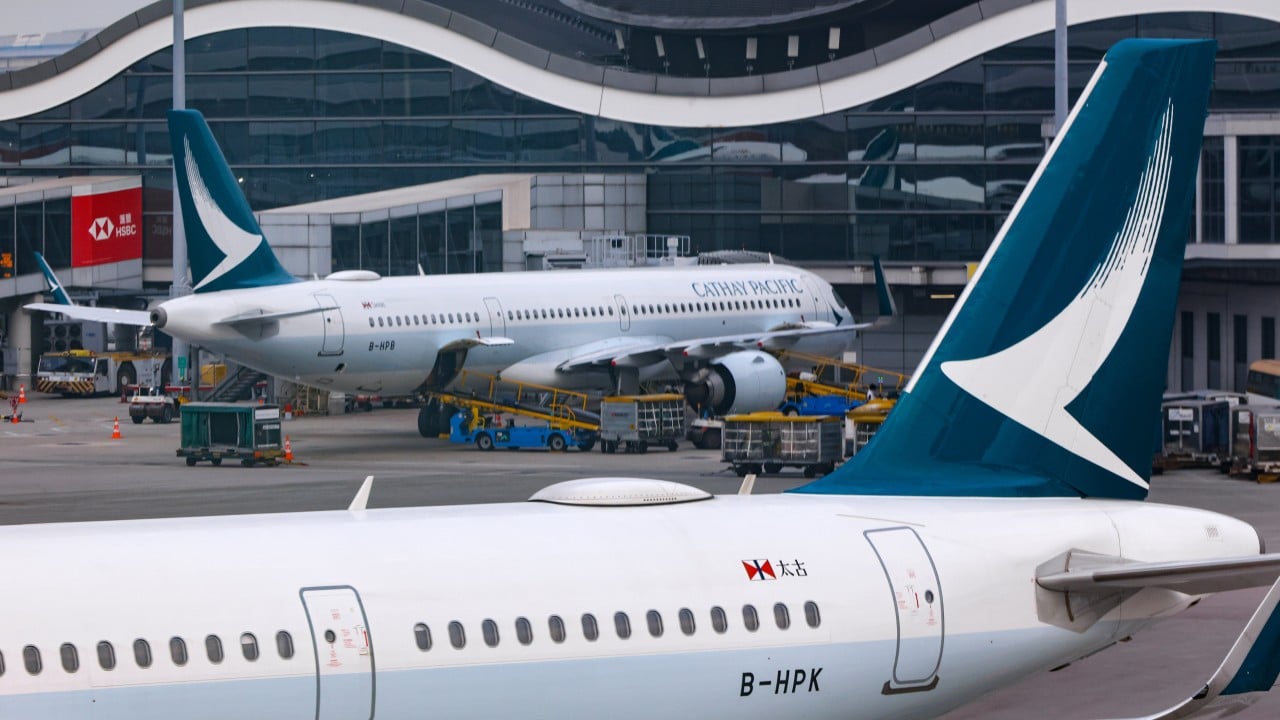
The frequency of these "insane" events will increase as the disparity between aircraft size and terminal capacity grows. Airlines are moving toward "up-gauging"—using larger planes to move more people with fewer pilots. While efficient for the airline's balance sheet, it puts an unsustainable strain on the gate area. A terminal designed for 150-seat 737s cannot gracefully handle the "pulse" of 240-seat A321neos arriving simultaneously.
The next phase of this crisis will likely involve "Reservation-Based Security," where passengers must book a specific time slot to enter the checkpoint. This shifts the burden of line management from the airport to the passenger's schedule, effectively ending the era of "on-demand" air travel.
The most effective immediate play for any organization or individual is to treat air travel as a high-variance activity. Reduce the number of segments, eliminate checked baggage to bypass the secondary "bag-drop" bottleneck, and prioritize flights that depart before 08:00, before the day’s "delay-debt" begins to compound. The system will not be "fixed" by better signage or more polite staff; it requires a fundamental recalibration of volume versus physical space. Until that happens, the "insanity" is simply the new baseline.