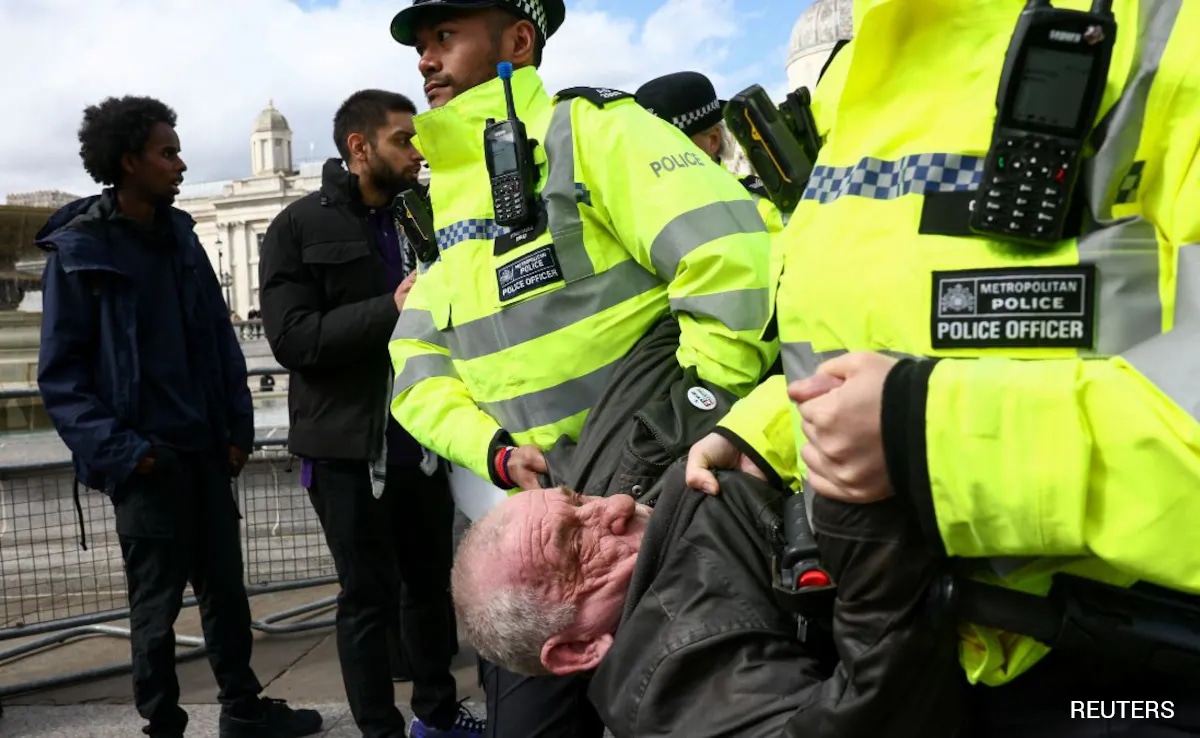
The Metropolitan Police arrested 523 people in Trafalgar Square on Saturday, marking one of the largest single-day mass detention events in recent British history. The scale is staggering, but the legal mechanism behind it is even more volatile. At the heart of the crackdown is a high-stakes tug-of-war between the Home Office and the High Court over the proscription of Palestine Action. While a judge recently ruled the government's ban on the group unlawful, a legal technicality has allowed the police to keep making arrests while the government appeals.
This is not a standard public order dispute. It is a calculated test of the Terrorism Act. The protesters, ranging in age from 18 to 87, were not arrested for violence or property damage. They were detained for the act of expressing support for a "proscribed organization." By holding placards that read "I support Palestine Action," they effectively walked into a legal trap set by a government that refuses to concede its authority even after a stinging judicial defeat.
The Legal Limbo of Proscription
In February, the High Court issued a landmark ruling stating that the ban on Palestine Action interfered with fundamental rights to free speech and assembly. To the average observer, that should have ended the matter. In a functioning legal system, once a ban is ruled unlawful, the enforcement of that ban usually halts. However, the Home Secretary was granted leave to appeal, and critically, the court delayed the "quashing order."
This delay created a grey zone. Until the appeal is heard, which could take months, the group remains legally "proscribed." The Metropolitan Police, after a brief period of hesitation, announced in late March that they would resume full enforcement. This means that for the next several months, the UK is in a bizarre state where citizens are being arrested under a law that a high court has already deemed invalid, simply because the paperwork to finalize that invalidity is stuck in a pending file.
A Demographic of Defiance
The police vans lining the square on Saturday were filled with a demographic that usually stays far away from the criminal justice system. Among those hauled away were elderly women with walking sticks, environmental managers, and musicians like Robert Del Naja of Massive Attack.
- Elderly Participation: A significant portion of those arrested were over the age of 70, including an 87-year-old.
- The Suffragette Aesthetic: Many women wore the purple, white, and green of the suffragette movement, drawing a direct historical line between their current legal peril and past struggles for civil liberties.
- Total Arrest Count: Since the group was banned last July, the total number of arrests has surged toward 3,000.
The police strategy appeared to be one of total saturation. Shortly after 1:00 PM, officers began peeling away protesters from the edges of the sit-in. By midnight, the tally had reached 523. This "zero-tolerance" approach suggests a directive from the top to break the back of the movement before the appeal can even reach the bench.
Why the Government is Risking a Crisis
The Home Office is playing an aggressive hand. By maintaining the ban despite the court's skepticism, they are signaling that national security and the prevention of disruption—Palestine Action is known for targeting arms factories—outweigh traditional interpretations of the First Amendment-style protections in the UK.
For the Metropolitan Police, the situation is a logistical and PR nightmare. Using hundreds of officers to carry away pensioners for holding cardboard signs consumes enormous resources. It also risks alienating the public. One woman, as she was carried toward a van, shouted to officers that they could be "catching real criminals." It’s a sentiment that resonates with a public frustrated by low charge rates for burglaries and violent crime.
The Looming Judicial Backlash
The Chief Magistrate, Paul Goldspring, has already put hundreds of existing cases related to these protests on hold. The judicial system is essentially clogged. If the government loses its appeal, all 523 arrests from Saturday—along with the thousands preceding them—will likely be deemed wrongful. The potential for a massive class-action lawsuit for wrongful arrest and human rights violations is high.
This is a high-risk strategy of attrition. The government is betting that by the time the legal dust settles, the momentum of the protest movement will have vanished under the weight of thousands of individual criminal charges. The protesters are betting that the sheer volume of arrests will make the law unenforceable and the government's position politically toxic.
The tension in Trafalgar Square wasn't just about foreign policy; it was a local battle over who gets to decide what is "terrorism" and what is "dissent." As the vans pulled away toward processing centers across London, the message from the Met was clear. They are enforcing the law as it exists today, regardless of how brittle its foundations have become. The next move belongs to the appellate judges, but for over 500 Londoners, the consequences are already here.