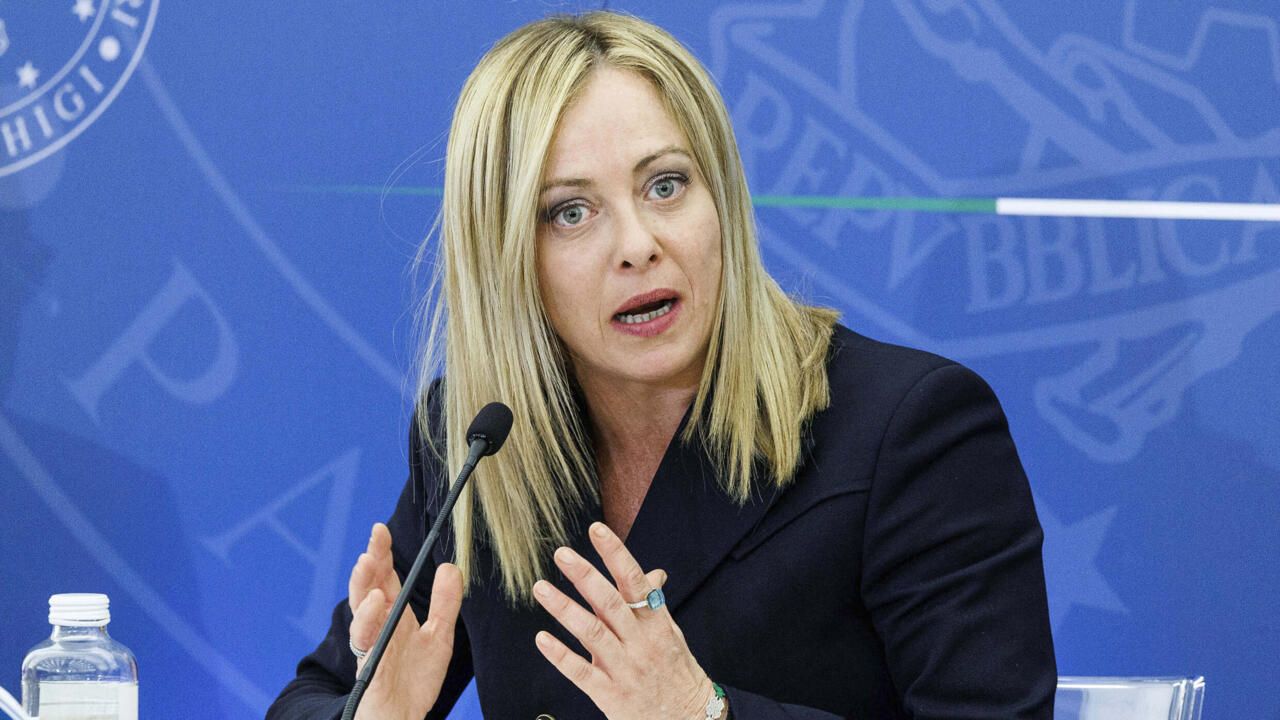
The standard narrative on Giorgia Meloni is a tired script written by people who haven't stepped foot in a Roman piazza in a decade. They call it a "gamble." They talk about "fragility." They whisper about "fiscal recklessness" while clutching their copies of the Maastricht Treaty. They are wrong.
What the mainstream analysis misses is that Meloni isn't gambling with the markets; she is priced into them. The real risk isn't her "right-wing" agenda. The risk is the intellectual bankruptcy of the European center that has no answer for a leader who actually understands the difference between a spreadsheet and a sovereign state.
The Sovereignty Arbitrage
For years, the Brussels-Frankfurt axis operated on a simple premise: Italian prime ministers are disposable placeholders. You get a technocrat, they implement "reforms" that involve cutting bone rather than fat, the economy stagnates, and then you swap them for a populist who scares the bond market until a technocrat returns.
Meloni broke the cycle. She realized something the pundits still haven't grasped: Political stability is the ultimate hedge.
By building a genuine, ideological coalition—rather than a fragile patchwork of convenience—she has provided the one thing the Eurozone lacks: predictability. Investors don't care about her rhetoric on "God, Fatherland, and Family" nearly as much as they care about the fact that she isn't going to be ousted by a backroom coup next Tuesday.
The "spread"—the difference between Italian and German bond yields—hasn't exploded because the market recognizes that a stable government with a clear mandate is safer than a "moderate" government that can’t pass a budget.
The Fiscal Illusion of the Stability Pact
Critics point to Italy’s debt-to-GDP ratio, currently hovering around 135%, as a ticking time bomb. They act as if Meloni personally printed the money. The reality is that Italy has run a primary surplus for the better part of three decades.
The problem isn't Italian spending; it’s Italian growth.
The "lazy consensus" dictates that Meloni must follow the strictures of the new Stability and Growth Pact (SGP) to maintain credibility. I have spent twenty years watching European finance ministers nod along to these rules while their domestic industries hollow out. It is a death pact.
Imagine a scenario where a CEO is told they must cut all R&D spending to pay down a low-interest loan while their competitors are scaling up. That is the SGP.
Meloni’s "gamble" is actually a calculated refusal to commit economic suicide. By pushing back on the speed of fiscal consolidation, she isn't being "irresponsible." She is attempting to preserve the industrial base of the third-largest economy in the Eurozone. If Italy goes under, the Euro goes with it. She knows it. Brussels knows it. The markets know it. The only people who don't seem to get it are the columnists writing about her "precarious position."
The Migration Hypocrisy
The most "controversial" aspect of her tenure—migration—is where the media's blind spots are the largest. The critique is that she’s failing because arrivals haven't hit zero.
This is a fundamental misunderstanding of the objective. Meloni isn't trying to build a wall; she is trying to rewrite the European security architecture. The "Mattei Plan" for Africa is the first serious attempt by a European power in a generation to move beyond reactive humanitarianism toward strategic energy and infrastructure partnerships.
While Germany and France are busy moralizing, Meloni is in Tripoli and Tunis making deals. She is treating North Africa as a geopolitical partner, not a charity case. This isn't "far-right" extremism; it’s Realpolitik that would make Metternich blush.
The Technocrat’s Nightmare
The establishment fears Meloni because she has mastered their own game. She didn't come to Brussels to flip tables; she came to sit at the head of one.
By aligning with the ECR (European Conservatives and Reformists) and keeping a disciplined line on Ukraine and NATO, she has neutralized the "radical" label. She has made herself indispensable to the EPP (European People's Party).
The true disruption isn't that she is destroying the European Union from the outside. It’s that she is capturing it from the inside. She is moving the center of gravity away from the Franco-German engine, which is currently sputtering under the weight of internal dissent and deindustrialization, and toward a Mediterranean bloc that is suddenly much more coherent.
The Cost of the "Safe" Path
The downside to this contrarian view? Italy remains a bureaucratic nightmare. Meloni hasn't fixed the glacial legal system or the demographic collapse. No one leader can do that in two years.
But the idea that she is a "gambler" implies she is playing a game of chance. She isn't. She is playing a game of leverage.
The Eurozone’s structural flaws—a single currency without a single fiscal treasury—make it a system of perpetual crisis. In such a system, the most "radical" thing you can be is a pragmatist with a backbone.
Stop looking at the polls and start looking at the power dynamics. Meloni isn't the one in trouble. The people who think they can still dictate terms to Rome are.
Buy the Italian bonds. Watch the theater. Realize that the "gamble" was actually the only logical move left on the board.
Stop asking if Meloni will survive the markets. Start asking if the European establishment can survive her success.