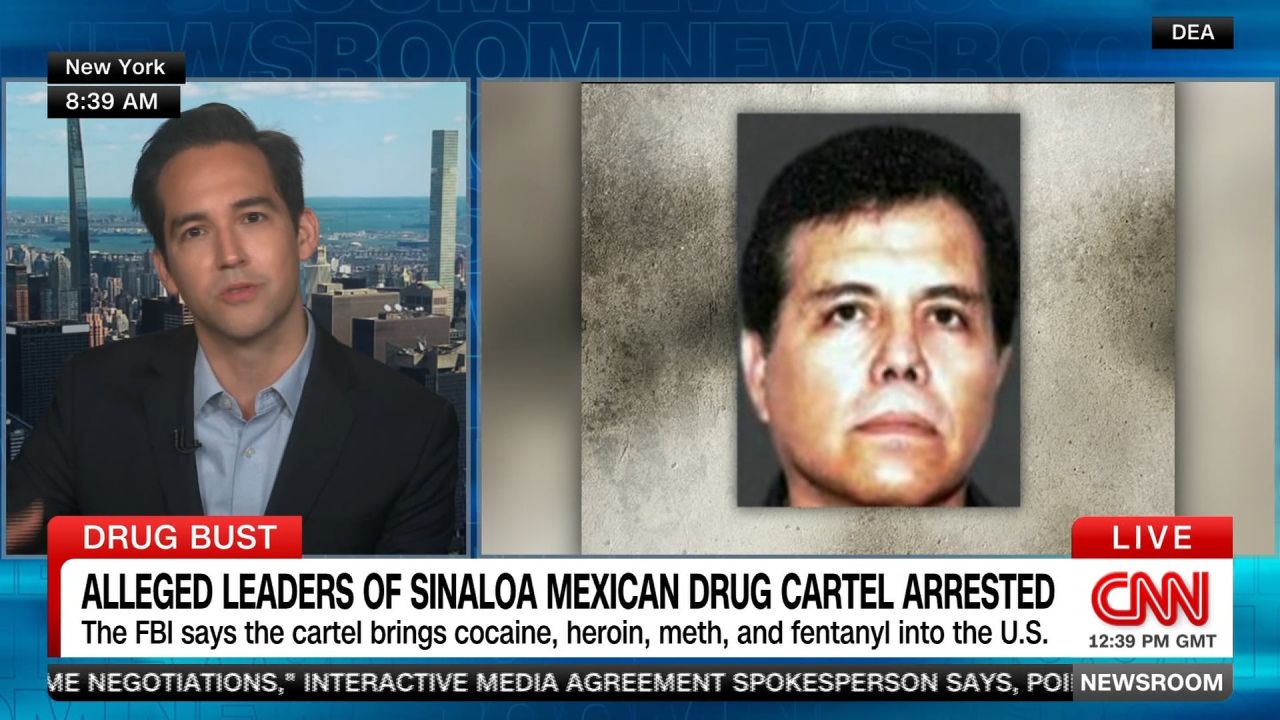
Eleven dead. A pile of seized tactical gear. Another "successful" raid in the heart of Sinaloa. The mainstream media outlets are currently running their standard playbook, framing this as a blow to organized crime or a victory for the rule of law. They are wrong.
This isn’t a victory. It is a taxpayer-funded restructuring program for the world’s most resilient black-market conglomerates. Meanwhile, you can explore similar developments here: The Cold Truth About Russias Crumbling Power Grid.
When the Mexican military hits a cell in Culiacán or the surrounding highlands, they aren't dismantling a business; they are performing a forced "lean startup" pivot on the cartel's behalf. We need to stop viewing these events through the lens of traditional warfare and start viewing them through the lens of aggressive market Darwinism.
The Myth of the Decapitation Strike
The most common misconception in modern security analysis is the idea that removing "high-value targets" or clearing out mid-level enforcers creates a vacuum that collapses the organization. In reality, these raids serve as a brutal, unintentional HR department for the Sinaloa Cartel. To explore the full picture, we recommend the detailed report by Al Jazeera.
In a legitimate corporation, middle management bloat is a silent killer. In a cartel, the military does the firing for you. By eliminating the weakest, most exposed, or most reckless cells, the state effectively "trims the fat." What remains is always leaner, more paranoid, and significantly more sophisticated.
I have tracked the movement of illicit capital across borders for a decade. Every time a major raid occurs, the immediate "market" reaction isn't a drop in supply. It is an increase in the price of the risk premium. This doesn't hurt the cartel; it increases their margins.
The Sinaloa Cartel as a Decentralized Autonomous Organization
The media treats the Sinaloa Cartel like it’s a 1980s Italian Mafia family with a clear "Godfather" at the top. This is an obsolete mental model. Today, Sinaloa operates more like a Decentralized Autonomous Organization (DAO) or a franchise model like McDonald's, but with better encryption and more firepower.
Raiding a single ranch or a safe house in northern Mexico and killing eleven people is the equivalent of a rival company breaking the windows of a single Starbucks location. It doesn't affect the supply chain. It doesn't delete the intellectual property of the logistics routes. It definitely doesn't stop the demand.
By focusing on the body count, the government ignores the logistics infrastructure. The real power of the Sinaloa faction isn't in the men who died in that raid. It’s in the:
- Precursor chemical procurement networks in Asia.
- The "shadow" banking systems that move billions through legitimate agricultural exports.
- The deep-tier encryption and signal intelligence that the cartel uses to monitor the military’s own movements.
The "lazy consensus" says these raids make us safer. The reality? They force the cartel to invest more heavily in technology and professionalized paramilitary tactics. We aren't winning; we are upskilling the enemy.
The Economics of Blood and Replacement Costs
Let’s talk about the cold math the "experts" refuse to mention. The replacement cost of a cartel foot soldier in rural Sinaloa is effectively zero. In regions where the informal economy is the only economy, the cartel is the primary employer.
When eleven men are killed, there are a hundred more waiting for the "opportunity" to step up. The state is trying to solve a systemic economic reality with kinetic military force. It is the equivalent of trying to stop a flood by shooting the water.
- Human Capital: Low-level "sicarios" are an infinite resource.
- Hardware: Weapons seized in these raids are often written off as operational expenses before they even leave the box.
- Territory: A ranch in Sinaloa is just a coordinate. The business is the route, not the dirt.
Why "Stability" is a Dangerous Illusion
People often ask: "If we don't raid them, what do we do? Just let them run wild?"
This is the wrong question. The premise assumes that the current strategy of intermittent violence is achieving something. It isn't. It is creating a cycle of "violent equilibrium."
When the Mexican government ramps up raids, they aren't aiming for total victory—they are aiming for "manageable" levels of violence. This creates a perverse incentive structure. Cartels learn exactly how much noise they can make before a raid becomes politically necessary for the government.
This results in a sophisticated game of theater where the military gets their "eleven kills" for the headlines, and the cartel moves their high-value assets three miles down the road.
The Brutal Truth About Modern Prohibition
The elephant in the room that every news report ignores is that the Sinaloa Cartel is a multi-billion dollar commodity business. As long as the global demand for fentanyl, meth, and cocaine exists, someone will fulfill it.
Military raids are merely a temporary disruption in the supply chain. If you want to actually "disrupt" a cartel, you don't target their soldiers; you target their competitive advantages.
The Sinaloa Cartel’s biggest competitive advantage is the illegality of their product. It guarantees them a monopoly on high-risk, high-reward logistics. By continuing the "war" through these raids, the state is effectively protecting the cartel’s market position by making it too dangerous for any smaller, less-organized competitors to enter the field.
The Professionalization of the Paramilitary
Look at the gear seized in these raids. We aren't seeing guys with rusted AK-47s anymore. We are seeing:
- Professional-grade body armor.
- Sophisticated drone tech for surveillance and weaponization.
- Encrypted comms that rival state agencies.
The "evolutionary pressure" applied by military raids has turned these groups from gangs into private armies. Every time a raid "succeeds," the survivors learn. They adapt. They buy better gear. They hire former special forces as trainers.
The military isn't "cleaning up" Sinaloa. They are inadvertently running a high-stakes training simulation that only the most dangerous individuals survive.
Stop Celebrating the Body Count
The next time you see a headline about a raid in Sinaloa, don't look at the number of dead. Look at the price of the product on the street in Los Angeles or Chicago. If the price hasn't moved, the raid was a failure.
If the goal is truly to dismantle these organizations, we have to stop treating them like a military problem and start treating them like a sophisticated, multi-national corporate entity. You don't kill a corporation by shooting the warehouse security guards. You kill it by disrupting its cash flow, seizing its intellectual property, and making its business model obsolete.
Until we stop the theater of raids and start addressing the structural economic realities of the drug trade, these "victories" are nothing more than a fresh coat of paint on a crumbling wall.
The state is playing checkers. The cartel is playing the long game. And as long as we keep measuring success in corpses rather than disrupted dollars, the house always wins.
Stop asking when the violence will end and start asking who benefits from the cycle never stopping.