Western analysts are obsessed with the idea that Xi Jinping is trying to "clean up" the People’s Liberation Army (PLA) to prepare for a 2027 invasion of Taiwan. They see every purged general or "loyalty" speech as a step toward a more efficient, lethal fighting machine. They think a "pure" military is a more dangerous military.
They are completely wrong.
The demand for "purity" in the PLA isn't about clearing the path for a centenary goal; it is about managing the inherent instability of a military that is a political party’s enforcement arm rather than a national defense force. If the PLA ever actually became "pure" and meritocratic, it would pose the greatest existential threat to the Chinese Communist Party (CCP) since 1949.
The Corruption is the Feature Not the Bug
Standard geopolitical commentary treats corruption like a parasite draining the PLA’s strength. In reality, corruption is the glue. For decades, the promotion system in the Chinese military operated on a "pay-to-play" basis. You didn't get a star on your shoulder by mastering combined-arms maneuvers; you got it by writing a check to the right superior.
Why does this matter? Because a corrupt officer is a compromised officer. A general who bought his way into power is easier to control than a war hero with a cult of personality. When Xi demands "purity," he isn't looking for saints. He is looking for total, singular dependency.
The "centenary goal" for 2027 is a convenient deadline for political consolidation, not necessarily a tactical one. By purging the "tigers and flies" within the rocket force and the equipment development department, Xi is removing the old guard whose loyalties were tied to the patronage networks of Jiang Zemin or Hu Jintao. He is replacing an old, decentralized corruption with a new, centralized loyalty.
The Fatal Flaw of the 2027 Narrative
The "lazy consensus" argues that the purge of high-ranking officials—like former Defense Minister Li Shangfu—proves that corruption hindered technical readiness, and therefore, the cleanup makes the PLA more ready for war.
Actually, the opposite is true.
Purging the technical and logistics leadership three years before a supposed invasion deadline is a recipe for institutional paralysis. I have watched organizations—from tech giants to state-level bureaucracies—undergo "restructuring" during times of crisis. It never results in immediate efficiency. It results in "CYA" (Cover Your Assets) culture.
In a military where the wrong hardware purchase or the wrong political stance can lead to a disappearance, no colonel is going to take a risk. No general is going to report that the fuel in the missiles is actually water (as has been alleged in recent intelligence leaks). The demand for purity creates a feedback loop of lies.
If you want a military that can win a high-tech, high-stakes conflict, you need decentralized command and the freedom to report failure. Xi’s "purity" mandate ensures that failure will be hidden until the first shot is fired.
Ideology is the Enemy of Competence
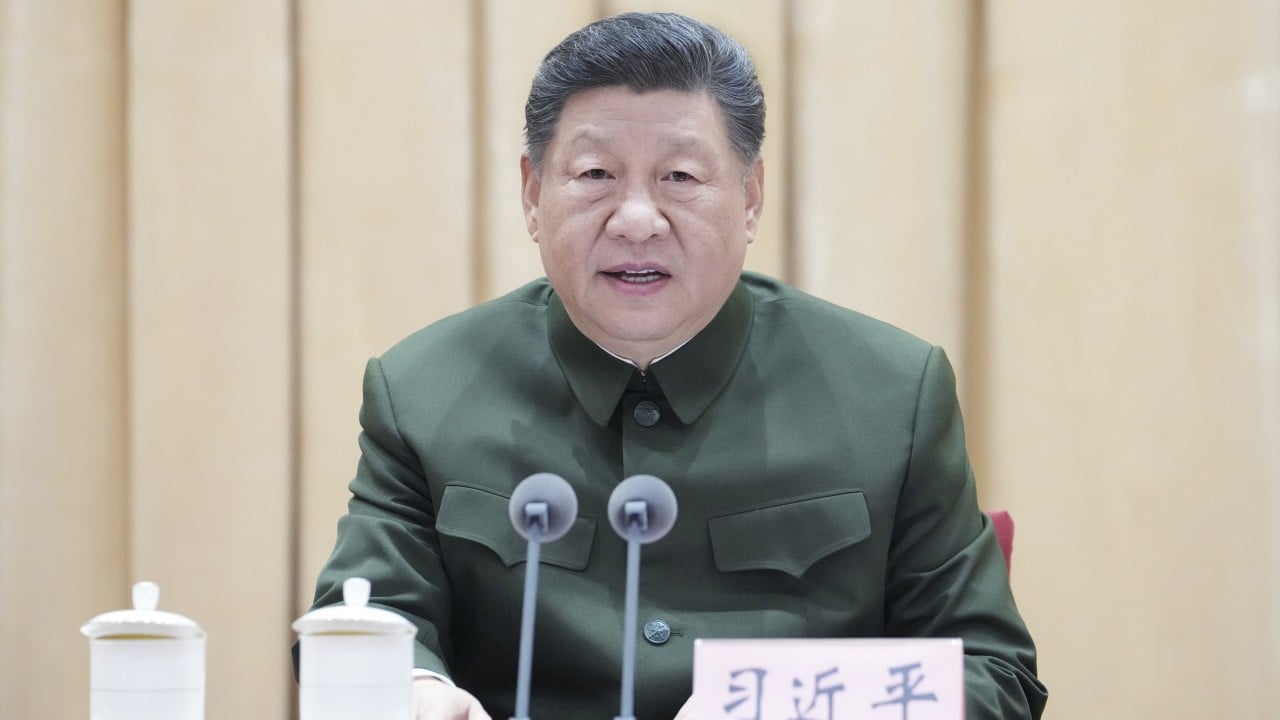
The PLA is a "Party Army." It belongs to the CCP, not the state. Xi’s recent speeches at the Central Military Commission (CMC) political work conference emphasize that "the gun should always be in the hands of those who are loyal and reliable to the Party."
Notice he didn't say "those who can win a dogfight over the Strait."
When you prioritize political reliability over tactical brilliance, you create a military of bureaucrats. The "senior officers" being told to "stay pure" are being told to spend more time studying Xi Jinping Thought than studying 21st-century electronic warfare.
The Cost of Compliance
- Talent Flight: The truly brilliant strategic minds—the ones who don't want to spend six hours a day in "criticism and self-criticism" sessions—will find ways to stay in the private sector or lower-level technical roles where they can hide.
- Intellectual Stagnation: Innovation requires the ability to challenge the status quo. In a "pure" PLA, challenging the status quo is called "political deviation."
- Command Paralysis: In a conflict, the PLA relies on a top-down structure. If the "pure" senior officers are afraid to make a move without a nod from Beijing, they will be decimated by an adversary that uses Mission Command (the ability for lower-level officers to make independent decisions based on the commander's intent).
The Equipment Trap
The obsession with "centenary goals" ignores the hardware reality. The PLA has rapidly modernized its fleet and its missiles, but the "purity" issue extends to the supply chain.
If the leadership of the Equipment Development Department is being gutted for corruption, it means the very foundation of the PLA’s tech—the chips, the sensors, the airframes—is suspect. You cannot "purify" a military-industrial complex overnight. The rot is baked into the procurement process because the state is both the buyer and the regulator.
Think of it like a software build where the lead developers were fired for skimming money. You don't just hire new guys and ship the code the next day. You have to audit every line of code to make sure the whole thing won't crash when it hits the server. Xi is attempting to audit his military while simultaneously telling the world it’s ready to launch.
The Real Goal is Internal, Not External
We need to stop asking "When will China invade?" and start asking "How does Xi stay in power?"
The rhetoric about a "world-class military" by 2027 is a tool for domestic legitimacy. It justifies the absolute control of the state over the economy and the lives of the citizens. By framing "purity" as a prerequisite for national rejuvenation, Xi makes any opposition to his purges look like treason against the Chinese dream.
If the PLA were actually ready for a high-intensity war, they wouldn't need to talk about purity this much. They would be talking about integration, lethality, and joint-force operations. Instead, they are talking about "souls" and "cleanliness."
The Counter-Intuitive Truth
A "pure" PLA is a weaker PLA.
It is a military that has traded its bite for its leash. It is an organization where the most talented are the most feared, and the most loyal are the most mediocre. Every time a new "purity" drive is announced, the 2027 goal post actually moves further away, regardless of what the official calendar says.
The risk isn't that a clean PLA will suddenly become a hyper-efficient juggernaut. The risk is that a paralyzed, "pure" leadership will feel so pressured to prove their loyalty that they will stumble into a conflict they aren't prepared to win, simply because they were too afraid to tell the man at the top that the Emperor has no clothes—and the missiles have no fuel.
Stop looking at the parade formations and start looking at the incentives. A general who is busy proving his "purity" isn't planning a war; he’s planning his survival.
The "centenary goal" isn't a countdown to an invasion. It's a countdown to the total homogenization of the only force in China that could ever challenge Xi Jinping. He isn't building a war machine; he’s building a fortress for himself, and he’s using the blood of his own generals to mix the mortar.