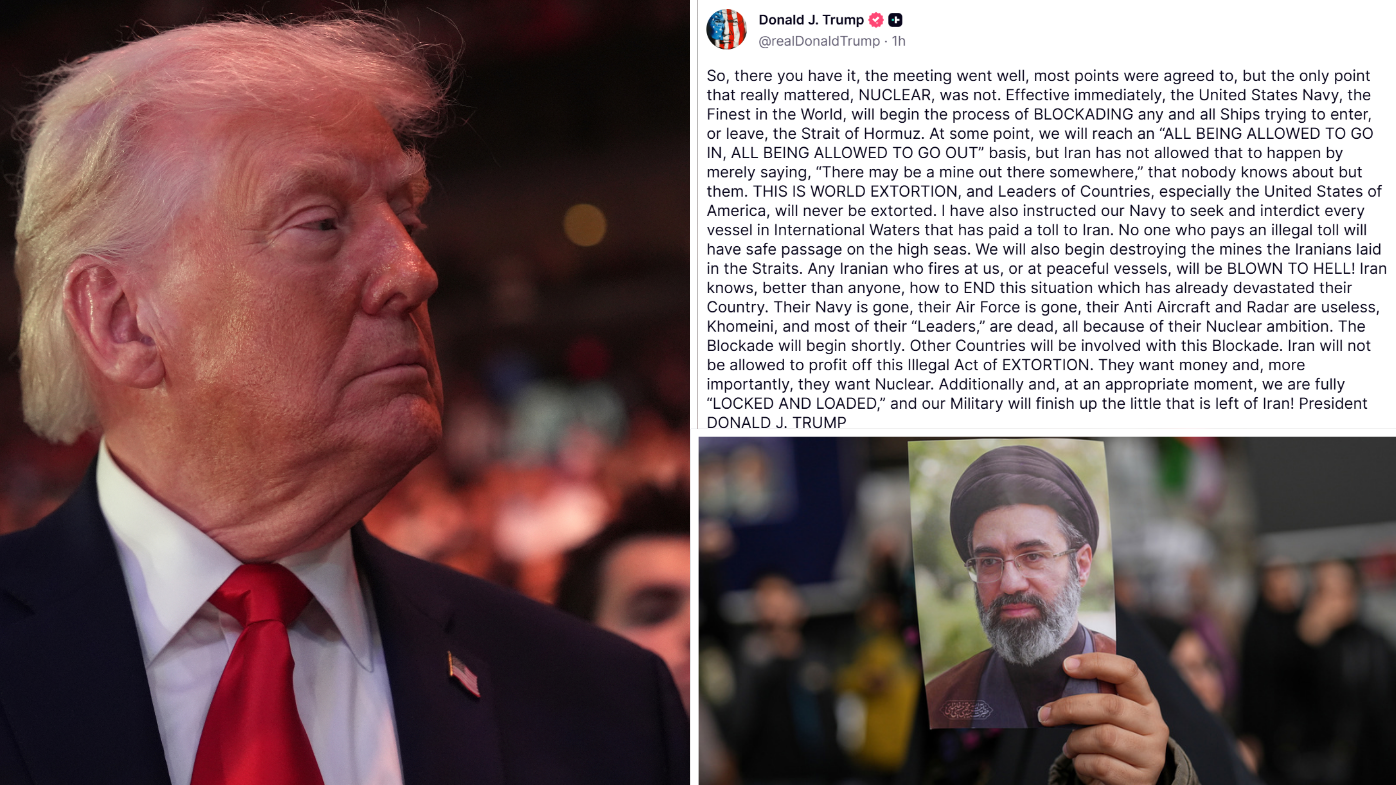
The chattering class is currently hyperventilating over President Trump’s latest declaration: a naval blockade of the Strait of Hormuz. They view this as a terminal event for global trade, a final rupture in the energy bloodstream of the planet. They are wrong.
The standard media narrative focuses on the immediate "shock" to oil prices and the catastrophic failure of diplomacy in Islamabad. It ignores the reality of how energy markets actually function. By fixating on the Strait, investors are missing the structural transformation that has been underway for months. You aren't watching a crisis; you are watching the final, violent collapse of a 20th-century geopolitical framework.
The Myth Of The Chokepoint
The consensus is that Hormuz is a unique, irreplaceable artery. This is a fairy tale for analysts who haven't looked at a pipeline map since 1995.
For years, regional powers have been systematically building around this vulnerability. Egypt’s expansion of terminal capacity, the increasing throughput of pipelines bypassing the Gulf, and the rapid, desperate diversification by Asian importers aren't just headlines; they are capital expenditures. The market has already priced in a world where the Strait is intermittently closed. If you are panic-selling today because of a naval announcement, you are reacting to news that was baked into the commodity spread back in February.
Imagine a scenario where the Strait is sealed indefinitely. The immediate outcome isn't global economic annihilation. It is a massive, localized reallocation of capital. Companies that rely on "just-in-time" delivery through the Gulf will die, yes. But their failure is a correction, not a catastrophe. The survivors are those who built resilient, diversified logistics chains that treated the Gulf as a high-risk liability rather than a reliable utility.
Why The Blockade Is Actually A Signal
The conventional take views a naval blockade as an act of escalation that invites war. Look closer. By moving to intercept ships paying "tolls" to Tehran, the White House is essentially forcing a move from a chaotic, informal extortion racket to a controlled, state-led enforcement zone.
When you strip away the bluster, the U.S. Navy isn't just trying to block Iran; it is trying to break the price-setting power of the Islamic Revolutionary Guard Corps (IRGC) within the waterway. If successful, this brings clarity to shipping insurance markets. Insurance premiums currently reflect the "legal uncertainty" of Iranian boarding parties. An American naval presence—even a combative one—establishes a predictable, albeit high-cost, operational environment. Uncertainty is what kills markets. Predictability, even at a premium, allows them to function.
The Real Danger Is Not The Oil Supply
Everyone is looking at the price of Brent crude. That’s the lazy play. The real systemic risk isn't the physical volume of oil; it’s the debt-laden shipping firms and energy-intensive manufacturing sectors that have spent the last decade operating on razor-thin margins, assuming that the Persian Gulf would always be open for business.
I have seen companies blow millions on "supply chain optimization" that amounted to nothing more than a bet on geopolitical stability. When that stability evaporated on February 28, they didn't just lose their margins; they lost their viability. They are dead weight. They will drag down anyone who still holds their equity.
Stop Betting On Diplomacy
If you are waiting for a deal to reopen the Strait, you have already lost. The era where a few hours of negotiation in Islamabad could "solve" a systemic disruption is gone.
The current environment is characterized by what analysts are calling "economic clock of war." A short-term shock is an oil spike; a long-term closure is an inflationary and growth-killing event. We are well past the point where a signature on a document changes the underlying reality of the shipping lanes. The physical infrastructure has been mined, the tankers are being intercepted, and the insurance industry has already reassessed its risk appetite.
The smart money moved months ago. It is parked in localized energy, domestic production hubs, and logistics firms that don't rely on the "Persian Gulf lifeline." If you are still trying to play the spot markets in crude or the shipping sector reliant on the Strait, you aren't investing. You are gambling on a return to a status quo that stopped existing in February.
The blockade is a symptom of a transition that is nearly complete. Stop reading the news to tell you what happened yesterday and start looking at the logistics infrastructure of tomorrow.
If your portfolio is still tied to the assumption that the world’s most dangerous waterway is going to act like a normal commercial asset, you are going to get wiped out.