The crash of a tour helicopter at Kalalau Beach, Kauai, resulting in three fatalities and two critical injuries, represents a catastrophic breakdown in the thin margin of safety that governs doors-off aerial tourism in high-gradient coastal environments. While initial media reports focus on the emotional weight of the loss, a structural analysis of the incident reveals a confluence of localized micro-climatology, mechanical strain, and the inherent risks of "Napali Coast" flight profiles. Understanding this event requires deconstructing the flight environment into its constituent hazards: the aerodynamic trap of the Na Pali cliffs, the performance limitations of the aircraft under load, and the regulatory gray zones of Part 135 on-demand air taxi operations.
The Aerodynamic Trap: Wind Shear and Orographic Lift
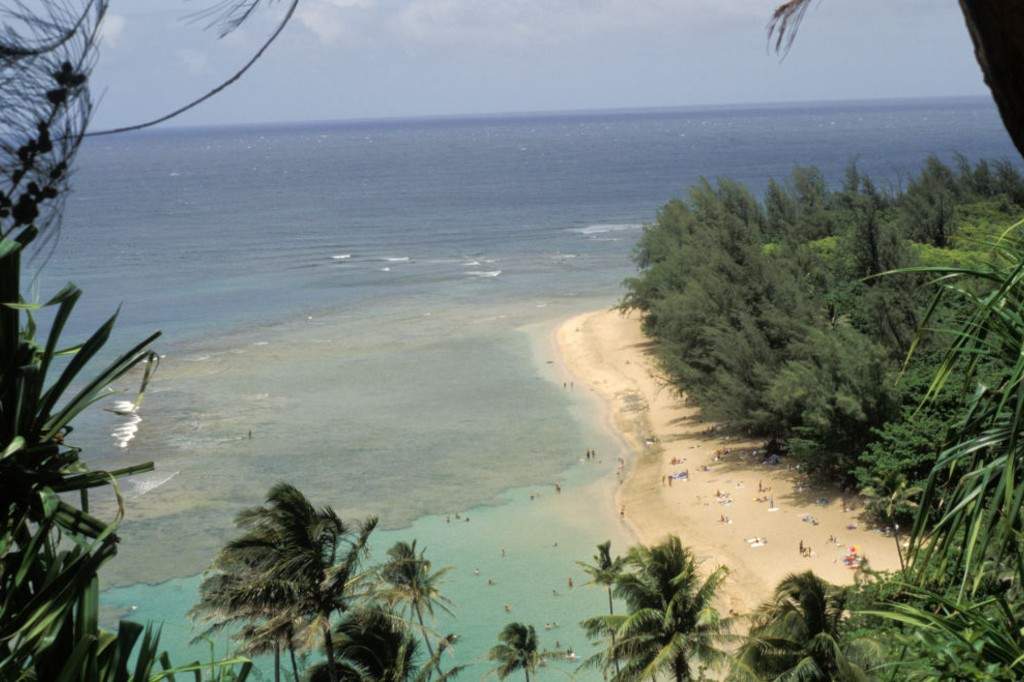
Kalalau Beach sits at the base of fluted ridges that rise nearly 4,000 feet from sea level. This geography creates a complex fluid dynamics problem for any low-flying rotorcraft. When prevailing northeast trade winds encounter these vertical faces, they do not simply bypass them; they are forced upward (orographic lift) and then tumble over the leeward side in a phenomenon known as mountain waves or mechanical turbulence.
A helicopter operating in this "venturi effect" zone faces instantaneous changes in effective lift. If the pilot is executing a low-level transition to provide passengers with a view of the beach, they are operating in the "Dead Man's Curve"—the Height-Velocity Diagram area where an engine failure or a sudden downdraft leaves insufficient altitude to trade for airspeed, or insufficient airspeed to cushion a landing via autorotation.
The kinetic energy of a falling helicopter is defined by $KE = \frac{1}{2}mv^2$. In a restricted coastal LZ (Landing Zone) like Kalalau, the $v$ (velocity) often drops below the safety threshold required to maintain translational lift. When a downdraft (microburst) strikes an aircraft already at low airspeed, the "settling with power" or Vortex Ring State becomes a high-probability failure mode.
The Performance Envelope of the MD 500 Series
The aircraft involved, frequently identified in these roles as the MD 500 (369D/E) series, is favored for its maneuverability and "doors-off" capability. However, this specific airframe is sensitive to Center of Gravity (CG) shifts and Gross Weight (GW) limitations. In a five-passenger configuration (four passengers plus one pilot), the MD 500 operates near the edge of its maximum takeoff weight, particularly in high-humidity environments where "thin" air reduces rotor efficiency.
The physics of rotorcraft performance in Hawaii are dictated by Density Altitude. Although the crash occurred at sea level, the high ambient temperature and humidity effectively "raise" the altitude the engine "feels."
- Engine Torque Limitations: At high gross weights, the Rolls-Royce 250 series turbine may lack the instantaneous power response needed to out-climb a localized downdraft.
- Tail Rotor Authority: In high-wind coastal gusts, the tail rotor can lose its ability to counteract main rotor torque (Loss of Tail Rotor Effectiveness), leading to an uncommanded spin.
- Structural Vulnerability: Unlike larger twin-engine variants, the MD 500 lacks engine redundancy. Any internal mechanical failure—be it a compressor stall or a fuel pump malfunction—results in an immediate transition to a forced landing.
Categorizing the Failure Chain
The "Swiss Cheese Model" of accident causation suggests that a disaster occurs only when the holes in multiple layers of defense align. In the Kalalau incident, these layers can be categorized into three specific pillars:
The Environmental Pillar
The Na Pali coast is a "micro-climate factory." Weather observations at Lihue Airport often fail to capture the violent localized turbulence at Kalalau. Pilots often rely on "visual cues" (whitecaps on the water, swaying foliage) which are reactive rather than predictive. The lack of real-time, automated weather reporting stations (AWOS) at remote beach locations creates an information vacuum during the most critical phases of flight.
The Operational Pillar
Tour operators in Hawaii often fly "high-cycle" days, where a single airframe may perform eight to ten sorties. This introduces:
- Thermal Fatigue: Constant cycling of the turbine engine.
- Pilot Saturation: The mental load of navigating complex terrain while providing a narrated experience for tourists.
- Weight Sensitivity: Precise calculation of passenger weights is often bypassed for "standard weights," which can lead to an aircraft being unintentionally over-gross or out of CG balance.
The Regulatory Pillar
FAA Part 135 regulations govern these flights, yet the "doors-off" niche creates unique safety paradoxes. While removing doors provides better visibility, it alters the aircraft's drag profile and increases the risk of loose objects (phones, hats) exiting the cabin and striking the tail rotor—a catastrophic failure mode that has grounded fleets in the past.
Survivability Metrics in Coastal Impacts
The transition from a controlled flight to a three-fatality event suggests a high-energy impact or a post-crash fire. In a "doors-off" configuration, passengers are held in by secondary harnesses. While these prevent falling out during flight, they can become death traps during a "dynamic rollover" or if the aircraft settles into the surf.
The impact force $F$ is a function of the change in momentum over time ($F = \Delta p / \Delta t$). On the sandy but uneven terrain of Kalalau, a helicopter that strikes the ground with any lateral velocity is prone to a rollover. As the main rotor blades strike the ground, they disintegrate, sending shrapnel through the cabin—a space that, without doors, offers zero structural protection against external debris.
The Economic Pressure of the "Perfect Shot"
The strategy of tour operators is dictated by the "Instagram Economy." The demand for low-altitude, high-bank maneuvers over Kalalau Beach forces pilots into the most dangerous corners of the flight envelope. From a consulting perspective, this is a misalignment of Risk vs. Reward. The marginal utility of a lower altitude is outweighed by the exponential increase in the "Loss of Control In-Flight" (LOC-I) probability.
Quantitative Safety Gaps in Hawaii Air Tourism
Data from the NTSB indicates that Hawaii sees a disproportionate number of helicopter accidents compared to the mainland U.S. per flight hour. This is not due to inferior pilot skill, but due to the "Unforgiving Terrain Constant." Unlike a flat Midwestern field, a power loss over the Na Pali cliffs offers zero "landable" terrain until the beach is reached.
This creates a "bottleneck of options." If the pilot is at 500 feet AGL (Above Ground Level) and loses power, they have approximately 10 to 15 seconds to identify a landing spot, enter autorotation, and execute a flare. If the wind is blowing toward the cliffs, the aircraft may be pushed into the rock face before it ever reaches the sand.
Strategic Mitigation for Future Operations
To prevent the recurrence of the Kalalau failure, the industry must move beyond "pilot discretion" and toward "instrumented safety."
- Real-Time Telemetry: Implementing flight data monitoring (FDM) that triggers alerts when an aircraft enters the "Dead Man's Curve" of the H-V diagram.
- Load Factor Hard Caps: Mandatory use of actual passenger weights rather than estimates to ensure a minimum 10% power margin at all times.
- Terrain-Specific Certification: Requiring pilots to pass a specific "Na Pali Coastal Checkride" that simulates Loss of Tail Rotor Effectiveness in high-wind canyon environments.
The Kalalau crash is a reminder that in the intersection of tourism and high-performance aviation, gravity is a constant that punishes even minor deviations from the safety envelope. The industry must either accept the "Price of the View" or fundamentally re-engineer the flight paths to stay outside the kinetic danger zones of the coastal cliffs.
Operators should immediately transition from the MD 500 to twin-engine platforms like the Airbus H135 for all Na Pali tours. The increase in operational cost (fuel and maintenance) is the only logical hedge against total hull loss and catastrophic liability. Failure to upgrade the fleet architecture will inevitably lead to a total regulatory ban on "doors-off" operations in the Kauai corridor as the risk-to-public-safety ratio becomes politically untenable.