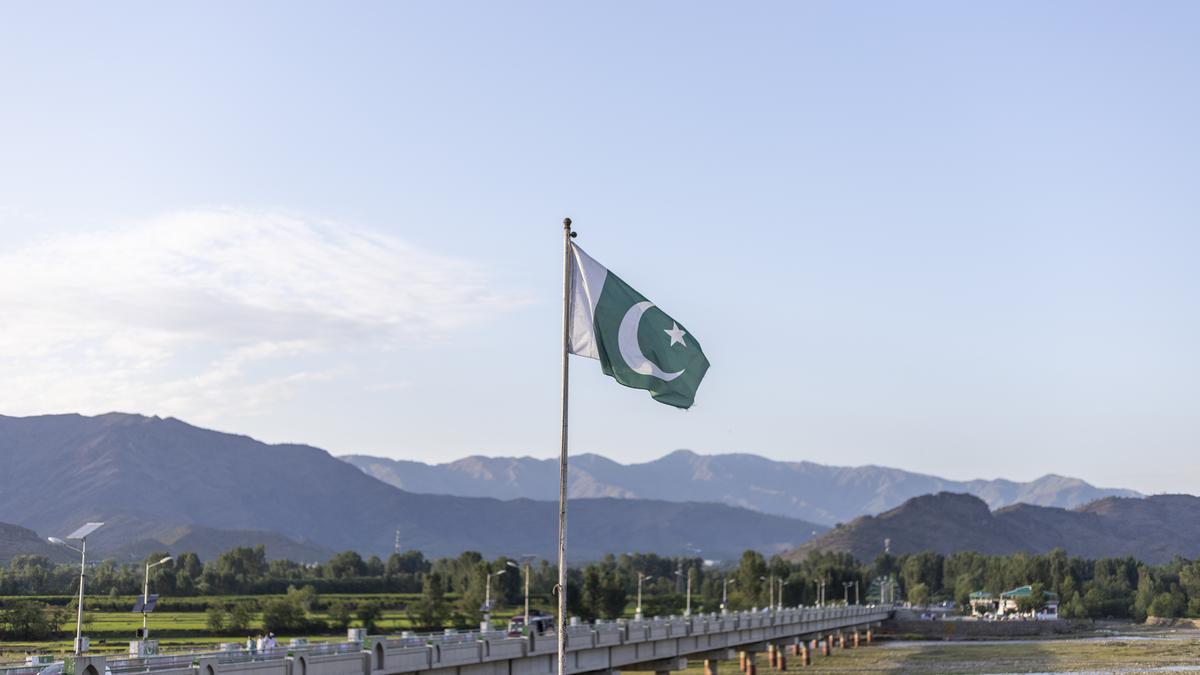
Pakistan isn't just sitting on the sidelines of the Middle East anymore. For decades, the narrative was simple: Islamabad was the "janitor" of the region, cleaning up mess after mess while begging for oil discounts. But something shifted in early 2026. While the world watched the "Third Gulf War" erupt with terrifying speed, Pakistan didn't just issue a bland statement of concern. It stepped into the middle of the fire.
You've probably heard the skeptics. They say Pakistan is too broke and too unstable to lead anything. They’re wrong. Being a "mediator" isn't about being the strongest guy in the room; it’s about being the one everyone is willing to talk to. Right now, Islamabad is the only capital that can pick up the phone and get an honest answer from both the White House and Tehran. That’s not just a diplomatic flex—it’s a survival strategy.
The Postman with a Nuclear Suitcase
The world was shocked when Deputy PM Ishaq Dar announced that Pakistan was acting as a "postman" for a 15-point US ceasefire proposal. Why Pakistan? Because the traditional heavyweights are too compromised. The Saudis are picking a side. The Qataris are often seen as too close to certain factions. But Pakistan? It shares a 900-kilometer border with Iran and has a "mutual defense agreement" signed with Saudi Arabia in 2025.
It’s a high-wire act. If Pakistan leans too hard toward Washington, it risks an insurgency spillover from Iranian Balochistan. If it stays too quiet, it loses the billions in investment flowing through the Special Investment Facilitation Council (SIFC). Islamabad isn't doing this out of the goodness of its heart. It’s doing it because an energy crisis in the Gulf would bankrupt the country in weeks.
Why Trump is Listening to the Generals
The relationship between Donald Trump and Field Marshal Asim Munir is the secret sauce here. Remember when ties with the US were in the gutter after 2011? That’s ancient history. In 2026, the vibe is different. Trump likes "strongmen" and deals. When Pakistan handed over an Islamic State bomber who targeted US troops earlier this year, it bought a seat at the table.
By positioning itself as the bridge, Pakistan is trying to move away from being a "pariah" to being an "asset." It’s a calculated play to ensure that when the dust settles in West Asia, Pakistan is the one holding the keys to the reconstruction contracts and the energy pipelines.
Is This Mediation or Just Desperate Survival?
Let's be real: Pakistan is terrified. If the Strait of Hormuz stays closed, the 20% of the world's oil that flows through it stops. For a country already struggling with debt, that’s a death sentence.
- The Iran Factor: Tehran is suspicious. They see Islamabad as a "minion" of the US. Pakistan has to prove it can protect Iranian interests while pushing American demands.
- The Saudi Factor: Riyadh wants a result. They’ve invested billions in Pakistan's mines and agriculture. They expect a return on that investment in the form of regional stability.
- The India Factor: This is the unspoken driver. Islamabad is desperate to outshine New Delhi's diplomatic reach. While India remains largely silent on the conflict, Pakistan is in the headlines as the peacemaker.
The Real Risks on the Ground
It’s not all handshakes and photo ops. The Balochistan frontier is a powderkeg. Separatist groups on both sides of the Iran-Pakistan border are watching for any sign of weakness. If Pakistan fails as a mediator, it doesn't just lose face—it loses control of its own territory.
We’ve seen this before. In the 1970s, Pakistan helped open the door between the US and China. That worked. But the Middle East is a different beast. There are too many moving parts, too many proxies, and too much history.
What You Should Watch Next
Don't look at the public speeches. Look at the flight paths between Islamabad, Riyadh, and Washington. If you see Field Marshal Munir making unannounced trips, a deal is brewing.
If you're tracking this for business or geopolitical reasons, focus on the "humanitarian pauses" Pakistan is proposing. They aren't trying to solve the whole war at once. They’re looking for a two-week window to breathe. If they get that, Pakistan’s stock as a global player hits an all-time high. If they fail, they’re just another neighbor caught in the crossfire.
Keep an eye on the SIFC investment updates. If Saudi and UAE money keeps flowing despite the war, it means they trust Pakistan’s back-channel diplomacy. That’s the real metric of success.