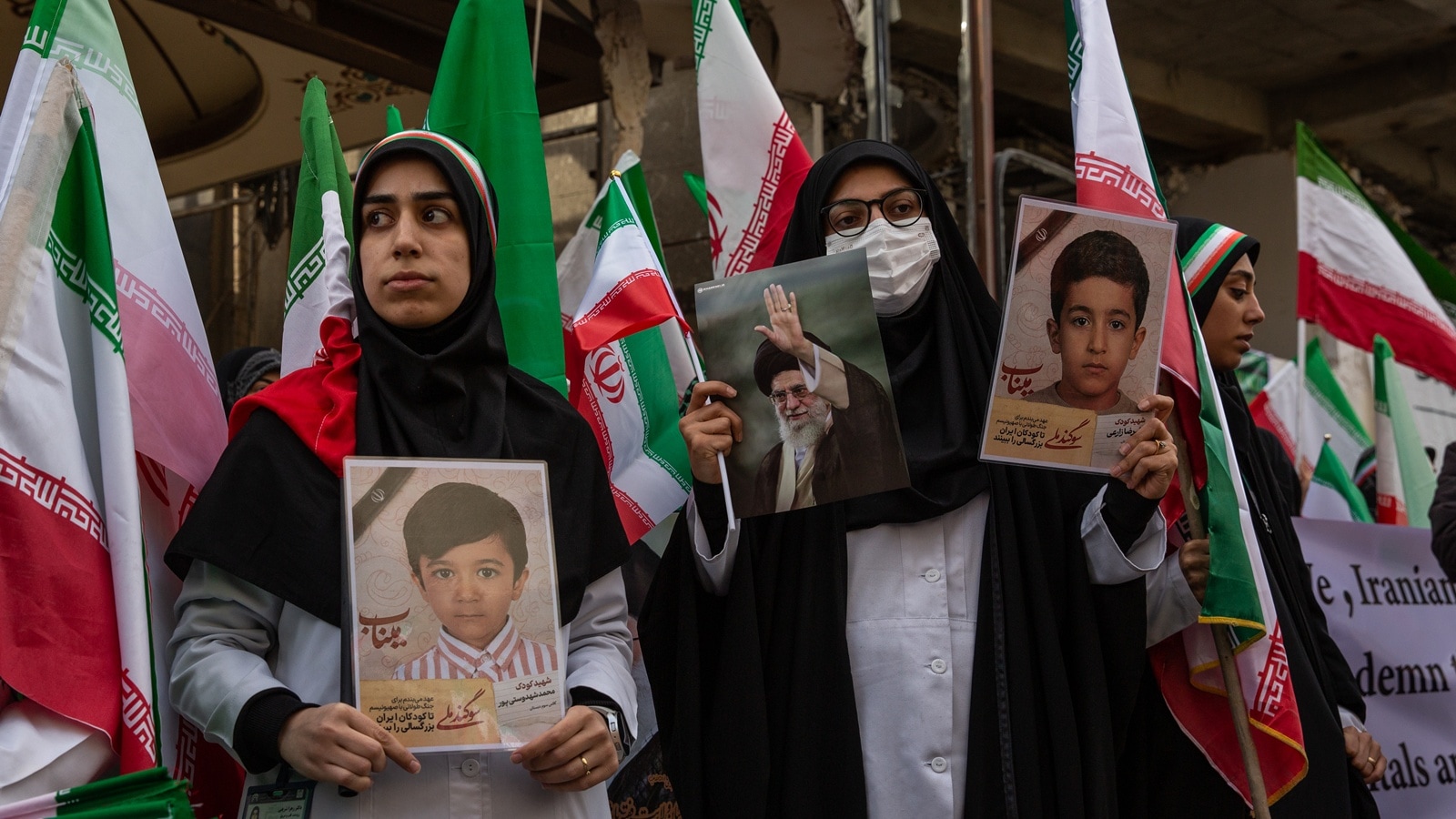
The preliminary inquiry into the strike on a school in Iran is a masterclass in missing the point. While the global press corps trips over itself to assign "fault" or debate "proportionality," they are operating on an intellectual hardware that was obsolete by the late nineties. The current narrative assumes this was a failure of intelligence or a breakdown in the chain of command.
It wasn’t.
If you want to understand the reality of modern kinetic operations, you have to stop looking at the school and start looking at the signal. We are witnessing the birth of a doctrine where the "mistake" is actually the message. The inquiry claims the US is at fault. I’m telling you the US is signaling a level of technical capability that should terrify every regional actor from Tehran to Riyadh.
The Myth of the Precision Error
Mainstream reporting loves the "collateral damage" trope. They frame it as a tragic glitch in an otherwise perfect system. This is a fundamental misunderstanding of how high-altitude long-endurance (HALE) platforms and AI-assisted targeting actually function.
In modern warfare, we use something called the Circular Error Probable (CEP). It’s a measure of a weapon system's precision.
$$CEP = 0.5915 \cdot (R_x + R_y)$$
When you have a CEP measured in centimeters, you don't "accidentally" hit a school unless the data fed into the fire-control system told it to. The inquiry suggests a "data-link synchronization failure." That is a convenient bureaucratic fiction. In reality, modern sensor fusion is so redundant that for a synchronization failure to occur, multiple fail-safes must be manually overridden.
I’ve spent fifteen years watching how these target folders are built. You don't just click a button. You have analysts, legal officers, and mission commanders vetting every coordinate. To believe this was a simple mistake is to believe that the most sophisticated military on earth is run by interns.
Intelligence Is Not About Facts
The "People Also Ask" sections of the internet are currently flooded with questions like, "How did the US miss the school?"
That is the wrong question.
The right question is: "What was hidden under the school that required a kinetic response despite the optics?"
We have entered an era of Human Shield Saturation. Non-state actors and state-sponsored proxies have figured out that the West’s greatest weakness is its own morality. They place command-and-control nodes under schools, hospitals, and mosques because they know it creates a "no-win" scenario for the adversary.
If the US strikes, it loses the PR war. If it doesn't, the command node stays active.
By striking, the US is signaling that the "human shield" strategy has reached its expiration date. The message being sent isn't "we missed." The message is "your shield no longer protects your assets." This is a brutal, cold-blooded shift in engagement rules. It’s the end of the sanctuary era.
The Cost of the Moral High Ground
The inquiry blames the US. Fine. But let’s talk about the cost of the alternative. When you allow an adversary to operate with impunity from civilian infrastructure, you are not saving lives. You are prolonging the conflict.
I have seen operations where we let a high-value target walk because he was holding a child's hand. That target went on to coordinate an IED cell that killed forty civilians three weeks later. Who is at fault for those forty deaths? The commander who followed the rules of engagement, or the enemy who exploited them?
The current inquiry is a political theater designed to soothe the conscience of the international community. It ignores the reality of Asymmetric Escalation. When your enemy does not wear a uniform and does not respect borders, the traditional laws of war become a suicide pact.
The Signal in the Noise
Look at the hardware used. This wasn't a carpet bombing. It was a surgical application of force.
Even in a "school strike," the precision was terrifying. The specific wing targeted was likely housing a localized server farm or a communication relay. The fact that the rest of the structure remained standing is a testament to the engineering.
If this were truly a "failure," the entire block would be a crater. Instead, we see a calculated, calibrated strike. The "preliminary inquiry" is the shroud used to cover the fact that the US just proved it can hit a specific room inside a sovereign nation's protected infrastructure whenever it chooses.
The Deception of Diplomacy
Diplomats will spend the next six months arguing about reparations and apologies. This is the "lazy consensus" of the foreign policy establishment. They think words matter more than payloads.
They don't.
In the corridors of power in Tehran, they aren't reading the apology letters. They are looking at the satellite imagery of the strike. They are seeing that their most secure urban environments are transparent to US sensors. They are realizing that the "red lines" they thought protected them are actually just lines on a map that can be erased in a millisecond.
The downside to this approach? Total erosion of international trust. We are burning our reputational capital to maintain our tactical edge. It’s a high-stakes gamble that assumes our technological dominance will always outpace the blowback.
The Hard Truth About Accountability
You want accountability? Then you have to accept the reality of the theater.
- Targeting is an algorithm, not an accident.
- Optics are secondary to strategic denial.
- The school was the location, but the asset was the target.
The inquiry's focus on "fault" is a distraction from the uncomfortable truth: the US has decided that the risk of hitting a school is lower than the risk of letting the target inside that school survive.
Stop asking if the US made a mistake. Start asking why they decided that making this specific "mistake" was worth the price.
War isn't a courtroom drama. It’s a series of brutal, binary choices. The US made its choice. The inquiry is just the paperwork.
Get comfortable with the silence from the Pentagon. They aren't mourning a failure; they are analyzing the data from a successful test of resolve. If you think this was the last time a "protected site" gets hit, you haven't been paying attention to the shift in the wind. The rules have changed, and the inquiry is the only thing still following the old ones.



