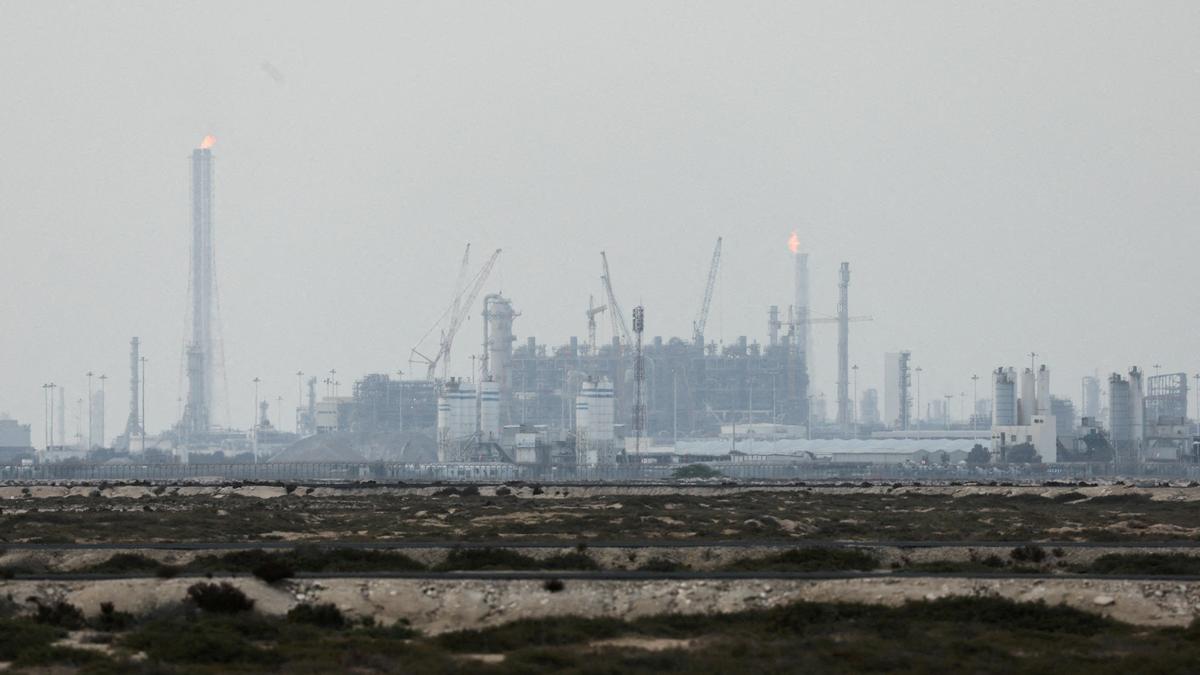
The visual of fires lighting up the sky 30 kilometers away from Doha isn't just a local emergency. It’s a blinking red light for the global economy. When QatarEnergy confirmed "extensive damage" at Ras Laffan Industrial City following missile attacks on Wednesday, the stakes for your energy bill and global stability shifted instantly. This wasn't a random strike. It was a calculated hit on the world's most vital liquefied natural gas (LNG) hub during a week of spiraling regional escalations.
If you're wondering why a missile in the Gulf matters to someone in London, Tokyo, or Berlin, it’s simple. Ras Laffan usually handles about 20% of the world's LNG supply. With production already shaky after earlier drone incidents this month, this latest hit pushes the market into uncharted territory. We aren't just talking about a temporary dip in exports; we're looking at a strategic shift where energy infrastructure has become the primary battlefield.
The Reality of the Damage at Ras Laffan
QatarEnergy hasn't been shy about the severity. While they’ve luckily reported no casualties, the phrase "extensive damage" in the energy world is code for "this won't be fixed by Monday." Emergency teams spent the night containing fires at a facility that is essentially a giant, high-pressure chemistry set.
Specific reports indicate that the missile strikes—which Tehran essentially pre-announced as retaliation for strikes on its own South Pars field—targeted key downstream facilities. We’re looking at potential hits to the Pearl GTL complex and the condensate refinery. Unlike a traditional oil fire that you can eventually just douse and mop up, LNG infrastructure involves incredibly sensitive cryogenic systems. You can't just patch a pipe and turn the gas back on. These systems require precise calibration and safety checks that can take weeks, if not months, to reset.
Why the Market is Panicking
It’s easy to look at a map and think this is a "them" problem. It isn't. The market reaction tells the real story.
- Brent Crude surged toward $112 a barrel almost immediately after the news broke.
- European Gas Prices jumped significantly, reflecting the fear that the "bridge fuel" for the continent's energy transition is suddenly under fire.
- Force Majeure declarations are now the norm rather than the exception for Qatari deliveries.
When Qatar declares force majeure, it basically tells its buyers, "We can't fulfill our contract because of an act of war." This leaves major importers in Asia and Europe scrambling for spot cargoes that simply don't exist in the volumes needed. You’re seeing a de facto halt to the reliable flow of energy that keeps the lights on in major industrial hubs.
The Strategic Retaliation Loop
This attack didn't happen in a vacuum. It was the direct consequence of a strike on Iran’s South Pars gas field earlier on Wednesday. Since Qatar and Iran actually share the world’s largest gas reservoir (the North Dome/South Pars field), the irony is thick. Iran is effectively sabotaging the very field it relies on for its own domestic energy, just to prove it can hurt its neighbors.
Qatar’s response has been uncharacteristically blunt. They’ve already ordered Iranian military and security attaches to leave the country within 24 hours. This marks a massive diplomatic breakdown for a nation that usually prides itself on being the regional mediator. When the "neutral ground" gets hit, you know the old rules of Gulf diplomacy are dead.
Defending the Indefensible
One of the biggest takeaways here is the failure of air defenses to stop every threat. Qatar’s defense ministry noted they intercepted two ballistic missiles, but others clearly got through. In an industrial city covering nearly 300 square kilometers, you don't need a direct hit on a storage tank to cause a crisis. Hitting a pumping station or a power plant serving the liquefaction trains is enough to mothball the entire operation.
Energy hubs are notoriously difficult to protect because of their scale. You can’t put a dome over a city-sized refinery. This vulnerability is being exploited to inflict maximum economic pain with relatively low-cost munitions. It’s a lopsided war where a few million dollars' worth of missiles can threaten trillions in global GDP.
What Happens Next for Energy Security
If you're an energy buyer, the "just-in-time" delivery model is officially toasted. The reliance on a single chokepoint like the Strait of Hormuz, combined with the concentration of production in a few high-risk zones, is a systemic flaw that can't be ignored anymore.
Don't expect prices to cool down anytime soon. Even if the fires are out, the "risk premium" on every barrel of oil and every cubic meter of gas is going to stay high as long as the South Pars field remains a target. We’re entering a period where energy security isn't about the best price—it’s about whether the shipment shows up at all.
You should monitor the recovery timeline for the Ras Laffan condensate refinery specifically. If that stays offline, the ripple effects on local power generation in the Gulf could lead to even more instability. Keep an eye on how Saudi Arabia and the UAE bolster their own defenses in the coming days, as they’ve already been named as secondary targets in this ongoing exchange.