The headlines are playing a safe, predictable game. They call it a "30-day sanctions waiver." They frame it as a tactical maneuver to stabilize global energy prices or a diplomatic olive branch designed to coax a rogue state back to the negotiating table.
They are wrong.
What we are witnessing isn't a "waiver." It’s a surrender disguised as a spreadsheet adjustment. By granting a window for the sale of Iranian oil currently sitting in floating storage, the U.S. Treasury hasn't just tweaked a policy; it has effectively validated the "ghost fleet" economy. It has told every illicit actor in the Strait of Hormuz that if they hold their breath long enough, the West will eventually provide the oxygen.
The Myth of the Tactical Pause
The prevailing logic among Beltway analysts is that a short-term waiver allows the market to absorb supply shocks without technically "lifting" sanctions. It’s a neat trick of semantics. In reality, there is nothing "short-term" about the signal this sends.
When you tell a market that sanctions are flexible based on the current price of a gallon of gas in the Midwest, you destroy the efficacy of the sanction itself. Sanctions work through permanence and predictability. They are designed to create a "risk premium" so high that no legitimate bank, insurer, or shipping conglomerate will touch the cargo.
The moment a 30-day window opens, that risk premium evaporates. Speculators don't see a "temporary reprieve." They see a proof of concept. They see that the U.S. government’s resolve is tethered to the Consumer Price Index.
The Ghost Fleet is Now the Merchant Marine
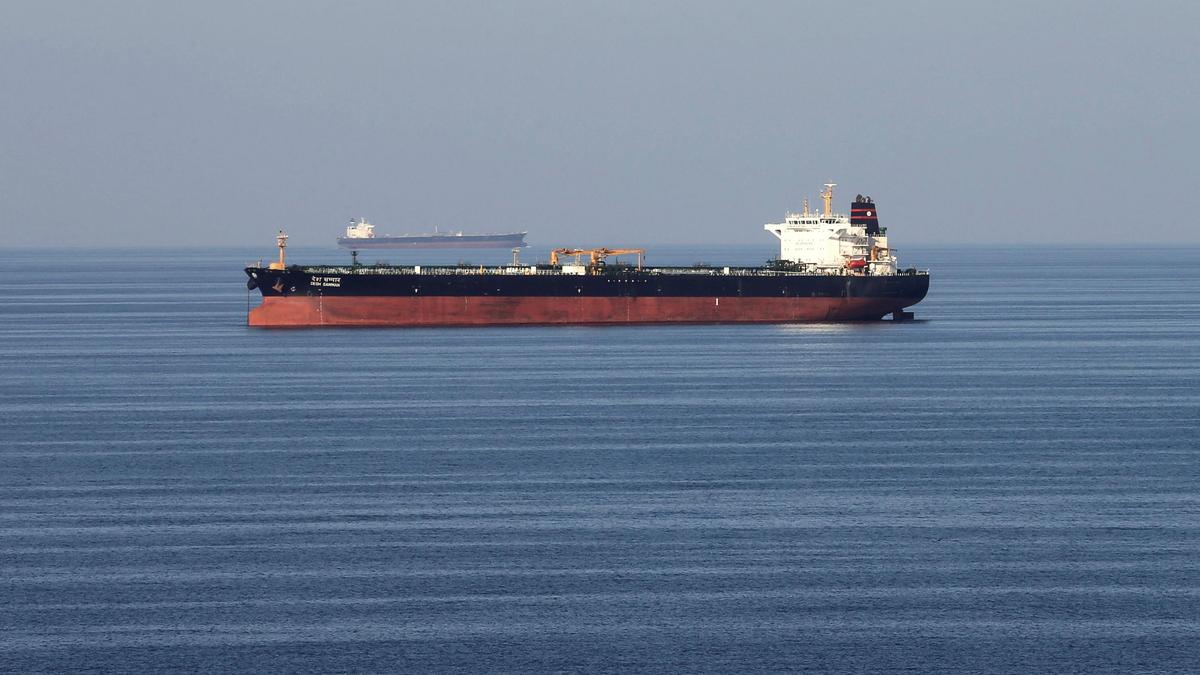
For years, Iran has mastered the art of "dark ship" maneuvers. We’re talking about tankers turning off AIS (Automatic Identification System) transponders, ship-to-ship transfers in the middle of the night, and a dizzying array of shell companies based in jurisdictions that don't ask questions.
The industry calls this the "Ghost Fleet." I’ve spent a decade watching these vessels move. They are often aging hulls, uninsured or under-insured, posing a massive environmental risk to every coastline they pass. By issuing this waiver, the U.S. is effectively providing these "ghosts" with a temporary haunting license.
The "lazy consensus" suggests this oil was already leaking into the market anyway, so we might as well track it. That is a loser’s logic. Legitimizing the sale of "oil at sea" provides Tehran with a sudden, massive injection of liquidity—not over months, but in a single 30-day fire sale.
Breaking the Math of Maximum Pressure
Let’s look at the mechanics. Iran currently holds an estimated 50 to 80 million barrels of oil in floating storage. At $70 to $80 a barrel, we are looking at a potential $4 billion to $6 billion windfall.
In the world of geopolitics, $5 billion isn't "bridge money." It’s a defense budget. It’s funding for proxy networks. It’s the difference between a regime facing a domestic currency collapse and a regime that can afford to wait out another election cycle.
The "Maximum Pressure" campaign—a term often tossed around by those who don't understand the plumbing of global finance—relies on the total isolation of the Central Bank of Iran. A waiver for "oil at sea" necessitates a waiver for the financial channels required to process those payments. You cannot sell the oil without moving the money.
Why the Price at the Pump is a Lie
Politicians love to point to these waivers as a win for the average driver. "We're increasing supply to lower prices," they claim.
This is a fundamental misunderstanding of how the oil majors operate. A 30-day influx of Iranian heavy crude does not change the structural deficit in global refining capacity. You can't just dump millions of barrels of sour crude into a refinery calibrated for light sweet crude and expect lower prices tomorrow.
The market knows this. The traders at Vitol and Trafigura know this. The only people who don't seem to know this are the ones drafting the press releases at the State Department. Instead of lowering prices, this move creates "volatility noise." It encourages OPEC+ to tighten their grip further, knowing the U.S. is desperate enough to tap the Iranian keg.
The Hidden Cost of Compliance
I have seen compliance departments in Tier 1 banks spend millions of dollars to ensure they aren't accidentally processing a transaction linked to a sanctioned entity. These departments are the real "enforcement" arm of U.S. foreign policy.
When the rules change every 30 days, these banks don't become "more flexible." They become more terrified. They see the waiver not as an opportunity, but as a trap. "If I process this Iranian transaction today, will the waiver be revoked tomorrow while the funds are still in transit?"
The result? The legitimate players stay away, and the business stays in the hands of the "dark" financiers. We are effectively subsidizing the growth of a parallel financial system that operates entirely outside the reach of the U.S. Dollar.
Stop Asking if Sanctions Work
People often ask: "Do sanctions even work if Iran is still selling oil?"
It’s the wrong question. Sanctions aren't a binary "on/off" switch. They are a tax on bad behavior. They make it expensive, difficult, and dangerous to be a pariah state.
By offering a waiver for oil at sea, we are lowering that tax. We are telling the world that the "bad behavior tax" is negotiable.
Imagine a scenario where a retail store catches a shoplifter with a bag full of stolen goods. Instead of calling the police, the manager says, "You can keep what’s in the bag if you agree to pay 50% for it today only."
Does that stop shoplifting? Or does it encourage every person in the store to fill their bags and wait for the "30-day sale"?
The Reality of Floating Storage
The technical reality of "oil at sea" is that it’s a liability for the seller. Storing oil on tankers is expensive. It costs tens of thousands of dollars per day in charter rates. The oil itself can degrade.
By waiting them out, the U.S. had the leverage. Iran was paying a "storage tax" to keep its economy on life support. This waiver is a bailout for the Iranian shipping industry. It clears their decks, settles their storage debts, and allows them to start the cycle of illicit production all over again.
The Geopolitical Ripple Effect
Our allies in the Gulf aren't watching the oil prices; they’re watching our spine.
When the U.S. pivots on a dime to allow Iranian exports, it signals to Riyadh and Abu Dhabi that American energy policy is dictated by the next 24-hour news cycle, not a long-term strategic vision. This pushes them closer to Beijing and Moscow—the very entities we are supposedly trying to isolate.
We are trading long-term regional stability for a 3-cent drop in the price of gasoline that may never even materialize.
What Actually Works
If the goal was truly to stabilize the market without empowering an adversary, the solution isn't a waiver for a rogue state. It’s the aggressive deregulation of domestic production and the streamlining of refinery permits at home. But that takes political courage and more than 30 days.
Waivers are the "fast food" of foreign policy. They provide a quick, greasy hit of perceived action while rotting the underlying health of the global order.
The next time you see a headline about a "temporary waiver," don't look at the oil. Look at the money. Look at who just got a multi-billion dollar lifeline because the West got a little bit nervous about the price of a commute.
The U.S. didn't just waive a sanction. It waived its leverage.
Stop pretending this is a strategic masterstroke. It’s a fire sale where the arsonist gets the commission.