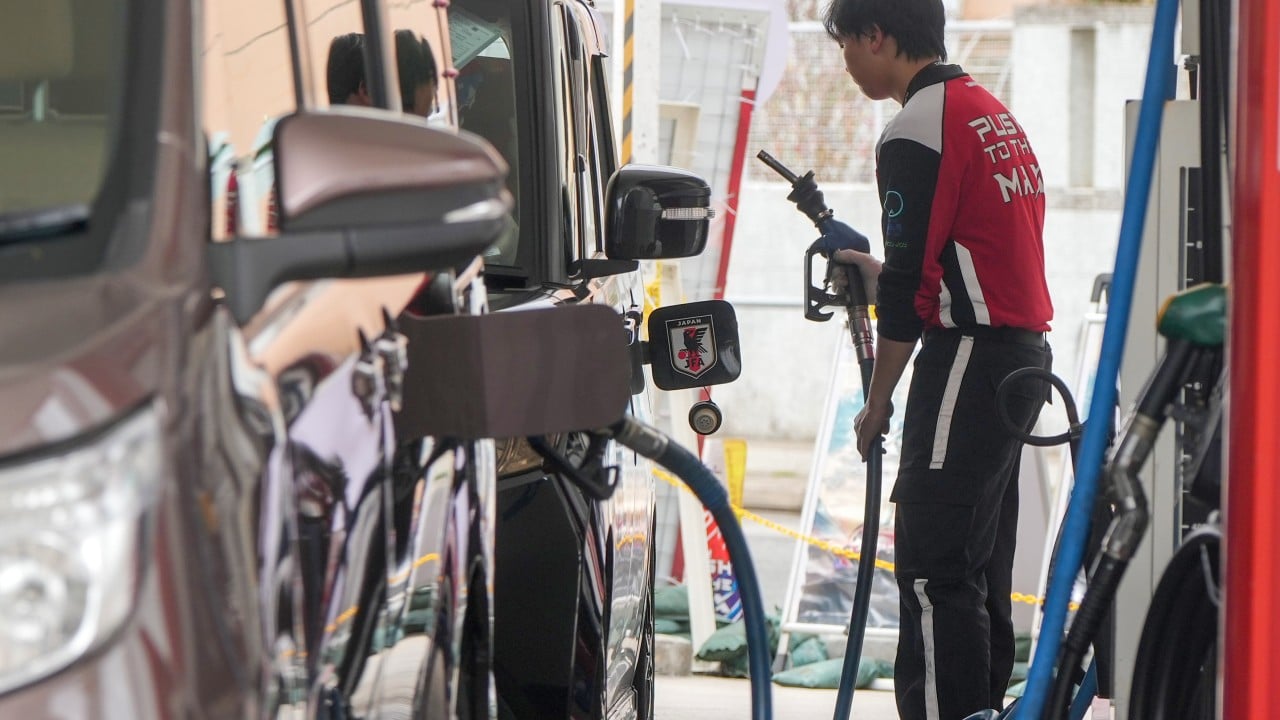
In the neon-slicked canyons of Mong Kok, the city doesn’t sleep, but it does hold its breath. It happens every time a taxi driver glances at the digital red numbers of a gas station pylon. For decades, those numbers were a source of quiet, grinding anxiety—a stagnant mystery that only seemed to shift when the global market screamed. But starting April 1, the rhythm of the city’s streets is slated for a fundamental recalibration.
Hong Kong is moving to a weekly update cycle for retail fuel prices.
To the casual observer, it sounds like a bureaucratic tweak. A minor adjustment in a ledger. To Mrs. Leung, who runs a small cross-border logistics van, it is the difference between a Sunday dinner with roast goose or another night of instant noodles. The transparency she has craved for years is finally arriving, but it comes with a new kind of tension.
The Opaque Wall of the Past
For years, the way fuel prices fluctuated in Hong Kong felt like trying to predict the weather by looking at a brick wall. The government monitored, the oil companies adjusted, and the consumer simply paid. There was a lag. When crude oil prices tumbled on the international stage, the pumps in North Point remained stubbornly high. When global prices spiked, the local reaction felt instantaneous.
This perceived imbalance created a culture of deep-seated skepticism. Drivers felt trapped in a one-way street of mounting costs. The "rocket and feather" effect—prices shooting up like a rocket but drifting down like a feather—wasn't just a socioeconomic theory; it was a daily grievance whispered in the queues at the Cross-Harbour Tunnel.
Now, the Environment and Ecology Bureau is tearing down that wall. By mandating weekly updates, the government is forcing the invisible hand into the light. Every seven days, the heartbeat of the market will be synchronized with the pulse of the city.
The Arithmetic of the Street
Consider the life of a "Red Urban" taxi driver. His shift is a twelve-hour marathon of stop-and-go traffic, humidity, and the constant hum of the air conditioner. Every liter of petrol is a deduction from his take-home pay. Under the old system, he might fill his tank on a Tuesday, only to find that a massive global price drop wouldn't reflect at his local station for another two weeks.
That delay represents lost capital. It represents a micro-tax on the working class.
The new weekly transparency mechanism aims to bridge this gap. By providing a scheduled, predictable cadence of information, the government is attempting to inject a sense of fairness into an inherently volatile commodity. It is an acknowledgment that in a city as fast-paced as Hong Kong, information is as vital as the fuel itself.
But transparency is a double-edged sword.
While the weekly updates will ensure that price drops reach the consumer faster, they also mean that price hikes will arrive with the same clinical efficiency. There will be no more hiding from a bad week in the oil markets. The volatility of the world will now knock on the driver's door every seven days, regular as a clock.
The Mechanics of the Shift
What actually happens on April 1? The government will begin publishing a weekly summary that details the movements of international oil prices alongside the local retail adjustments. This isn't just about the final number on the pump; it’s about the "why" behind the "how much."
- Frequency: Moving from irregular, ad-hoc monitoring to a strict seven-day cycle.
- Context: Providing the Mean of Platts Singapore (MOPS) benchmarks so the public can see the raw costs behind the refined product.
- Accountability: Putting the burden of proof on oil companies to justify why their retail prices aren't tracking with international trends.
The hope is that this will stimulate a more competitive environment. In a city where land is scarce and gas stations are often owned by a handful of conglomerates, true competition has always been a rare bird. If every driver knows exactly what the "fair" price should be on a Wednesday morning, the station across the street can no longer afford to be the outlier.
The Psychological Toll of the Seven Day Cycle
There is a human cost to constant information.
Imagine a weekend in late April. The news breaks that tensions in the Middle East have flared, or a refinery in Southeast Asia has gone offline. Under the old regime, the average Hong Konger might have a few days of blissful ignorance before the prices crept up. Now, they will spend their Sunday evening calculating the damage.
The "Weekly Update" becomes a recurring character in the city's narrative. It is the Sunday night dread. It is the Monday morning relief. It turns the mundane act of refueling into a strategic game. Do you fill up on Sunday night to beat the Monday reset? Or do you wait, gambling that the new week will bring a reprieve?
This shift transforms the consumer from a passive victim of the market into an active, albeit stressed, participant.
Beyond the Pump
The ripples of this policy change extend far beyond the fuel tank. When transport costs fluctuate weekly, the price of everything else begins to tremble. The bunch of bok choy at the wet market, the delivery fee for your new sofa, the cost of a minibus fare to the New Territories—all of these are tethered to the price of oil.
A more responsive fuel market means a more volatile cost of living.
If the government succeeds, this transparency will act as a stabilizer. It will prevent the "feather" from floating too long. It will ensure that when the world gets a break, Hong Kong gets a break too. But it also signals the end of a certain kind of stability. The city is plugging itself more directly into the chaotic veins of global trade.
We are no longer insulated by the lag. We are moving in real-time.
The Ghost in the Machine
Critics argue that transparency alone isn't a silver bullet. Knowing you are being overcharged doesn't help if you have no choice but to pay. The geography of Hong Kong dictates that many drivers are beholden to whatever station is on their route. Knowledge, in this case, might just be a clearer view of the struggle.
Yet, there is dignity in clarity.
For the small business owner managing a fleet of three delivery bikes, the ability to forecast expenses on a weekly basis is a tool for survival. It allows for tighter margins. It reduces the "mystery" expense that can sink a month’s profit. The government isn't promising lower prices—no one can promise that in an era of global instability—but they are promising an end to the guessing game.
The First of April
As the date approaches, the mood at the depots is one of cautious observation. The oil giants are tightening their PR strategies. The taxi unions are preparing their spreadsheets. And the citizens are waiting to see if the red numbers on the pylons will finally start to tell the truth.
This isn't just a policy update. It is a new social contract between the city and the machines that keep it moving. It is a recognition that in the digital age, silence from the authorities is often interpreted as complicity.
When the first weekly update drops on April 1, it won't just be a list of figures. It will be the sound of a city demanding to know why things cost what they cost. It will be the start of a conversation that happens every seven days, at every corner, in every district, until the next tank is empty.
The mystery of the pump is dying. In its place, we are getting the cold, hard, weekly truth.
Mrs. Leung sits in her van, checking her phone. The notification hasn't arrived yet, but she knows it's coming. She looks at the gauge. Half full. She decides to wait until Monday. For the first time in her career, she feels like she isn't just driving through the dark; she’s finally watching the clock.
Would you like me to analyze how these weekly fuel price updates might impact the operating margins of Hong Kong's logistics sector over the next quarter?