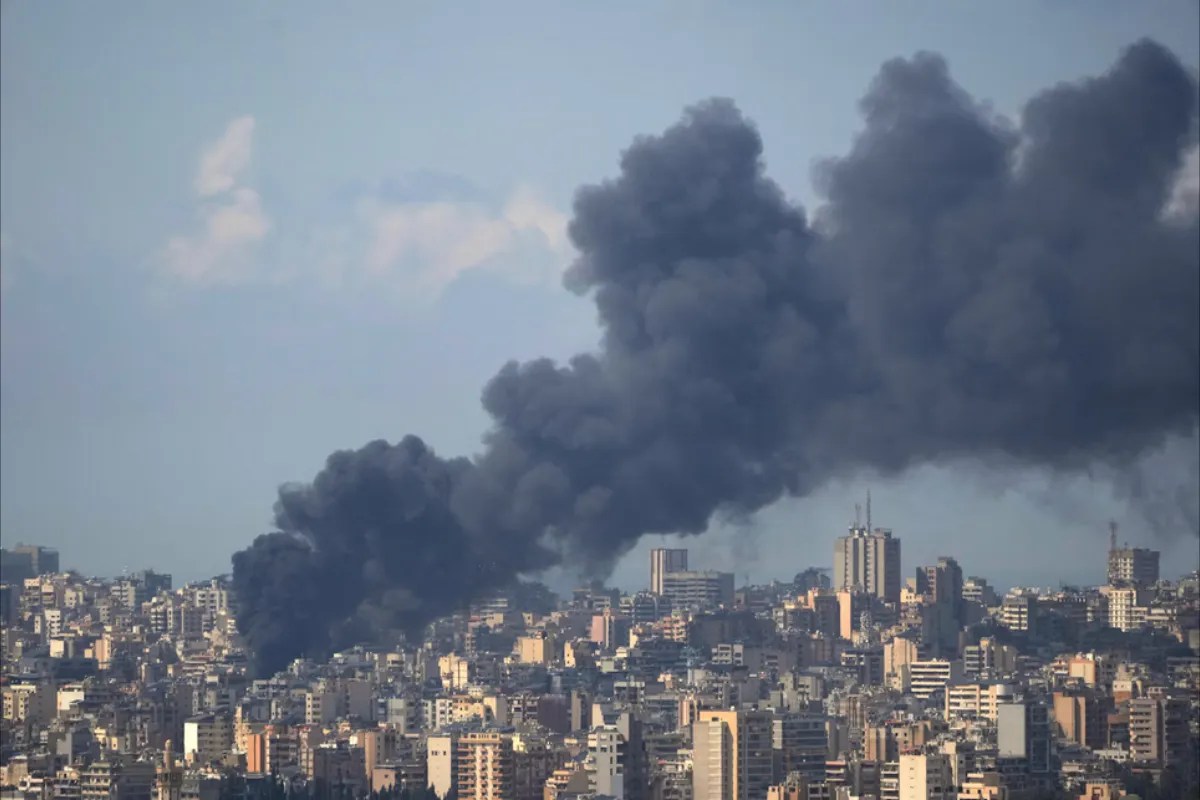
The relentless bombardment of Southern Lebanon is not a series of isolated tactical strikes. While mainstream reports focus on the immediate flashes of fire and the rising death toll, they often miss the underlying objective of the Israeli military campaign. This is a deliberate, scorched-earth strategy designed to render the border region uninhabitable for decades. By systematically targeting civilian infrastructure, agricultural lifelines, and residential hubs, the Israeli Defense Forces (IDF) are effectively creating a "dead zone" that extends far beyond the physical reach of any tunnel network or missile launcher.
The scale of the destruction suggests a goal that transcends the stated mission of pushing Hezbollah back to the Litani River. From the ruins of Bint Jbeil to the charred remains of olive groves in Marjayoun, the operational logic appears to be the permanent displacement of the Shia population that forms the social backbone of the resistance. This isn't just a war against a militia; it is a war against the geography that sustains it.
The Infrastructure of Displacement
Warfare in the 21st century often hides behind the veil of precision, but there is nothing precise about the total erasure of entire villages. The IDF's current air campaign utilizes heavy ordnance—often 2,000-pound bunker busters—in densely populated urban centers. The resulting craters do more than just collapse buildings. They rupture the water mains, shatter the electrical grids, and destroy the sewage systems that make modern life possible.
When a city like Nabatieh is hit, the immediate concern is the casualty count. However, the long-term reality is that the city’s ability to function as a human habitat is being extinguished. Replacing a water pumping station in a sanctioned, war-torn economy like Lebanon's can take years. Without water, there is no return for the hundreds of thousands of internally displaced persons (IDPs) currently huddled in schools and parking garages in Beirut.
The Agriculture of Attrition
Southern Lebanon relies on its land. For generations, the economy of the south has been anchored by tobacco and olive oil. Recent reports indicate that thousands of acres of ancient olive trees have been incinerated by white phosphorus shells. The use of these incendiary munitions serves a dual purpose. While the IDF claims they are used to clear brush and expose Hezbollah movements, the environmental fallout is catastrophic.
White phosphorus leaches into the soil, contaminating the ground for years. To an aging farmer in Yaroun, the destruction of his grove is a terminal blow. He cannot wait twenty years for new trees to mature. This systematic environmental degradation ensures that even if the bombs stop tomorrow, the economic incentive to return has been burned away.
Hezbollah’s Depth and the Failure of Static Defense
The Israeli military establishment argues that this level of violence is necessary to dismantle the "Nature Reserves"—the sophisticated network of underground bunkers and launch sites Hezbollah has spent twenty years perfecting. From a purely kinetic standpoint, this makes sense. You cannot destroy a tunnel buried forty meters underground with small arms fire. You need massive, sustained kinetic energy.
However, the assumption that Hezbollah is a static entity tethered to these border villages is a fundamental miscalculation. The group has transitioned from a localized guerrilla force into a regional expeditionary army. Their command structure is decentralized. While the IDF flattens a house in Aita al-Shaab, the operatives they are hunting have likely moved through a subterranean network that spans the length of the Bekaa Valley.
The Buffer Zone Myth
History provides a grim blueprint for what is happening now. In 1978 and again in 1982, Israel attempted to create "security zones" in Lebanon to protect its northern communities. Each time, the result was the same: the creation of a vacuum that was eventually filled by a more radical, more capable adversary.
The current attempt to create a buffer zone through aerial supremacy ignores the social reality of the Levant. Displacement breeds radicalization. Every child sitting on a thin mattress in a Beirut refugee center today is a future recruit for a movement that will eventually rise from the rubble. The buffer zone is a temporary geographical fix for a permanent political problem.
The Financial Collapse and the Cost of Conflict
Lebanon is a state that exists primarily on paper. Its banking system vanished in 2019, its currency is worthless, and its government is paralyzed by sectarian gridlock. The Israeli bombardment is hitting a country that has no safety net.
When a bridge is destroyed in the south, there is no Ministry of Public Works with the budget to rebuild it. When a hospital is leveled, the medicine stops flowing because the supply chains are already broken. Israel is aware that the Lebanese state cannot absorb this shock. The pressure is intended to turn the general population against Hezbollah, blaming the group for the ruin brought upon the nation.
A Misguided Calculation
This psychological warfare rarely works as intended. In the Middle East, the "blame" usually gravitates toward the hand pulling the trigger, not the one hiding behind the shield. By intensifying the suffering of the Lebanese civilian population, the IDF is inadvertently strengthening the narrative of "defensive resistance" that Hezbollah relies on for legitimacy.
The cost of this war is also mounting for Israel. The northern Galilee has been emptied. Domestic pressure on the Netanyahu government to return citizens to their homes is what drove this escalation. But you cannot achieve "security" through a policy of total destruction on the other side of the fence. A desolate, angry, and ruined Southern Lebanon is arguably a greater long-term threat to Kiryat Shmona than a stable, albeit hostile, neighbor.
The Role of Western Intelligence and Complicity
We must look at the hardware being used. The munitions falling on Tyre and Sidon are largely manufactured in the United States. While Washington issues lukewarm calls for "restraint," the logistical pipeline remains wide open. This disconnect between diplomatic rhetoric and military reality is not lost on the Arab world.
Intelligence sharing between the US and Israel has reached an unprecedented level. The targeted killings of high-ranking Hezbollah commanders suggest a deep penetration of the group’s communications, likely aided by Western signals intelligence. Yet, this high-tech decapitation strategy has failed to stop the daily barrages of rockets into northern Israel. It turns out that a movement based on an ideology is much harder to kill than a man with a title.
The Global South Perspective
Outside the Western bubble, the destruction of Southern Lebanon is seen as a glaring example of a double standard in international law. The "Rules-Based Order" is frequently cited when discussing Ukraine, but it seems remarkably flexible when the bombs are falling on Lebanese soil. This erosion of international norms has consequences. It signals to other regional powers that the total destruction of civilian infrastructure is now a permissible tool of statecraft.
Tactical Success Versus Strategic Defeat
On a map in a war room in Tel Aviv, the campaign looks like a success. Targets are being neutralized. Supply lines are being disrupted. The "red lines" are being pushed further north. But military history is littered with tactical geniuses who won every battle but lost the war because they failed to understand the human terrain.
The Israeli Air Force can turn every village south of the Litani into a parking lot. They can kill every commander whose name they know. But they cannot bomb an idea out of existence. As long as the root causes of the conflict—the occupation of land, the displacement of people, and the lack of a viable political settlement—remain unaddressed, the cycle will continue.
The real tragedy is that we have seen this film before. We know how it ends. The bombs will eventually stop, the diplomats will sign a hollow ceasefire, and both sides will claim victory while standing on a mountain of corpses. Then, the survivors will begin digging through the ruins, not just for their belongings, but for the means to restart the fight.
The destruction of Southern Lebanon isn't a solution. It is a down payment on the next war. The immediate tactical gains are being bought at the price of permanent regional instability. There is no security in a graveyard. The strategy of systematic depopulation may clear the border for a season, but it sows the seeds of a resentment that will eventually bloom into a conflict even more savage than the one we are witnessing today.