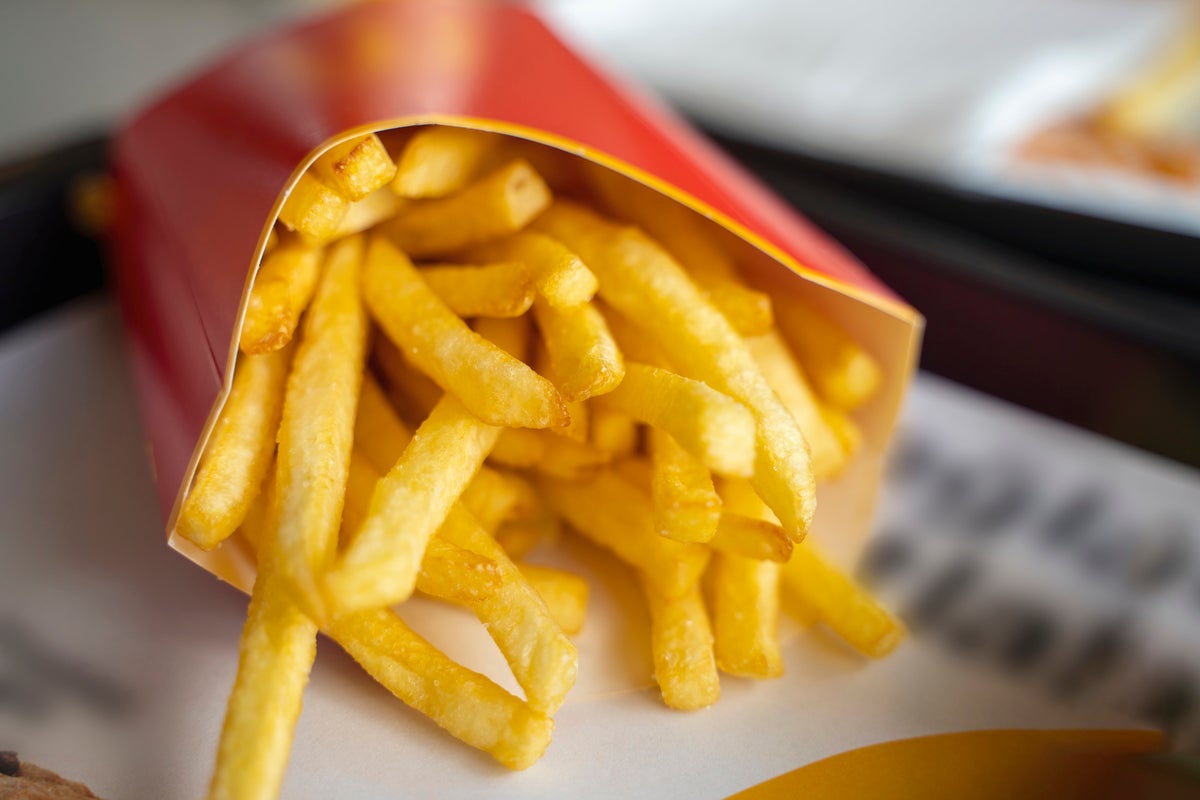
The food science industry is currently obsessed with a lie. They want you to believe that we can "optimize" the french fry—stripping away its caloric density while preserving that elusive, golden crunch—through ultrasonic vibrations, pulse-electric fields, or hydrocolloid coatings. They call it a breakthrough. I call it a fundamental misunderstanding of why people eat fries in the first place.
When scientists brag about reducing oil uptake by 30% using a modified starch coating, they aren't saving your health. They are ruining your dinner. The obsession with "healthy" junk food is a psychological trap that keeps us tethered to mediocre eating habits while stripping away the honest, chemical satisfaction of a well-executed fry. Don't forget to check out our earlier post on this related article.
The Myth of the Healthy Crunch
The "lazy consensus" in recent food tech journals suggests that the enemy is the oil. This is a shallow take. The real magic of a fry isn't just the texture; it's the specific interaction between the lipid profile and the gelatinized starch.
Most "healthy" fry innovations focus on creating a physical barrier to prevent oil absorption. Here is what they won't tell you: oil isn't just a cooking medium. It is a flavor carrier and a mouthfeel regulator. When you use a "cutting-edge" (to use their tired phrasing) coating to block oil, you end up with a dry, glassy shell that shatters like a cracker rather than yielding like a crust. If you want more about the context here, Psychology Today offers an in-depth breakdown.
The calorie reduction is often negligible in the context of a full meal, yet the sensory trade-off is massive. You’re trading 50 calories for a soul-crushing experience that leaves you hunting for a second snack twenty minutes later because your brain’s satiety signals—which are triggered heavily by fat—never fired.
Why the Air Fryer is a Lie
We have to talk about the elephant in the kitchen: the air fryer. The industry markets this as the ultimate "healthy fry" solution. Scientifically, an air fryer is just a small, high-velocity convection oven. It does not fry. It dehydrates.
Frying is an intensive heat transfer process. When a potato hits $180°C$ oil, the moisture at the surface turns to steam instantly, creating a pressurized outward flow that prevents the oil from soaking in deep while simultaneously cooking the interior. This is a violent, beautiful physical reaction.
Air frying cannot replicate this because air is a terrible conductor of heat compared to oil. To get that "crisp," you have to cook the potato longer, which leads to a thicker, tougher "pellicle" (the outer skin). You aren't eating a fry; you're eating a leathery, dehydrated potato stick. If you want a baked potato, eat a baked potato. Don't lie to your taste buds and call it a fry.
The Chemistry of Disappointment
Let’s look at the data these "healthy fry" startups love to cite. They often point to lower levels of acrylamide—a chemical that forms in starchy foods during high-heat cooking. While reducing acrylamide is a valid goal, the methods used to achieve it (like blanching at specific temperatures or using vacuums) often leach out the very sugars needed for the Maillard reaction.
The Maillard reaction is the chemical holy grail of cooking. It’s the reaction between amino acids and reducing sugars that gives browned food its distinctive flavor. When you "optimize" a fry to be healthier, you are almost always sabotaging the Maillard reaction. You get a pale, ghostly imitation of a fry that tastes like wet cardboard and sadness.
I’ve seen R&D labs spend millions of dollars trying to "re-flavor" these optimized fries with powder coatings and artificial "fatty" aromas. It’s an expensive way to fail at replicating what a pot of tallow or quality oil does for pennies.
The Satiety Paradox
Here is a thought experiment: Imagine a world where every french fry is "guilt-free" and contains half the calories. Do we become a thinner society?
History says no. This is the "SnackWell’s Effect"—a phenomenon where consumers eat double the portion because the perceived "healthiness" removes the internal regulator of moderation. By trying to make the fry healthier, the industry is actually encouraging overconsumption.
A traditional, high-quality french fry is an indulgence. It is meant to be heavy. It is meant to be rich. That richness is what tells your brain, "Stop, we’ve had enough." When you strip that away, you create a high-glycemic-index carbohydrate bomb that provides zero satisfaction. You aren't solving the obesity crisis; you're just making the food worse.
Better Fats, Not Less Fat
If we actually wanted to improve the french fry, we wouldn't focus on removing oil. We would focus on the quality of the oil.
For decades, the industry moved toward highly processed seed oils because they were cheap and "heart-healthy" according to flawed mid-century data. These oils are prone to oxidation and can become inflammatory when reused multiple times in a commercial fryer.
The contrarian solution? Go back to basics.
- Beef Tallow: Higher smoke point, incredible flavor, and much more stable than soy or canola oil.
- Duck Fat: The gold standard for crispness and depth.
- Cold-Pressed Avocado Oil: For those who want plant-based options without the inflammatory profile of industrial seed oils.
These options are more expensive. They don't look good on a "low-fat" marketing brochure. But they produce a fry that is biologically more recognizable to the human body and vastly more satisfying.
The Architecture of the Perfect Fry
If you want a "better" fry, stop looking for a lab-grown coating. Focus on the physics of the potato itself. The "Standard Model" of the perfect fry isn't a secret, yet the industry keeps trying to shortcut it.
- Starch Selection: Use high-starch Russets. The high solids content is non-negotiable.
- The Triple Cook: This is the Heston Blumenthal method. Simmer until the edges are crumbling, freeze to create fissures, fry at a low temperature to build the structure, then fry at a high temperature for the finish.
- Surface Area Management: The fissures created by freezing are what give you the "crunch." You don't need a chemical coating if you understand how to manipulate potato starch through temperature cycles.
This process is labor-intensive. It’s hard to scale in a fast-food environment. That’s why companies want the "healthy" coating shortcut. They want to sell you a mediocre product under the guise of "wellness."
The Brutal Reality of Food Tech
We have become a culture that prefers a complex lie over a simple truth. The simple truth is that french fries are not a health food. They never will be. Any attempt to make them so is an exercise in diminishing returns.
When you see a headline claiming scientists have "fixed" the fry, understand that they are talking about industrial efficiency and marketing, not your biological well-being. They are trying to find a way to sell you more potatoes by easing your conscience.
Eat the real thing. Eat it less often.
Demand fries cooked in stable, traditional fats. Demand the triple-cook method. Reject the glassy, starch-coated, air-puffed imposters. If you’re going to eat the calories, make sure they’re worth the metabolic tax.
Stop settling for engineered mediocrity.