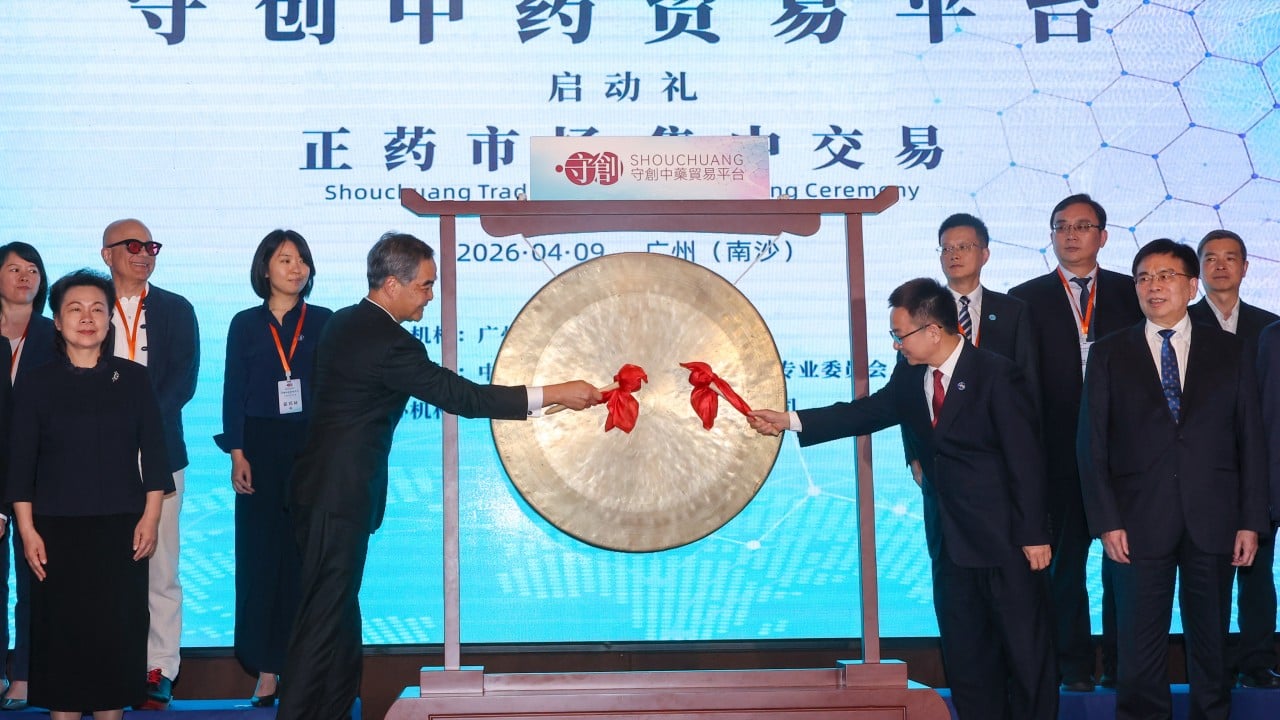
The initiative led by former Hong Kong Chief Executive CY Leung to establish a centralized Traditional Chinese Medicine (TCM) platform represents more than a cultural export; it is a calculated attempt to solve the Information-Asymmetry-to-Value Gap that has historically suppressed the sector's global market cap. By positioning Hong Kong as the "super-connector" between the massive raw material output of the Chinese mainland and the stringent regulatory environments of the West and Southeast Asia, the project aims to institutionalize TCM through a three-pronged framework: standardized quality assurance, transparent supply chain logistics, and cross-border regulatory harmonization.
The Structural Deficit of the Global TCM Market
To understand why a centralized platform is necessary, one must first identify the structural failures inherent in the current TCM trade. Despite a global market valuation exceeding $150 billion, the industry suffers from a fragmented supply chain that diminishes trust and value retention.
- Variable Bioavailability and Potency: Unlike synthetic pharmaceuticals, the efficacy of TCM is contingent on Di Dao (geographic authenticity). A lack of standardized testing at the point of origin creates a market where high-quality raw materials are priced identically to substandard ones due to a lack of verifiable data.
- Regulatory Disconnect: The European Medicines Agency (EMA) and the U.S. Food and Drug Administration (FDA) classify TCM products primarily as dietary supplements rather than therapeutic agents. This classification limits clinical claims and, by extension, market penetration.
- Traceability Friction: Current exports often pass through multiple unverified middle-men, making it impossible to guarantee the absence of heavy metals or pesticides, which are the primary triggers for import bans in high-value markets.
The Tri-Hub Operational Model
The proposed platform operates as a specialized trade infrastructure designed to compress these inefficiencies. It functions not as a passive marketplace, but as a technical filter that raw materials must pass through to gain "global-ready" status.
1. The Quality Standardization Engine
The platform’s primary function is to transform subjective agricultural products into objective pharmaceutical inputs. This involves the deployment of ISO/TC 249 standards, which govern TCM terminology and quality. By centralizing the testing process in Hong Kong—a jurisdiction with high legal trust—the platform provides a "stamp of authenticity" that lowers the risk premium for international buyers. This creates a Premium Pricing Loop: Verifiable quality leads to higher trust, which justifies higher price points, eventually funding better cultivation practices at the source.
2. Vertical Integration of the Mainland Supply Chain
The collaboration focuses on specific provinces like Gansu and Ningxia, which serve as the primary production bases. The platform introduces a Linear Integration Strategy that bypasses regional brokers. By connecting these inland growers directly to the Hong Kong hub, the platform captures the value-added margins usually lost to logistical intermediaries. This verticality ensures that the "Benefit of Origin" is preserved from the farm gate to the international port.
3. Regulatory Arbitrage and Harmonization
Hong Kong occupies a unique position where it can utilize the "One Country, Two Systems" framework to act as a regulatory sandbox. It can pilot safety standards that satisfy both the National Medical Products Administration (NMPA) in China and international standards like the Good Manufacturing Practice (GMP). The platform acts as a translation layer, converting Chinese pharmacopeia data into dossiers that meet the evidence-based requirements of Western health authorities.
The Economic Mechanics of the GBA Synergy
The Greater Bay Area (GBA) serves as the physical and financial engine for this initiative. The logic is rooted in the Cluster Effect, where the proximity of manufacturing, finance, and logistics reduces the total cost of business.
- Manufacturing Efficiency: Shenzhen and Dongguan provide the high-tech infrastructure for processing raw herbs into concentrated granules or finished patent medicines.
- Financial Liquidity: Hong Kong’s capital markets allow for the securitization of TCM supply chains, enabling "Green Finance" initiatives that fund sustainable cultivation.
- Logistical Throughput: The integration of the GBA’s port systems ensures that the lead time from harvest to global distribution is minimized, preserving the volatile chemical compounds essential for TCM efficacy.
Identifying and Mitigating Systemic Risks
The success of this platform is not guaranteed; it faces three specific "bottleneck" risks that could derail its strategic objectives.
The Standardization Paradox
There is a fundamental tension between the traditional "individualized" nature of TCM prescriptions and the "standardized" requirements of global mass markets. If the platform focuses too heavily on standardized patent medicines (pills and capsules), it may alienate the high-end practitioner market that relies on raw, customized decoctions.
Data Sovereignty and IP Protection
As the platform digitizes TCM formulas and clinical data to prove efficacy, it creates a target for intellectual property theft. Protecting the "Trade Secrets" of ancient formulas while providing enough transparency to satisfy the FDA's "Evidence-Based" requirements is a delicate balancing act.
Geopolitical Sensitivity
Trade in TCM is susceptible to broader trade tensions. If TCM is categorized as a "strategic resource" by the mainland or a "health risk" by Western regulators due to political maneuvering, the platform’s role as a bridge becomes a liability. Diversifying the market focus toward RCEP (Regional Comprehensive Economic Partnership) countries serves as a hedge against this volatility.
Quantifying the Value Proposition for Stakeholders
The platform’s impact can be measured through specific KPIs that track the maturation of the TCM sector.
| Stakeholder | Primary Value Driver | Success Metric |
|---|---|---|
| Mainland Farmers | Disintermediation | Increase in farm-gate price vs. local market price |
| Global Pharma | De-risked Sourcing | Reduction in batch-rejection rates at customs |
| Investors | Market Expansion | Growth in TCM patent filings and international licensing |
| Governments | Healthcare Diversification | Integration of TCM into national insurance schemes (e.g., in Southeast Asia) |
The Transformation of TCM from Commodity to Asset
For the TCM sector to evolve, it must move away from being traded like a commodity (where price is the only variable) and toward being traded like a specialized asset (where data and provenance dictate value). The platform’s true innovation is the creation of a Digital Twin for physical shipments—a data packet containing the herb's DNA sequence, soil heavy-metal analysis, and carbon footprint.
This data-centric approach solves the "Trust Deficit." When a hospital in Singapore or a pharmacy in Germany purchases through the platform, they are not just buying Radix Astragali; they are buying a verified history of that specific root. This shift from physical-only trade to data-verified trade is the only path to achieving the $500 billion valuation some analysts predict for the 2030s.
Strategic Realignment and Execution
To maximize the utility of the Hong Kong-Mainland TCM platform, the focus must shift from "promotion" to "infrastructure." The following moves represent the logical progression for the initiative:
- Establishing a "TCM-Specific" Bond Market: Leverage Hong Kong's status to issue bonds specifically for the modernization of mainland cultivation sites. This ties global capital to the physical improvement of the supply chain.
- Harmonizing the "Dual-Standard" System: Develop a certification that is recognized by the NMPA for domestic use and the EMA for export. This "One Test, Two Markets" approach reduces the compliance burden on producers.
- Automated Quality Control: Implement AI-driven spectroscopy at the GBA processing centers to scan raw materials in real-time. This eliminates human error in the grading process and ensures that only "Grade A" materials reach the global market.
The platform is not merely a trading post; it is a sophisticated mechanism for Regulatory and Quality Arbitrage. By capturing the spread between the low cost of production in mainland China and the high value of "trusted" medicine in the global market, the initiative creates a sustainable economic moat. The final success of the project will be determined by its ability to maintain the integrity of this "trust bridge" against the pressures of both internal supply chain corruption and external trade barriers.
The immediate priority for the platform’s leadership is the rigorous onboarding of the first 100 "Certified Source" farms in provinces like Gansu. Establishing this core of high-integrity producers creates the "Minimum Viable Product" for the global market. Once the first shipments are successfully cleared through international customs with zero friction, the proof-of-concept will trigger a self-sustaining cycle of investment and adoption.