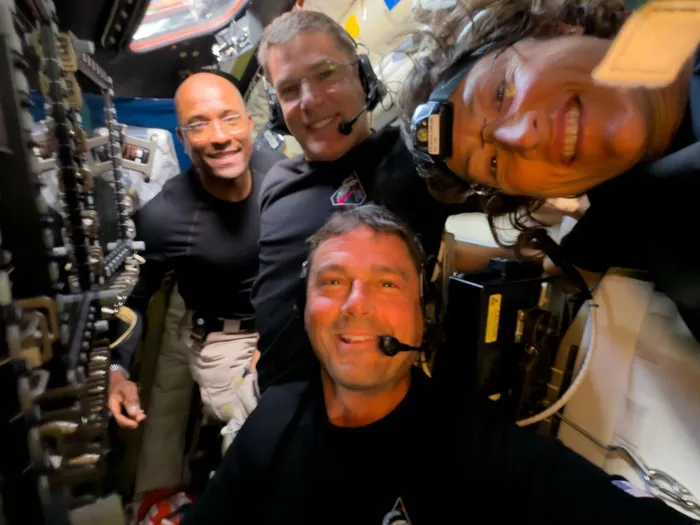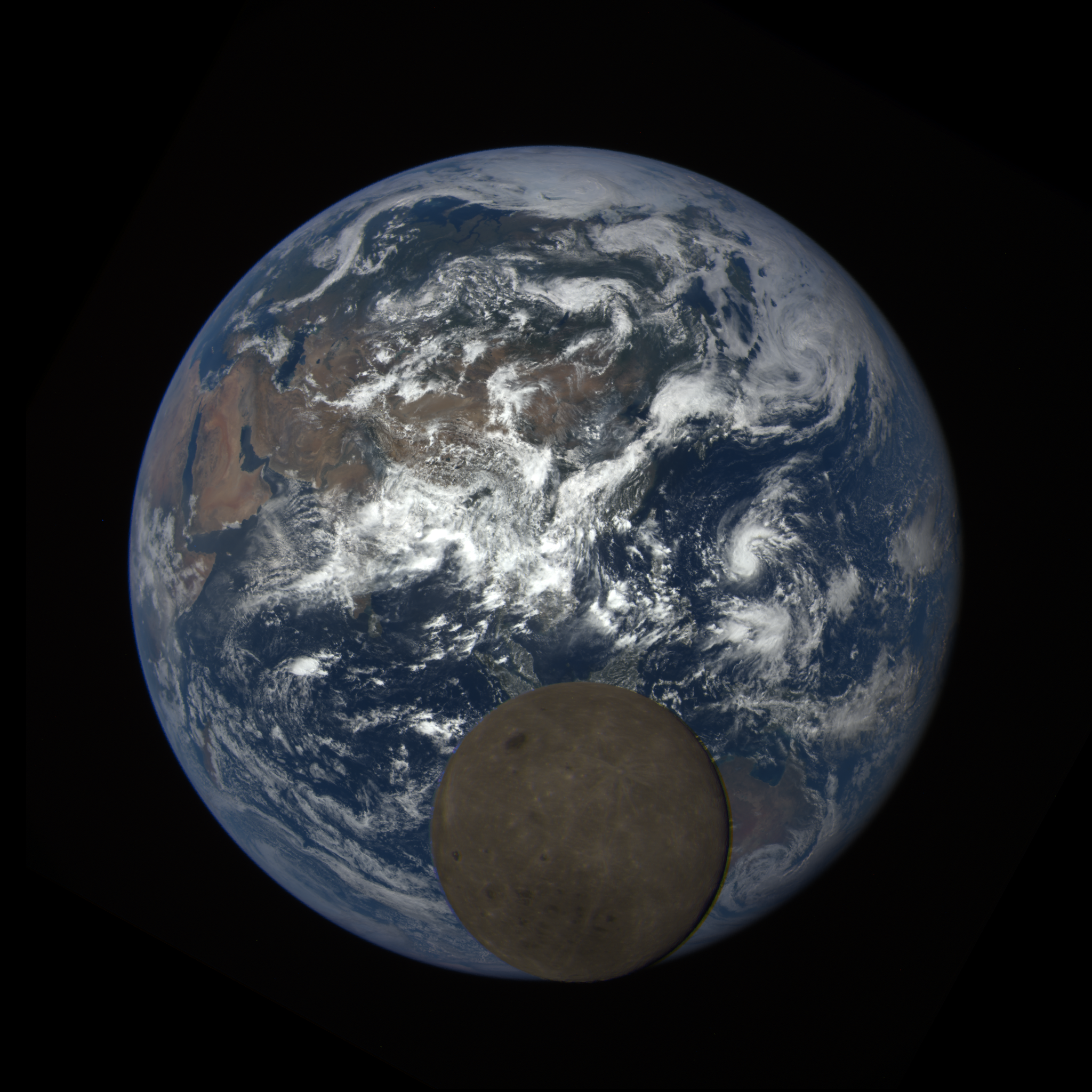
The return of four astronauts from a lunar flyby does not merely signal the completion of a flight path; it validates the structural integrity of the Orion crew module's thermal protection systems and the navigational precision required for high-velocity atmospheric reentry. This mission serves as the critical stress test for the Earth-Moon-Earth transit corridor, a 384,400-kilometer logistical chain that must operate with near-zero variance before a human descent is attempted. The transition from a circumlunar trajectory to a lunar landing involves a fundamental shift in physics, moving from orbital mechanics and ballistic reentry to the complex fluid dynamics of powered descent and vertical landing in a vacuum.
The Triad of Lunar Mission Success
To evaluate the feasibility of the upcoming landing phase, one must decompose the mission into three distinct operational pillars: Life Support Endurance, Propulsion Reliability, and Heat Shield Ablation.
1. Life Support and Atmospheric Scrubber Saturation
A lunar flyby tests the baseline metabolic load of a four-person crew over approximately ten days. However, a landing mission extends this duration significantly, introducing the "Surface Stay" variable.
- Mass-to-Oxygen Ratio: Every kilogram of breathing gas must be balanced against the fuel required to lift it out of Earth's gravity well.
- CO2 Management: Unlike the International Space Station, which utilizes expansive regenerative systems, the Orion capsule and the subsequent Human Landing System (HLS) rely on more compact, high-efficiency lithium hydroxide or amine-based scrubbers.
- System Redundancy: The failure of a single thermal control loop during a flyby allows for a direct return to Earth; a similar failure during a descent phase becomes a terminal event without an immediate abort-to-orbit capability.
2. The Delta-V Deficit in Lunar Descent
The primary bottleneck for a moon landing is the change in velocity, or Delta-V, required to transition from a lunar orbit to a stationary position on the surface.
- Orbital Velocity: The spacecraft maintains a speed of approximately 1.6 kilometers per second in low lunar orbit.
- Kinetic Energy Dissipation: Because the Moon lacks an atmosphere, aerobraking is impossible. All kinetic energy must be negated through chemical propulsion.
- The Tsiolkovsky Constraint: The "Rocket Equation" dictates that to achieve the necessary Delta-V for a landing and subsequent ascent, the initial mass of the HLS must be predominantly propellant. This creates a cascading requirement for heavy-lift launches from Earth, specifically utilizing the Space Launch System (SLS) and Starship HLS configurations.
3. High-Velocity Reentry Dynamics
The return from the Moon involves entering Earth’s atmosphere at roughly 11 kilometers per second (Mach 32). This is significantly faster than a return from Low Earth Orbit (LEO), which occurs at roughly 7.8 kilometers per second.
- Compression Heating: The kinetic energy of the spacecraft is converted into heat via the compression of atmospheric gases. The Orion heat shield must withstand temperatures reaching 2,760 degrees Celsius.
- Skip Reentry Logic: To manage G-loads and heat distribution, NASA utilizes a "skip" maneuver, where the capsule dips into the atmosphere, bounces back slightly into space to dissipate heat, and then performs a final descent. This maneuver requires sub-millisecond timing in thruster firing and precise center-of-gravity management.
Navigating the Human Landing System Bottleneck
The move from flyby to landing introduces a radical shift in vehicle architecture. While the Orion capsule is the "bus" for the transit, it cannot land. NASA relies on the Human Landing System (HLS), a variant of SpaceX’s Starship, which introduces a different set of technical risks.
Cryogenic Fluid Management in Deep Space
The HLS requires liquid oxygen (LOX) and liquid methane (LCH4) to remain at cryogenic temperatures for weeks.
- Boil-off Prevention: Solar radiation in deep space quickly heats fuel tanks. Effective insulation and active cooling systems are required to prevent the propellant from expanding and venting, which would leave the crew stranded on the surface.
- Zero-G Fuel Transfer: To reach the Moon, the HLS must be refueled in Earth orbit. This requires multiple "tanker" launches and the successful docking and transfer of volatile liquids in a microgravity environment—a feat never before performed at this scale.
Precision Landing and Plume Surface Interaction
Landing a vehicle as massive as the HLS on the lunar South Pole presents a unique geotechnical challenge.
- Regolith Displacement: High-thrust engines can kick up lunar dust (regolith) at ballistic velocities, potentially damaging the lander’s sensors or sandblasting nearby equipment.
- Shadowed Terrain Navigation: The South Pole is characterized by "Permanently Shadowed Regions" (PSRs). Traditional optical landing sensors are useless in total darkness, necessitating the use of LiDAR (Light Detection and Ranging) and Terrain Relative Navigation (TRN) to identify safe landing zones in real-time.
The Economic Reality of the Lunar South Pole
The strategic shift toward the lunar South Pole is driven by the hypothesized presence of water ice in crater shadows. This is not a matter of scientific curiosity, but of mission economics.
In-Situ Resource Utilization (ISRU) Efficiency
If water ice can be harvested and electrolyzed into hydrogen and oxygen, the Moon becomes a "refueling station."
- Oxygen Production: $$2H_2O \rightarrow 2H_2 + O_2$$
- Cost Reduction: Processing fuel on the Moon eliminates the need to launch that mass from Earth, where the cost per kilogram remains a significant barrier to long-term exploration.
Calculated Risks and Systemic Vulnerabilities
Despite the success of the flyby, several "known unknowns" remain that could derail the landing timeline.
- Radiation Exposure: During the transit, astronauts leave the protection of Earth’s Van Allen belts. A solar particle event (SPE) during a surface stay could deliver a lethal dose of radiation if the lander’s shielding is insufficient.
- Communications Latency: While the delay is only approximately 1.3 seconds, the dependence on the Deep Space Network (DSN) for telemetry creates a single point of failure. If the DSN is overcapacity or experiences a ground-station outage during the descent burn, the crew must rely entirely on onboard autonomous systems.
- The Artemis Suits: Existing Extravehicular Activity (EVA) suits used on the ISS are pressurized for a microgravity environment and are too bulky for walking. New suits must provide greater lower-body mobility while maintaining a hermetic seal against the abrasive, "velcro-like" properties of lunar regolith.
Strategic Operational Forecast
The success of the lunar flyby confirms that the Orion-SLS stack is a viable deep-space transport. However, the path to a landing is not a linear progression; it is a step-function increase in complexity.
The next 24 months will be defined by the "Refueling Milestone." If SpaceX and NASA can demonstrate the transfer of cryogenic propellants in LEO, the landing mission moves from a theoretical possibility to a logistical certainty. If that milestone fails, the mission architecture will likely revert to a simpler, expendable lander model, sacrificing the goal of a sustainable lunar base to ensure a near-term political win. The focus should remain on the mass-flow rate of the refueling tankers, as this is the primary indicator of the Artemis program's eventual success.