Stop checking your watch. Stop doom-scrolling the headlines about "unprecedented delays" and "security meltdowns." Every time a government shutdown looms, the media recycles the same tired script: heroic TSA agents working without pay, lines snaking into the parking lot, and a national aviation system on the brink of collapse.
It is a lie. Not because the agents aren't working hard—they are—but because the "chaos" is a manufactured performance designed to protect a bloated, inefficient bureaucracy.
If the TSA actually stopped functioning during a shutdown, the skies wouldn't fall. The industry would simply be forced to innovate. We are currently held hostage by a monopoly that uses your holiday travel plans as a political bargaining chip. It is time to stop fearing the shutdown and start demanding the decentralization of airport security.
The Sick-Out Narrative is a Statistical Ghost
The headlines love to highlight "surging unscheduled absences" among TSA staff during budget stalemates. They want you to envision thousands of officers walking off the job in solidarity.
Look at the actual data from previous long-term shutdowns. Even at the height of the 2018-2019 impasse, the highest national absence rate hit roughly 10%. In any other high-stress service industry, a 10% call-out rate during a period of zero pay isn't a "crisis"—it’s a miracle of professional dedication.
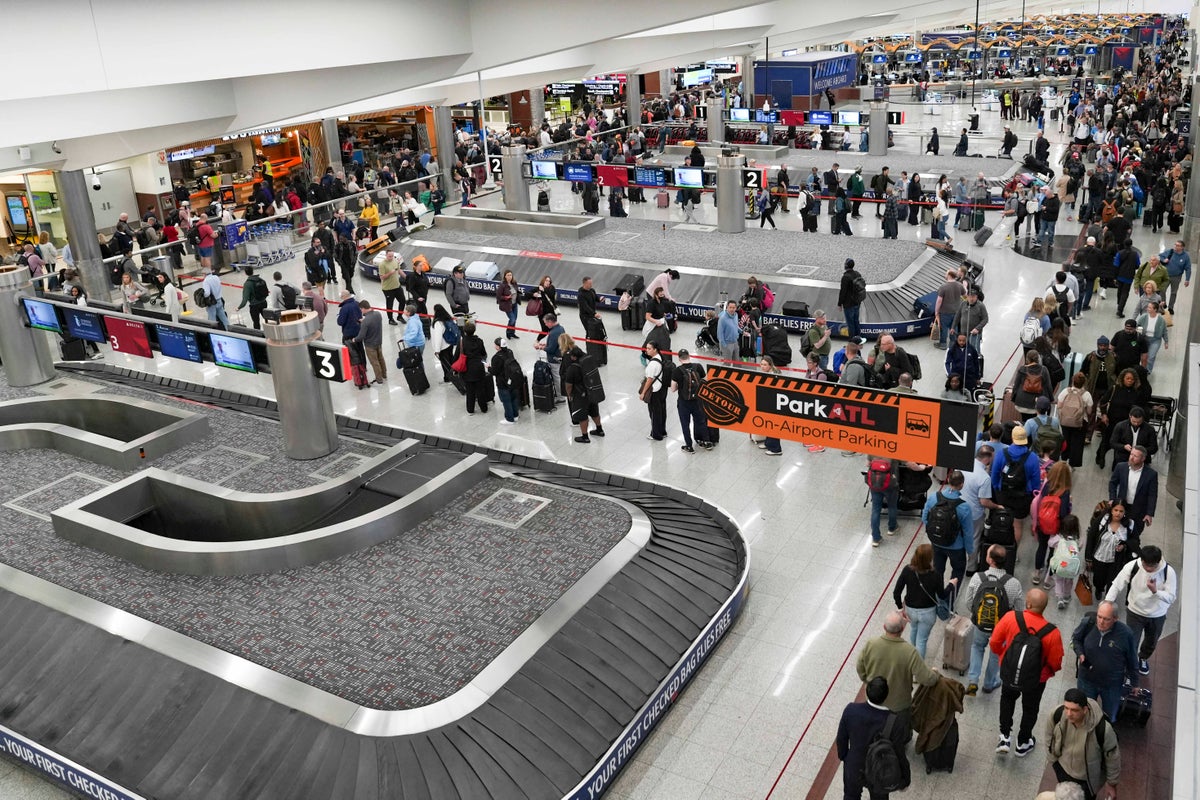
The "chaos" at major hubs like Hartsfield-Jackson or O'Hare during these periods is often less about missing staff and more about rigid, centralized management. When a private company faces a labor shortage, it shifts resources, streamlines processes, and prioritizes throughput. When the TSA faces a shortage, it closes lanes to ensure the lines look as long and miserable as possible for the evening news.
Security is Not a Federal Monopoly
The biggest misconception in modern travel is that only the federal government can keep a plane safe. This is historically and practically false.
Before 2001, security was the responsibility of airlines and airports. While the pre-9/11 system had flaws, the solution wasn't necessarily a massive, federalized workforce of 60,000 employees. Look at the Screening Partnership Program (SPP). Currently, over 20 U.S. airports—including San Francisco International (SFO)—use private screening companies overseen by the TSA rather than federal employees.
Guess what? During shutdowns, SFO doesn't have a "sick-out" problem. Why? Because private contractors get paid by their firms regardless of whether Congress is bickering over a continuing resolution.
If we truly cared about "travel headaches," we would be expanding the SPP to every major hub in the country. We don't do it because the TSA is a jobs program first and a security agency second. A shutdown merely exposes the fragility of a system that refuses to outsource its labor risk.
The High Cost of the Security Theater
We have been conditioned to accept the "liquids and laptops" ritual as a necessary evil. In reality, much of the checkpoint experience is a relic.
The TSA’s own internal testing—leaked repeatedly over the last decade—shows dismal failure rates in detecting prohibited items during covert trials. We are trading billions of dollars and millions of man-hours for a sense of "feeling safe" rather than actual, data-driven risk mitigation.
During a shutdown, the TSA has a choice:
- Simplify the process to move people faster with fewer staff.
- Maintain the full theater with fewer staff, creating the "chaos" headlines.
They almost always choose the latter. By refusing to adapt the screening protocols—such as leaning more heavily on K9 teams and biometric pre-clearance which require less manual labor—they ensure that the public feels the "pain" of the political stalemate. It is a cynical use of the traveler as a human shield.
Why Your "PreCheck" is the Ultimate Irony
The government sells you a solution to a problem they created. TSA PreCheck is a brilliant racket: pay the government for the privilege of not being treated like a suspect by the government.
During a shutdown, PreCheck lanes often stay open, proving that the agency knows exactly how to move people quickly when there is a financial or PR incentive to do so. The infrastructure for efficient travel exists. It is simply gated behind a paywall and restricted by a bureaucracy that thrives on its own perceived indispensability.
The Logic of the Decentralized Airport
Imagine a scenario where the federal government provides the standards, but the airports provide the execution.
If Dallas/Fort Worth (DFW) or LAX were responsible for their own security lines, they would treat you like a customer. If the lines got too long, the airport would lose money as people missed flights and skipped the terminal's retail shops. They would have a direct financial incentive to hire more staff, invest in better scanners, and ensure that a Washington D.C. budget fight doesn't stop a family from getting to a wedding.
Under the current model, the TSA has zero incentive to be efficient. Whether the line is five minutes or five hours, their budget remains the same. In fact, longer lines often lead to increased budget requests. We are rewarding failure.
The Reality of "Travel Headaches"
Let's be brutally honest: most travel delays during a shutdown are caused by weather and airline mechanical issues, not the TSA. But "Thunderstorm in Denver" doesn't get the same clicks as "Federal Shutdown Cripples Airports."
The media outlets screaming about shutdown chaos are the same ones that ignore the daily, systemic failures of our aviation infrastructure—the aging ATC systems, the lack of pilot pipelines, and the monopolistic behavior of the "Big Four" carriers. The TSA is just an easy, visible villain to point at when you’re stuck in Terminal 3.
If you want to fix airport delays, stop worrying about the TSA’s paycheck. Start worrying about why we still use ground-based radar from the 1960s to track flights. Start asking why airports aren't allowed to compete on security efficiency.
Stop Being a Victim of the Headline
The next time you see a report about "impending airport doom," ignore it. Pack light, show up at your normal time, and watch how the system actually functions. You will find that the vast majority of officers are at their posts, doing their jobs, despite the noise.
The real "chaos" isn't the line at the airport; it’s the intellectual laziness of accepting that this is the only way the system can work. We have been trained to believe that without a federal badge at the checkpoint, the planes won't fly.
The airlines want you to believe it because it shifts the blame for their own delays onto the government. The politicians want you to believe it because it gives them leverage. The TSA wants you to believe it because it ensures their survival.
Break the cycle. Demand privatization. Support the airports that opt out of the federal monopoly. The only thing we have to lose is the belt-less, shoe-less walk through a radiation portal.
Stop waiting for permission to have an efficient travel experience. The "chaos" is a choice. Choose differently.