The metal on the railing of the Ever Given II is slick with a fine, oily mist, the kind of humidity that feels like a physical weight against the lungs. If you stand on the bridge of a Very Large Crude Carrier (VLCC) passing through the Strait of Hormuz, you aren't just looking at water. You are looking at the carotid artery of the modern world.
Twenty-one miles.
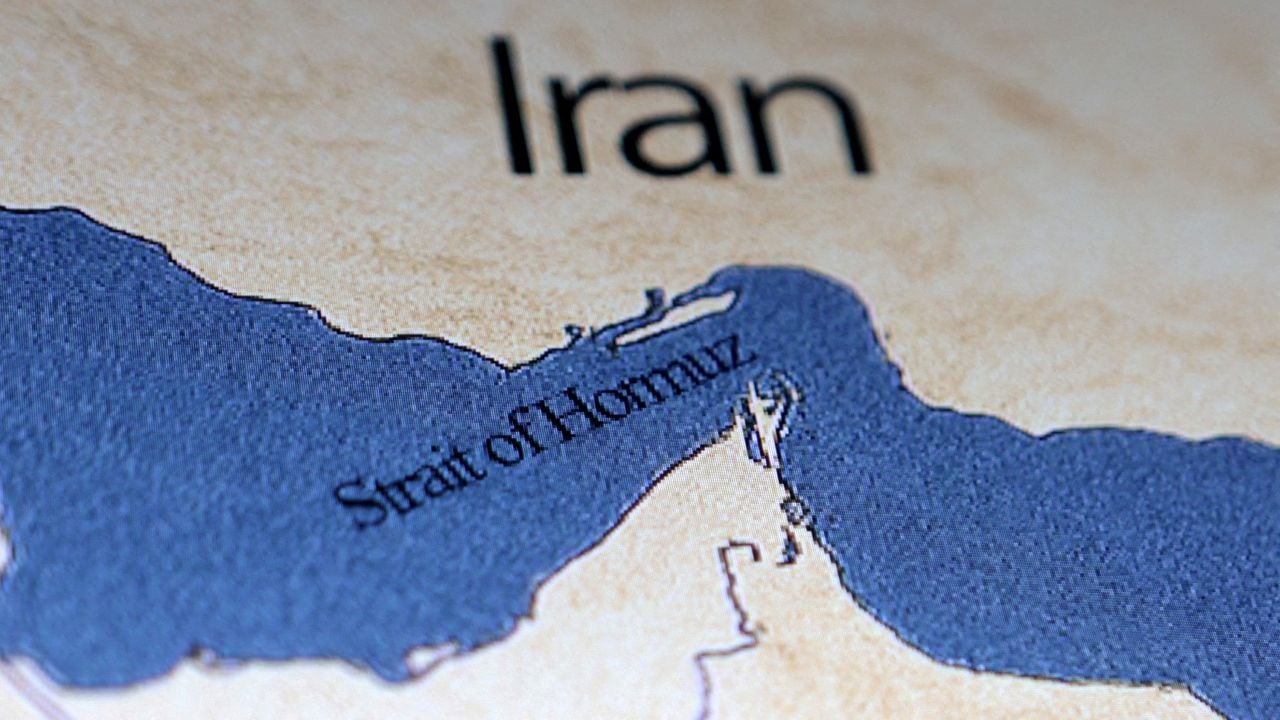
That is the width of the narrowest point of the Strait. To put that in perspective, a marathon runner could cross that distance in about two hours. Yet, through this tiny needle’s eye, nearly 21 million barrels of oil flow every single day. If you have ever flipped a light switch, driven to a grocery store, or bought a plastic toy, your life is tethered to this specific patch of turquoise water between Oman and Iran.
When the news broke that the United States was moving to block Iranian ports, the air in the shipping offices from Singapore to Rotterdam grew thin. This isn't a board game. It is a hair-trigger reality where a single miscalculation by a nervous destroyer captain or a revolutionary guard speedboat changes the price of bread in Kansas.
The Ghost in the Machine
Consider Malek. He is a hypothetical third officer on a Greek-owned tanker, but his anxiety is real enough to be felt across the industry. Malek doesn't care about the high-level diplomatic chess between Washington and Tehran. He cares about the "Symmetric" and "Asymmetric" threats that hide in the morning glare.
To the north lies the Iranian coastline, jagged and watchful. To the south, the Musandam Peninsula. In between, the shipping lanes are only two miles wide in each direction, separated by a two-mile buffer zone. It is a tightrope walk.
The U.S. plan to squeeze Iranian exports to zero is a maneuver of economic strangulation. But when you corner a power that sits on the world’s most vital geographic chokepoint, the response isn't always found in a legal brief. It’s found in the water.
Iran has spent decades perfecting the art of the swarm. They don't need a fleet of billion-dollar aircraft carriers to win. They have thousands of fast-attack boats, sea mines that look like trash floating on the waves, and coastal missile batteries tucked into limestone caves.
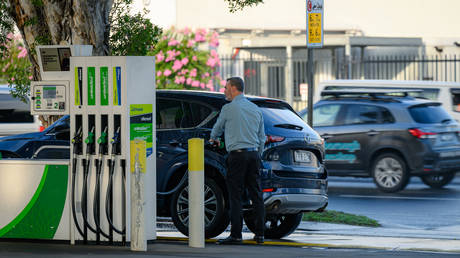
When the U.S. announces a blockade, the maritime insurance markets don't just "react." They scream. The "War Risk" premium on a single voyage can jump by hundreds of thousands of dollars in an afternoon. That cost doesn't vanish into the ether. It ends up on your credit card statement at the gas pump.
The Dragon and the Lion
Beijing and London are currently playing the roles of the worried parents in a room full of breaking glass. Their urgency isn't just about peace; it’s about survival.
China is the world's largest importer of crude oil. Their "Economic Miracle" is fueled by a steady, uninterrupted heartbeat of tankers coming from the Persian Gulf. For China, a closed Strait is a cardiac arrest. Their calls for "restraint" are coded language for a terrifying reality: if the oil stops, the factories stop. If the factories stop, the social contract in the world's most populous nation begins to fray.
Then there is the United Kingdom. Historically the masters of the sea, the British now find themselves in a precarious middle ground. They are the traditional allies of the Americans, yet they are acutely aware that their own energy security is a fragile thing. A blockade doesn't just hurt the "enemy." It creates a vacuum.
The logic of a blockade is simple on paper. You stop the ships, you stop the money, you force a change in behavior. But the sea is never simple.
The Invisible Stakes of a Cold Harbor
We often talk about "global markets" as if they are abstract mathematical clouds. They aren't. They are people.
If the U.S. proceeds with blocking Iranian ports, and Iran follows through on its perennial threat to shutter the Strait, the immediate impact is a supply shock. We are talking about 20% of the world's liquid petroleum disappearing from the market overnight.
Imagine the logistics.
Tankers currently in the Gulf become floating targets or stationary warehouses. They can't leave. The ones outside can't enter. The world has roughly 60 to 90 days of emergency oil reserves, but the psychological impact hits in 60 to 90 seconds.
The "restraint" urged by China and the UK is born from the knowledge that once the first mine is laid or the first tanker is seized, the escalatory ladder has no middle rungs. You go from zero to total conflict with terrifying speed.
The U.S. gamble is that Iran is too weak, too economically battered to fight back. It’s a bet on desperation leading to surrender. But history suggests that desperation often leads to something much more volatile. When a regime perceives an existential threat—the total blocking of its only source of life-blood—it ceases to act according to the "rational actor" models used by think tanks in D.C.
The Sound of a Closing Gate
There is a specific silence that happens on a ship when the engines cut out. It is an unnatural, haunting quiet.
If the Strait of Hormuz closes, that silence will ripple across the globe. It will be felt in the quiet of a shuttered assembly line in Germany. It will be heard in the stillness of a trucking terminal in Ohio where the diesel has become too expensive to burn.
The U.S. insists this is about security and preventing the proliferation of regional instability. Iran insists this is about sovereignty and the right to exist. China and the UK insist that everyone needs to breathe before the world’s economy is suffocated by twenty-one miles of water.
Everyone is right, and everyone is dangerously wrong.
The facts tell us about ship counts, barrel numbers, and diplomatic communiqués. But the truth is more visceral. We have built a civilization that rests on a thin blue line of water. We have assumed that the gates will always stay open because it would be "crazy" to close them.
We are now discovering that "crazy" is a relative term when the stakes are survival.
The blockade isn't just a move on a map. It is a hand reaching for the throat of global commerce. As the U.S. tightens its grip, the world watches the Strait, waiting to see if the next sound we hear is the splash of an anchor or the roar of a missile.
The metal railing on the Ever Given II is still slick. The horizon is still clear. For now. But the twenty-one miles feel narrower than they did yesterday. They feel like a trap.