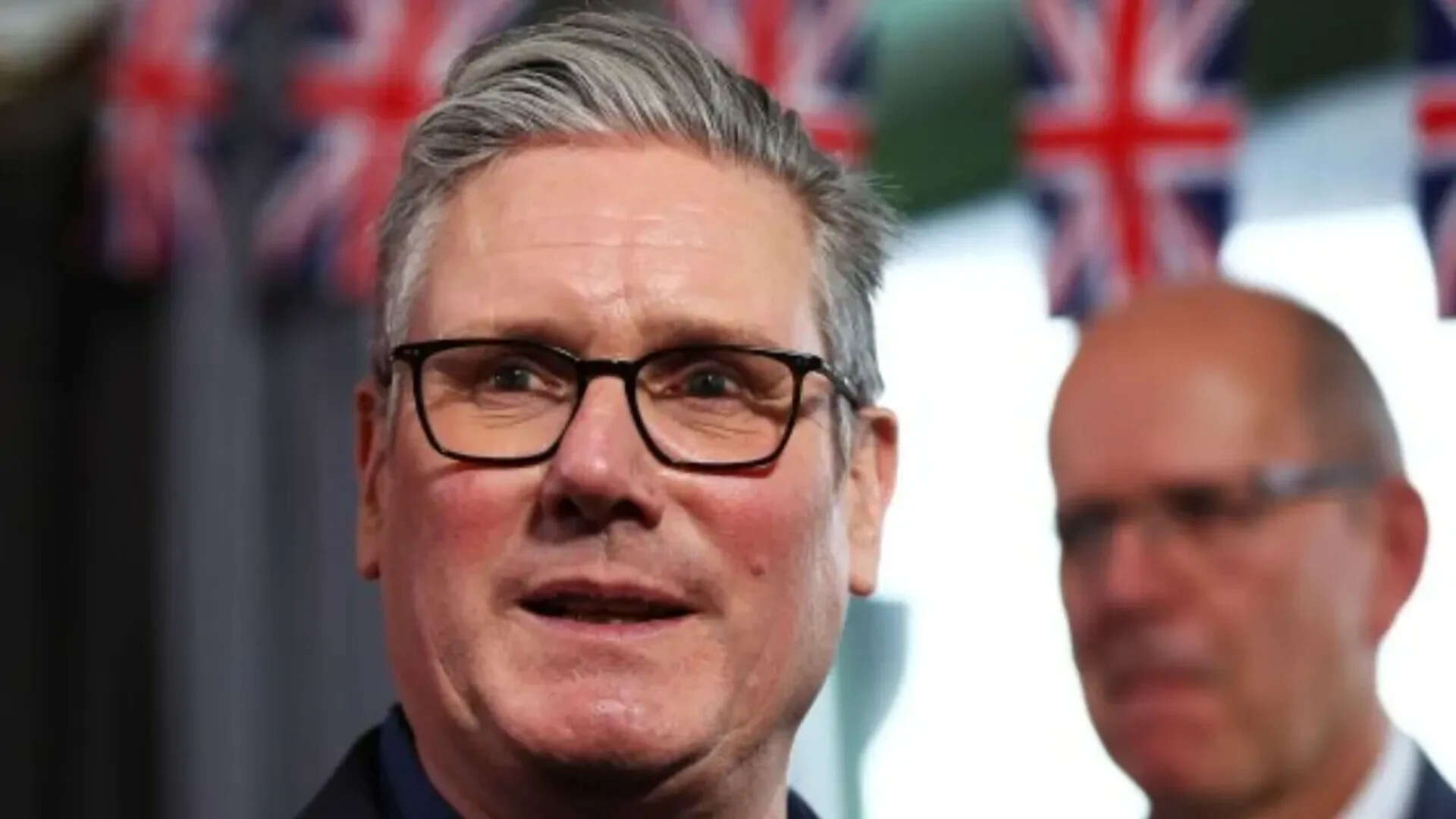
Keir Starmer and Emmanuel Macron are dusting off the old "Entente Cordiale" playbook to fix a problem they no longer have the hardware to solve. The announcement of a UK-France summit to "restore navigation" in the Strait of Hormuz is a masterclass in performative statecraft. It sounds noble. It looks presidential. It is also entirely detached from the reality of modern maritime power and the shifting physics of global trade.
The competitor narrative is predictable: closure is "deeply damaging," and collective Western diplomatic pressure, backed by a few aging frigates, will magically reopen the world's most sensitive chokepoint. This is a fairy tale.
Let’s dismantle the "lazy consensus." The idea that a bilateral summit between two middle powers can dictate terms in the Persian Gulf ignores twenty years of naval attrition and a fundamental shift in who actually needs that oil.
The Myth of the Global Policeman
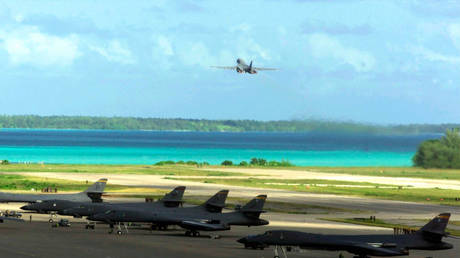
The UK and France are operating on muscle memory from the 1990s. Back then, the Royal Navy and the Marine Nationale possessed the hull counts to maintain a persistent, credible presence. Today, the Royal Navy’s Type 23 frigates are being held together by hope and high-grade paint, while the Type 26 replacements are years behind schedule.
When Starmer talks about "restoring navigation," he is implying a kinetic capability that doesn’t exist. You don't secure 21 million barrels of oil per day with a summit communiqué. You do it with a layered defense that can counter swarm-boat tactics and cheap, asymmetrical drone strikes.
I’ve spent a decade analyzing supply chain vulnerabilities for firms that actually move the world’s commodities. I can tell you that the insurance markets in London—the people who actually decide if a ship sails—don't care about a handshake in Paris. They care about the $P_d$ (probability of detection) and the $P_k$ (probability of kill) of incoming anti-ship missiles.
The Energy Independence Delusion
The premise of this summit is that the "West" needs to save the Strait. This is an outdated economic map.
Look at the data. The United States is now a net exporter of crude and petroleum products. While the global price of oil is fungible, the physical reliance on Hormuz has shifted dramatically toward the East. China, India, Japan, and South Korea are the true hostages of the Strait.
If navigation is "deeply damaging" to the UK, it is a terminal threat to Beijing. By positioning themselves as the primary guarantors of the Strait, Starmer and Macron are essentially offering a free security subsidy to their greatest economic rivals. Why should British taxpayers fund the protection of oil lanes that primarily feed the refineries of Ningbo and Shanghai?
Instead of a summit to "restore" navigation, we should be having a summit on how to bill the primary beneficiaries for the service. Anything else is geopolitical charity.
The Drone Gap and the Physics of Modern Blockades
The status quo assumes that a "closed" Strait means a physical blockade of ships. It doesn't. In the age of the Shahed-series drone and ballistic anti-ship missiles, "closure" is a psychological state achieved through math.
If an adversary can launch $n$ drones at a cost of $20,000 each, and a Royal Navy destroyer must use a Sea Viper missile costing $1.5 million to intercept just one, the math of "restoring navigation" collapses within a week.
$$\text{Cost Exchange Ratio} = \frac{\text{Interceptor Cost}}{\text{Attacker Cost}}$$
When this ratio is 75:1, you aren't winning a war of attrition; you are bankrupting your defense budget to protect a single tanker. Starmer’s summit won't address this because admitting the math makes the UK’s naval posture look like a Victorian relic.
The Problem with "Collective Security"
The competitor article leans heavily on "international cooperation." In the world of maritime security, "collective" usually means "the US does the heavy lifting while we provide a liaison officer and a press release."
But the US is pivots to the Indo-Pacific. Washington is tired of being the world's free security guard for energy routes it no longer depends on. By stepping into this vacuum with nothing but a summit, the UK and France are signaling weakness, not strength. They are demonstrating that they have the will to lead, but not the wallet to follow through.
I’ve seen governments blow millions on these summits. They produce "frameworks" and "joint task forces" that look great on a slide deck at a Brussels cocktail party but fail the first time a Revolutionary Guard fast-attack craft crosses a bow.
The Contrarian Reality: Let it Pivot
If we want to actually secure British and French interests, the strategy shouldn't be "restoring navigation." It should be strategic decoupling from the chokepoint.
- Accelerate the Pipeline Alternative: There is significant underutilized capacity in the East-West Pipeline (Abqaiq-Yanbu) across Saudi Arabia. Investing in the expansion of terrestrial bypasses is infinitely more effective than patrolling a 21-mile-wide strip of water with a handful of ships.
- Tax the Beneficiaries: If China wants its oil, China should provide the escort. A "user-pays" model for maritime security would force the actual consumers of Hormuz oil to share the burden of its defense.
- Admit the Vulnerability: Stop telling the public that "navigation will be restored." It won't. The Strait is permanently contested. Ships will be seized. Drones will be fired. The goal should be resilience and redundancy, not the restoration of a 1990s status quo that is dead and buried.
The Insurance Market doesn't Vote
The biggest misconception in the mainstream news is that political willpower affects shipping. It doesn't. The shipping industry is governed by the Joint War Committee (JWC) in London. When they designate the Persian Gulf as a high-risk area, premiums spike.
No amount of "summitry" from Starmer will lower those premiums. Only a sustained, multi-carrier presence with integrated air defense can do that. Since the UK and France currently struggle to deploy even one carrier strike group simultaneously without technical hiccups, the JWC is going to keep those rates exactly where they are.
The summit is a ghost dance. It is a ceremony performed by leaders who remember when they were the masters of the sea, hoping that if they go through the motions of "leadership," the reality of their diminished naval power will somehow disappear.
Stop looking for "solutions" in a French chateau. The Strait of Hormuz isn't a diplomatic puzzle to be solved with a better-worded treaty. It is a theater of asymmetric warfare where the West is currently on the wrong side of the cost-curve.
If Starmer wants to be a "sharp" industry insider, he should stop talking about restoration and start talking about the reality of a post-Hormuz world. But that would require a level of honesty that doesn't play well in a joint press conference.
The era of the UK and France policing the world's chokepoints ended decades ago. This summit is just the funeral procession, dressed up as a wedding.
Don't buy the "restoration" narrative. Prepare for the disruption.