The hydraulic hiss of a garbage truck is the metronome of the American suburb. It is a sound so ubiquitous we have trained our brains to filter it out, like the hum of a refrigerator or the distant rush of a highway. We hear the rhythmic thud of plastic bins hitting the pavement and the mechanical groan of the compactor, and we go back to our coffee. We trust the machine. We trust the routine.
But in Louisville, Kentucky, the routine broke.
When a machine designed to move tons of steel and waste encounters the fragility of human bone, there is no contest. On a morning that should have been defined by the mundane rituals of trash collection, a woman’s life was intercepted by a grappler claw—a massive, articulated steel arm meant for heavy brush and discarded furniture. According to her family’s legal counsel, she wasn’t just picked up. She was crushed.
This is not a story about a mechanical failure. It is a story about the terrifying invisibility of the marginalized and the catastrophic consequences of a world that prioritizes industrial efficiency over human pulse.
The Anatomy of an Oversight
Imagine, for a moment, the perspective from the cab of a heavy-duty waste management vehicle. It is a cockpit of mirrors, monitors, and blind spots. The driver is tasked with navigating narrow residential streets while operating a claw that can lift hundreds of pounds with a flick of a joystick. It is a job that requires intense focus. Yet, the safety of that operation relies on a single, fragile assumption: that nothing living is in the way.
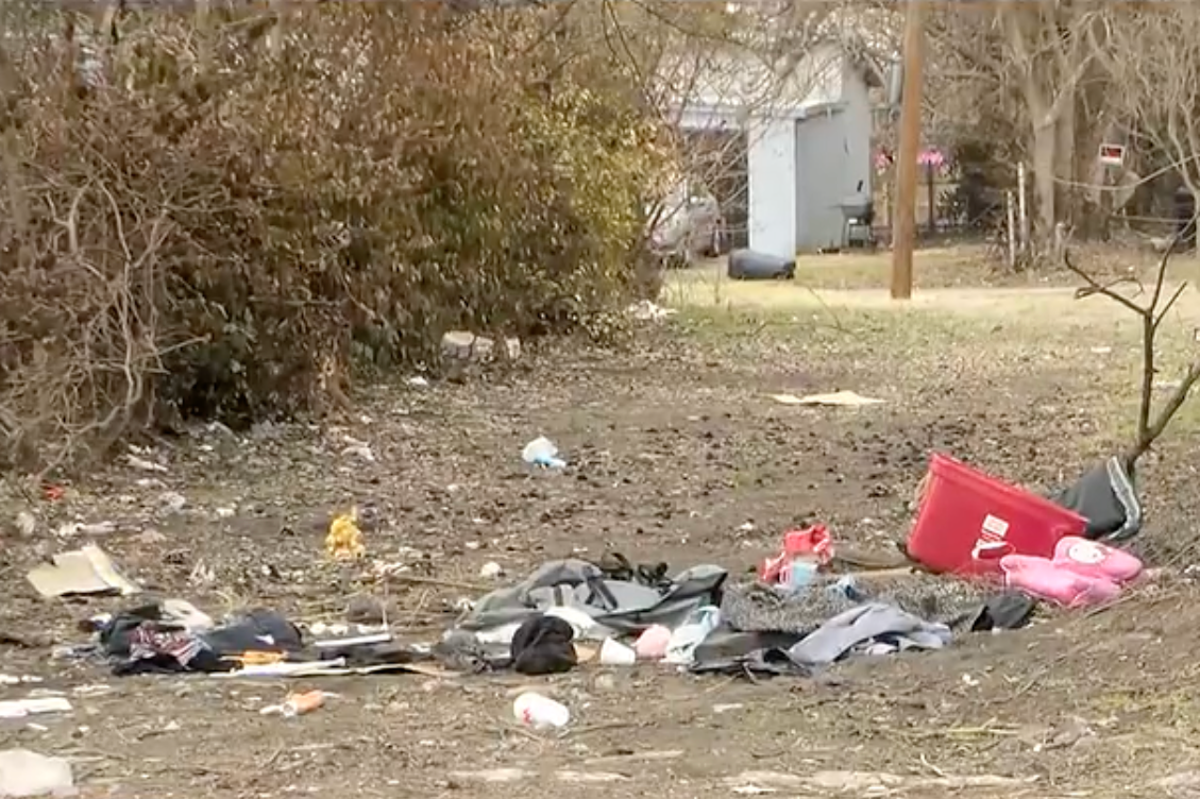
We often view our infrastructure as a set of inanimate objects performing tasks in a vacuum. We see the truck; we don’t see the personhood of those it serves or those who might be seeking refuge within its path. In the case of this Kentucky woman, the legal filings suggest a nightmare of spatial awareness. The grappler claw descended, its steel teeth closing not on a discarded sofa or a pile of storm debris, but on a human being.
The force exerted by these machines is measured in thousands of pounds of pressure. They are built to pulverize. When that power is misdirected, the result is not an accident—it is a transformation of a neighborhood street into a scene of industrial horror.
The Invisible Resident
Why was she there? Why did the operator not see her? These are the questions that will be chewed over in courtrooms and deposition rooms for years. But the broader truth is simpler and more haunting. We have created a society where certain people become invisible.
Whether someone is experiencing a mental health crisis, seeking warmth in a pile of discarded items, or simply standing in the wrong place at the peak of a blind spot, they occupy a space that the system no longer recognizes as "populated." The lawyer representing the family highlights a terrifying lapse in protocol. There are sensors, there are mirrors, and there is the basic human requirement of a "clear zone" before operating heavy machinery.
When these fail, we are forced to look at the gap between our technology and our humanity.
Consider the physics of the claw itself. It is a masterpiece of engineering, designed to mimic the grip of a human hand but scaled to the strength of a titan. It moves with a deceptive fluidity. In a warehouse or a construction site, its presence is signaled by flashing lights and beeping alarms. On a residential street, it is just another part of the Tuesday morning soundtrack.
The Cost of Convenience
We demand that our waste disappears. We want it gone, swiftly and silently, so we can maintain the illusion of a clean, frictionless life. This demand drives the speed of the industry. Drivers are often on strict routes with tight deadlines. The faster the claw moves, the more "efficient" the city becomes.
But efficiency has a shadow.
The shadow is the person who isn't supposed to be there. The shadow is the moment the operator looks at the left mirror while the claw descends on the right. In that split second, the machine ceases to be a tool of public works and becomes a weapon of incredible weight.
According to the family’s claims, the victim didn’t die instantly from a fall. She was crushed by the mechanical grip of the truck. This detail is crucial because it speaks to the sustained application of force. It wasn’t a bump; it was a process. The machine did exactly what it was programmed to do: it found an object, it gripped it, and it attempted to move it. It simply couldn't tell the difference between a discarded mattress and a living woman.
The Burden of Proof and the Weight of Grief
In the aftermath of such a tragedy, the language turns cold. We talk about "liability," "negligence," and "settlements." We look at maintenance logs and operator training records. We try to turn a scream into a spreadsheet.
But for the family in Kentucky, the reality is a permanent silence. They are left to reconcile the person they knew with the gruesome "incident" described in police reports. They have to live with the knowledge that a person they loved was treated, by a machine and its operator, as literal trash.
This is the true stakes of the conversation. It isn’t just about better cameras on trucks or more rigorous training for municipal employees. It is about the fundamental value we assign to a human life when it intersects with our industrial systems. If a woman can be picked up and crushed by a garbage truck in broad daylight, it suggests that our safety nets are made of tissue paper.
The legal battle ahead will likely focus on "standard of care." Did the operator follow the rules? Was the equipment functioning? But the moral question is deeper. How do we ensure that our pursuit of a clean city doesn't involve the accidental "disposal" of its most vulnerable citizens?
The Echo in the Street
Next Tuesday, the trucks will roll again.
They will hiss and groan, and the grappler claws will swing over the curbsides of America. Most of them will do their jobs perfectly. They will clear the brush and take away the broken chairs. But the air in that Louisville neighborhood will feel different. The sound of the hydraulics will no longer be a background hum; it will be a reminder of a morning when the machine won.
We like to believe we are in control of the steel we create. We believe that our "smart" systems and our safety protocols have tamed the raw power of industrial force. But every so often, the veil is pulled back. We are reminded that we live in a world of heavy things, and that the distance between a normal morning and an unthinkable tragedy is only as wide as the swing of a steel arm.
The woman in Kentucky wasn't just a casualty of a bad day at work. She was a person caught in the gears of a society that sometimes forgets to look down before it grabs.
She was there. She was breathing. And then, the machine moved.