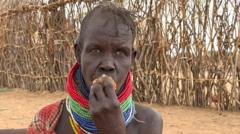
The western media loves a tragedy with a silver lining. They see a drought in Turkana, find a mother cracking open a hard nut from a Doum palm, and immediately label it the "Gingerbread tree"—a whimsical name for a desperate situation. They frame it as a "famine food," a last resort for a dying population.
This narrative isn't just lazy; it’s economically illiterate.
By labeling the Hyphaene compressa as a "famine food," NGOs and journalists ensure it stays exactly that. They relegate a resilient, multi-purpose bio-resource to the realm of "misery sustenance," effectively killing any chance of it becoming a legitimate industrial engine for Northern Kenya. We are looking at a biological asset through the lens of Victorian-era pity rather than 21st-century supply chain logic.
The Myth of the Last Resort
The "Gingerbread" moniker comes from the edible, brown, fibrous pulp that tastes vaguely of molasses. If you read the standard reporting, you’d think Kenyans only touch this fruit when the cattle are dead and the wells are dry.
Wrong.
The Doum palm has been the backbone of the Nilotic and Cushitic pastoralist economy for centuries. It isn't a "backup" plan; it is the infrastructure. Every part of the tree—from the fronds used for weaving to the hard vegetable ivory of the seed—represents a diversified portfolio of survival.
When a "competitor" article tells you people are "turning to" the gingerbread tree, they are implying a shift from "normal" food to "abnormal" food. This is a fundamental misunderstanding of arid-land ecology. In a desert, there is no "normal" that doesn't include deep-rooted, drought-resistant perennials. The real tragedy isn't that they are eating the fruit; it’s that the global market refuses to value the fruit until someone is starving.
The Vegetable Ivory Arbitrage
Let’s talk about what the "famine" articles never mention: the endosperm.
Inside the Doum nut is a substance so hard it is known as vegetable ivory. In the early 20th century, before the world was choked with cheap petroleum-based plastics, this was a massive global commodity. It was used for buttons, chess pieces, and tool handles.
Today, we talk about "sustainability" and "circular economies" in high-rise offices in Nairobi and London while the literal raw material for a plastic-free future is rotting in the Turkana sand because we’ve labeled it "famine food."
If we applied even a fraction of the R&D budget spent on "lab-grown meat" to the mechanical processing of Hyphaene compressa seeds, we could replace thousands of tons of synthetic resins. But we don't. We send a film crew to take a photo of a child eating the pulp, write a check for some grain shipments, and call it a day.
I’ve seen this pattern in dozens of emerging markets. We ignore the native, high-performance biological assets because they don’t fit the Western agricultural model of "row crops and irrigation." We try to force corn and wheat into places they don't belong, then act surprised when the climate wins.
Why Irrigation is a False God
The standard "solution" offered in these articles is usually more irrigation or "modern" farming techniques. This is a sunk-cost fallacy at a continental scale.
Pumping receding groundwater to grow thirsty crops in a 40°C environment is a thermodynamic nightmare. The Doum palm, however, requires $0$ in capital expenditure for irrigation. It taps into deep aquifers that annual crops can't reach. It produces high-energy carbohydrates and usable fiber in the middle of a heatwave.
The "Gingerbread tree" is the ultimate low-maintenance machine. It is the solar-powered factory that the NGO sector refuses to see as a factory.
The Real Supply Chain Failures
- Processing Bottlenecks: The fruit is incredibly hard. Manual processing is labor-intensive. Instead of donating bags of rice, why aren't we seeing investments in localized, solar-powered decorticators?
- Stigmatized Consumption: By branding it a "survival food," you ensure that as soon as a family has a little money, they stop eating it in favor of "status" foods like processed white flour. We are actively destroying the local palate for the most nutritious, available plant in the region.
- Logistics Void: There is no organized collection mechanism. The fruit falls, it is scavenged, or it is ignored.
The Pity Trap
People Also Ask: "How can we help drought-stricken Kenyans?"
The honest, brutal answer? Stop helping them with "aid" that disrupts local markets and start buying their indigenous products at a premium.
When you flood a region with "emergency" food aid, you crash the price of whatever local farmers managed to produce. You make the Doum palm fruit worthless. You turn a resilient population into a dependent one.
If we treated the Doum palm like the Acai berry or the Maca root—as a "superfood" or a "luxury bio-material"—the "drought-stricken" locals would be the owners of a gold mine. Instead, we treat them like characters in a tragedy, and we treat their resources like garbage.
The Engineering of Resilience
If you want to solve the food security crisis in the Horn of Africa, you don't do it with more "gingerbread" stories. You do it with industrial chemistry and mechanical engineering.
- Fractionation: We need to break the nut down into its constituent parts: the epicarp (for animal feed), the mesocarp (for human flour/sweetener), and the endocarp (for industrial bio-materials).
- Ethanol and Bio-fuels: The sugar content in the fruit pulp is high enough for fermentation. In a region where fuel is a massive expense, the "famine tree" is a potential gas station.
- Carbon Sequestration: These trees live for over 100 years. They are massive carbon sinks in a landscape where almost nothing else grows. Where are the carbon credit frameworks for pastoralists protecting Doum palm forests?
The Status Quo is a Death Sentence
The competitor article you read wants you to feel bad. It wants you to sigh at the "desperation" of people eating "wild" food.
I want you to be angry at the wasted potential.
I’ve stood in these regions. I’ve seen the sheer volume of biomass that goes unutilized because we are obsessed with "modern" agriculture. The Doum palm isn't a sign of failure; it is a blueprint for survival that we are too arrogant to read.
We don't need to "save" people from the gingerbread tree. We need to get out of the way and let them monetize it.
Stop viewing Northern Kenya as a charity case. Start viewing it as a frontier of bio-tech that happens to be currently locked in a "pity cage" constructed by international media. The tree is not the problem. Our perception of it is.
The next time you see a headline about "famine foods," remember that one man’s "desperate meal" is a multi-billion dollar industry’s missing link. We just haven't built the bridge yet.
Stop donating. Start investing in the hard, brown, "desperate" nuts of the Hyphaene compressa. Or don't, and keep wondering why the "hunger cycle" never ends despite your best intentions and your annual donations.
Build the factories. Process the ivory. Feed the world.
The gingerbread tree is waiting.