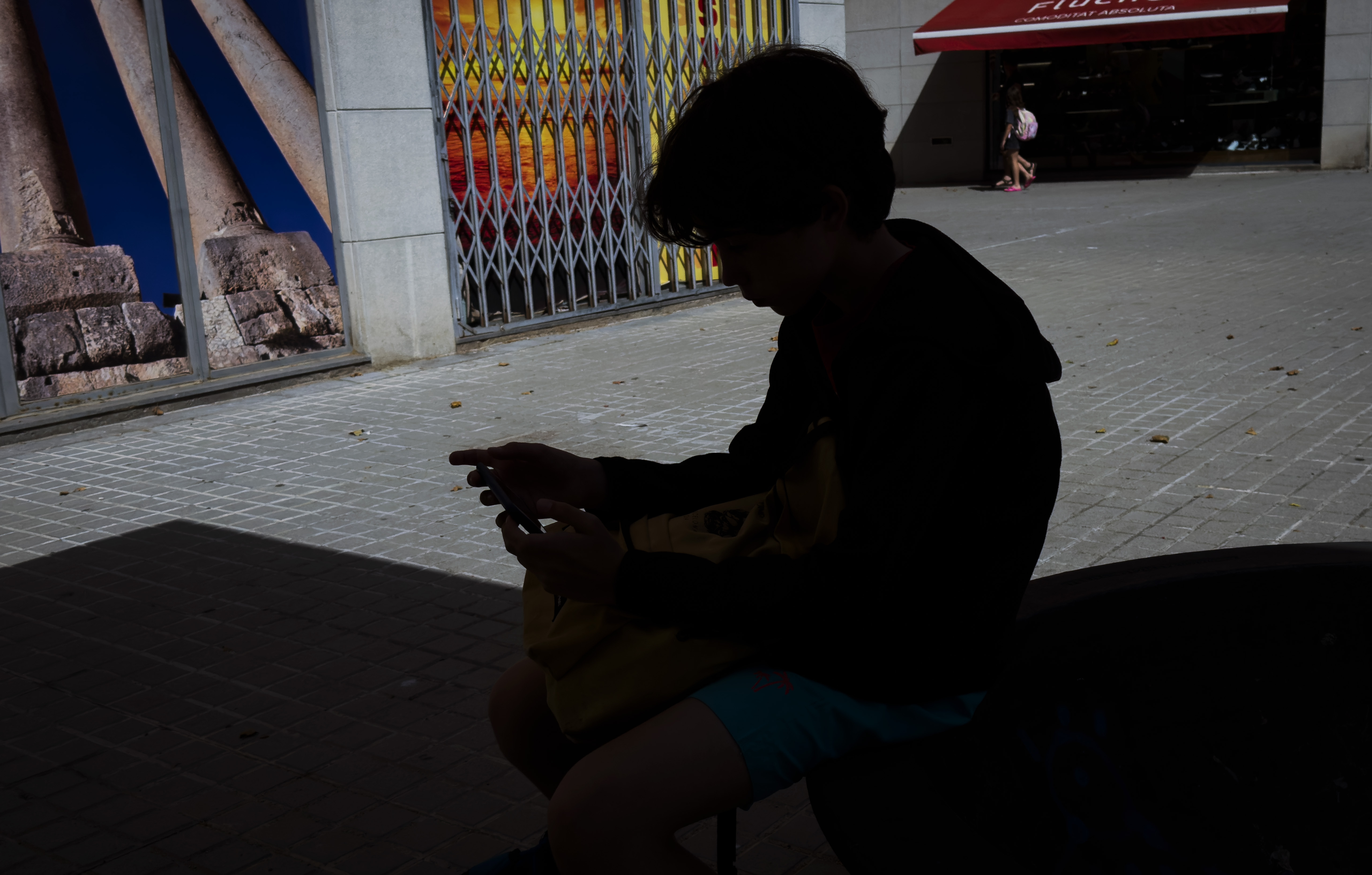
The blue light hits Leo’s face at 2:14 AM. He is seventeen, but in this light, he looks like a ghost haunting his own bedroom. His thumb moves in a rhythmic, mindless twitch—flicking upward, scrolling past a classmate’s beach vacation, a high-speed car chase, and a curated infomercial for a skincare routine he doesn’t need.
Each swipe is a gamble. He is looking for a hit of dopamine, a chemical "well done" from his own brain, but all he finds is a growing, hollow ache in his chest. This isn't just a teenager staying up too late. This is a quiet, global emergency. If you enjoyed this article, you should check out: this related article.
Recent data, including a sobering report from the Prince’s Trust and various international studies, confirms what Leo feels: young people are becoming significantly less happy, and the glowing rectangles in their pockets are the primary suspects. It isn't just about "spending too much time" online. It is about the fundamental restructuring of the human social experience.
The Algorithm of Inadequacy
We evolved to care what our neighbors think. In a hunter-gatherer tribe, being liked by the forty people around you was a matter of survival. Today, that biological hardwiring has been hijacked. For another angle on this story, see the recent coverage from National Institutes of Health.
When Leo sees a peer's "perfect" life, his brain doesn't see a filtered, staged, one-second snapshot of a twenty-four-hour day. It sees a benchmark. It sees a reality that he is failing to match. This creates a state of "perpetual comparison." In the past, you might feel jealous of the kid next door who got a new bike. Now, you are comparing your messy, unedited behind-the-scenes footage to the highlight reels of five thousand people simultaneously.
The numbers are staggering. Reports indicate that the percentage of young people who feel they lack control over their lives has nearly doubled in a decade. Happiness levels are at their lowest point since the mid-2000s, coinciding almost perfectly with the rise of the smartphone.
The Thief of Presence
Consider a hypothetical girl named Sarah. She is at a concert. Her favorite band is playing the song that helped her get through her parents' divorce. But Sarah isn't listening. Not really. She is holding her phone up, watching the performance through a six-inch screen, checking the lighting, and wondering if she should post it to her "Story" now or wait until the peak engagement hour of 7:00 PM.
Sarah has traded the visceral, spine-tingling experience of live music for the digital ghost of it. She is physically there, but mentally, she is in the minds of her followers, imagining their reactions.
This is the "spectator effect" of modern life. We no longer live our lives; we perform them. This performance is exhausting. It requires constant maintenance, a relentless vigilance over one's "brand," and it leaves almost no room for the quiet, unrecorded moments where true happiness actually grows.
The Science of the Spiral
Why does this make us miserable? It’s not just "grumpy old man" rhetoric; it’s biology.
Social media platforms are engineered using "variable ratio reinforcement schedules"—the same psychological trick used by slot machines. You don't know when the "win" (the like, the comment, the viral hit) is coming, so you keep pulling the lever. This keeps the brain in a state of high-alert anxiety.
- Sleep deprivation: The blue light inhibits melatonin, but the content keeps the mind racing.
- Sedentary loops: Hours spent scrolling are hours not spent moving, outdoors, or in face-to-face contact.
- The Echo Chamber: Algorithms feed us content that confirms our fears and angers, keeping us in a state of perpetual outrage or sadness.
But the real problem lies elsewhere. It’s the displacement of "friction."
Real friendship is full of friction. You have to show up, you have to listen to things that might bore you, you have to navigate awkward silences, and you have to be vulnerable. Digital interaction is "frictionless." You can ghost, you can hide behind a screen, and you can edit your words until they are polished and lifeless. When we lose the friction, we lose the depth. We are eating digital candy and wondering why we are malnourished.
The Great Disconnect
We are more "connected" than any generation in human history, yet we are the loneliest.
Imagine a bridge. In the old world, the bridge was made of stone and wood—solid, tangible things like shared meals, physical touch, and long walks. Today, the bridge is made of fiber-optic cables. It’s faster, sure. It carries more traffic. But you can’t stand on it. You can’t feel the grain of the wood under your feet.
The Prince’s Trust report highlighted that many young people feel they "don't belong" in their communities. How can you belong to a community you only see through a glass pane? How can you feel supported by a "like" when what you really need is a hand on your shoulder?
The invisible stakes are the loss of an entire generation's ability to regulate their own emotions. If your self-worth is tied to a fluctuating number on an app, your internal compass is broken. You are a leaf in a digital storm, blown about by the whims of people you don't even like.
Breaking the Glass
It is easy to blame the kids. It’s harder to acknowledge that we have built an environment that is hostile to their development. We handed a generation the most powerful psychological manipulation tools ever invented and then acted surprised when they became anxious and depressed.
The solution isn't as simple as "deleting the app." That’s like telling someone in the 1800s to avoid coal smoke while they live in London. The digital world is the air they breathe.
Change starts with reclaiming the "un-mirrored" life.
It starts when Leo decides to leave his phone in another room for just one hour. At first, the silence is deafening. He feels an itch in his thumb. He feels a phantom vibration in his pocket. He feels a wave of boredom that borders on panic.
But then, something happens.
He notices the way the shadows from the streetlamp outside crawl across his ceiling. He picks up a book he hasn't touched in months. He hears the sound of his own breathing. He realizes that he is a person, not a profile. He is a collection of thoughts and feelings that do not need to be validated by a server in California to be real.
The ache in his chest doesn't disappear instantly, but it softens.
We have spent fifteen years building a digital world that demands everything from us—our attention, our data, our peace of mind. Perhaps the most radical, rebellious act a young person can perform today is to be completely uninteresting to an algorithm. To be private. To be bored. To be present.
The screen is a window that eventually becomes a mirror, and if you stare into it long enough, you forget that there is a whole world standing right behind you, waiting to be touched, smelled, and lived in without a filter.
Leo puts the phone face down. The room goes dark. For the first time in weeks, he isn't a ghost. He is just a boy, closing his eyes, letting the real world finally be enough.