The glass towers of Dubai and Abu Dhabi were built on a specific, unspoken promise: that the chaos of the Middle East would never cross the threshold of a five-star lobby. For decades, global giants like Microsoft, Google, and Goldman Sachs treated the United Arab Emirates as a neutral digital fortress, a place where Western capital could interface with Eastern markets without the messy interference of regional blood feuds.
That illusion shattered on February 28, 2026.
Following the joint U.S.-Israeli strikes under Operation Epic Fury, which targeted Iranian leadership and nuclear facilities, the regional order has transitioned into a state of hybrid war. Tehran, stripped of its conventional deterrents and reeling from the loss of Supreme Leader Ali Khamenei, has pivoted to the only lever it has left: asymmetric economic strangulation. By explicitly naming Western tech hubs and financial centers in the Gulf as primary targets, Iran is not just threatening buildings. It is attempting to decouple the Gulf monarchies from the Western economy by making the "price of risk" too high to bear.
The Architecture of the New Threat
Tehran’s strategy is no longer confined to the shadow wars of the past. A spokesperson for the Khatam al-Anbia joint command recently clarified that the "hand of the enemy" has forced a shift toward targeting economic centers. This isn't just rhetoric. For companies like Google, which maintains its regional headquarters in Dubai’s Internet City, or Microsoft, which has deep infrastructure roots in Abu Dhabi, the threat is twofold.
First, there is the kinetic risk. On March 2, missiles and drones penetrated GCC airspace, impacting civilian infrastructure. While local air defenses are sophisticated, they are designed for high-altitude ballistic threats, not the low-flying, "suicide" drone swarms that can navigate urban corridors. The mere prospect of a drone hitting a major data center or a banking hub has already triggered quiet evacuation protocols for non-essential staff across the DIFC (Dubai International Financial Centre).
Second, and perhaps more dangerously, is the cyber-escalation. Intelligence reports from Google’s own Threat Intelligence Group (GTIG) indicate that Iranian state-aligned actors, such as APT33 and MuddyWater, have moved from espionage to active disruption. This isn't about stealing emails anymore. It is about "wiper" malware designed to erase the servers of regional banks and the cloud instances that power Gulf logistics.
Why Tech Giants Are the Front Line
Why target a software company instead of a military base? In the 2026 conflict, the distinction is meaningless.
- Data Sovereignty: The UAE has invested billions in becoming a global AI and data hub. Microsoft and Oracle have built massive data regions there to host government and corporate data. If Iran can successfully disrupt these "digital hearts," they paralyze the state's ability to function.
- Symbolic Leverage: An attack on a U.S. carrier is an act of war. An attack on a Google office that kills third-party contractors and sends global markets into a tailspin is a "grey zone" action that complicates the Western response.
- Economic Contagion: The goal is to drive up insurance premiums. If the cost of insuring a business in Dubai triples overnight, the competitive advantage of the Gulf vanishes.
We are seeing the early stages of a forced exodus. While many firms are officially "monitoring the situation," the reality on the ground is a frantic reassessment of the hub-and-spoke model. The idea that you can run your entire Middle Eastern operation from a single, gleaming office in the desert is being replaced by a distributed, remote-first contingency plan.
The Failure of the Neutrality Gamble
The Gulf states—particularly the UAE and Qatar—have spent years walking a geopolitical tightrope. They hosted U.S. bases while maintaining trade ties with Iran and deepening tech partnerships with Israel via the Abraham Accords. This war has rendered that tightrope invisible.
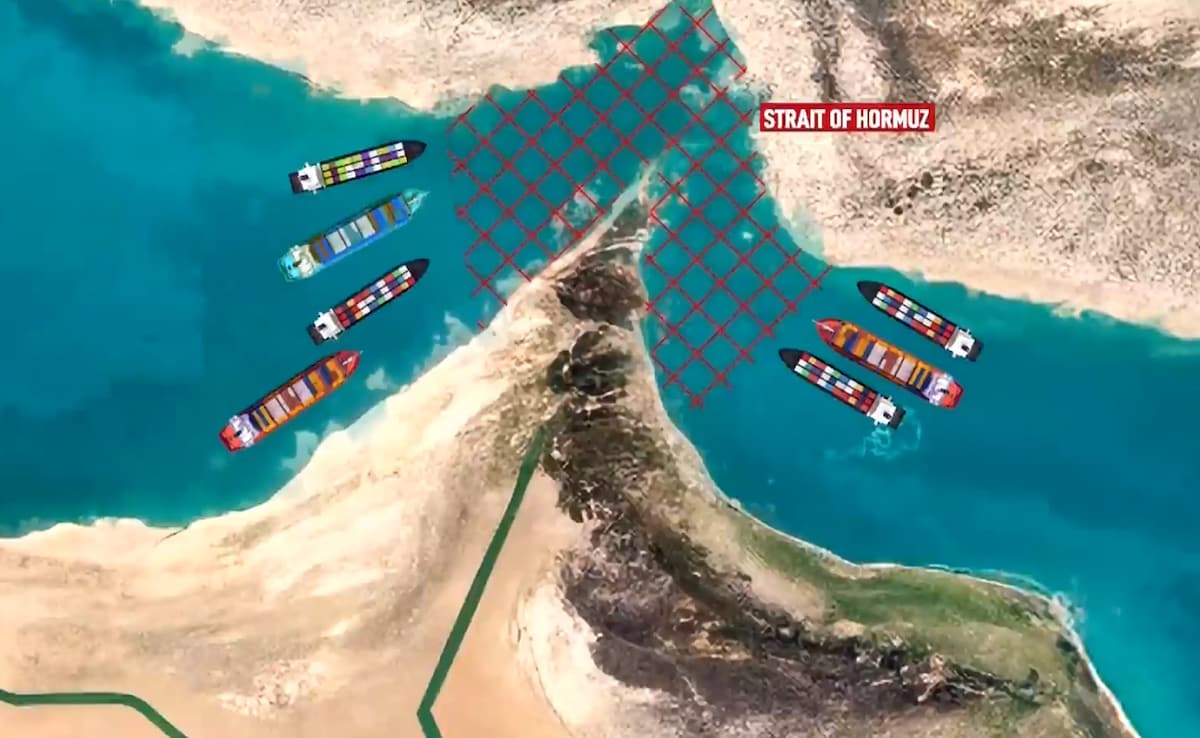
When the U.S. and Israel launched strikes from regional waters and utilized regional intelligence, Iran stopped seeing the GCC as a neutral trade partner and started seeing it as a forward operating base for the West. The closure of the Strait of Hormuz was the first move in this economic siege. The targeting of Western banks is the second.
The Reality for Staff and Customers
For the thousands of expats working in these sectors, the "safe haven" tag is gone. Recent reports of 12 fatalities and over 100 injuries in the UAE following retaliatory strikes have brought the war home in a way the 2025 skirmishes never did.
Banking customers in the region are facing a new kind of friction. It isn't just about physical safety; it is about the integrity of the financial system. If a major Iranian-linked hack results in the freezing of assets or the "disappearance" of transaction records at a major Gulf bank, the resulting bank run would be impossible to contain with traditional monetary policy.
The strategy of the "Electronic Operations Room" in Tehran is to create exactly this kind of chaos. They are weaponizing the very interconnectedness that made the Gulf successful.
The Shift in Risk Calculus
Investors are no longer asking if an escalation is possible; they are calculating how long it will last. JPMorgan has already trimmed growth forecasts, but that is a conservative estimate. The real impact lies in the "quiet competence" mentioned by regional analysts—the ability to keep the lights on without drama. Currently, the drama is unavoidable.
If you are a C-suite executive with assets in the Gulf, the time for "watchful waiting" ended in February. The current conflict proves that in the age of hybrid warfare, there are no sidelines. Every server rack in Dubai is a potential target, and every Western employee is a pawn in a larger game of regional attrition.
The conflict has moved beyond the battlefield and into the boardroom. The question now is not whether the Gulf can remain a safe haven, but whether the West is willing to pay the staggering price required to defend it.
I can analyze the specific cybersecurity protocols your regional office should implement to mitigate Iranian APT footholds if you would like.