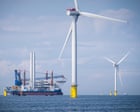
The transition to green energy in Europe and the United Kingdom just hit a wall of cold, hard geography. While policymakers have spent years debating turbine efficiency and grid connectivity, they ignored the fragile maritime arteries that keep the wind industry alive. A widening conflict involving Iran does more than just spike the price of a barrel of oil. It threatens to paralyze the supply chains required to build the massive offshore wind farms meant to replace that oil.
Offshore wind is not a local business. It is a global assembly line. The steel comes from one continent, the specialized bearings from another, and the massive installation vessels often transit through the very chokepoints now under threat in the Middle East. If the Strait of Hormuz or the Red Sea becomes impassable for prolonged periods, the "Green Revolution" will be delayed by years, not months. The math is simple and brutal. Most of the critical components for the next generation of 15MW turbines rely on shipping routes that are currently under fire.
The Logistics of a Low Carbon Crisis
We are currently seeing the intersection of 21st-century climate goals and 19th-century geopolitics. To build a wind farm like Dogger Bank or the massive projects planned off the coast of Germany, you need specialized heavy-lift vessels. There are fewer than thirty of these ships in the world capable of handling the newest, largest turbines. Many of these vessels operate on international charters, moving between Asian shipyards and European waters.
When conflict with Iran escalates, insurance premiums for these vessels skyrocket. In some cases, "war risk" surcharges make the transit economically impossible. A developer might have budgeted $200,000 a day for a vessel, only to find the cost has doubled because the ship has to circumnavigate the Cape of Good Hope rather than taking the Suez Canal shortcut. This adds three weeks to the journey. In a seasonal industry where "weather windows" dictate when you can actually bolt a turbine to the seabed, a three-week delay can result in a six-month shutdown.
The industry is already reeling from inflation. Adding a geopolitical premium to the logistics chain is the breaking point for several "shovel-ready" projects. We are already seeing developers in the UK and Scandinavia quietly reassessing their Final Investment Decisions (FIDs). They cannot guarantee the delivery of subsea cables or nacelles when the ships carrying them are being rerouted to avoid drone strikes or seizures.
The Rare Earth Stranglehold
It isn't just about the ships. It is about what is inside the turbines. Modern offshore wind relies heavily on permanent magnets, which require rare earth elements like neodymium and dysprosium. The vast majority of the processing for these materials happens in China. The primary route for these materials to reach European manufacturers is through the Red Sea and the Suez Canal.
If Iran-backed proxies continue to harass shipping, or if a direct conflict shuts down the Gulf, the supply of these refined materials will tighten instantly. Unlike oil, which can be pulled from strategic reserves, there is no "Strategic Neodymium Reserve" in London or Brussels. Manufacturers work on a "just-in-time" basis. A disruption at the Strait of Hormuz creates a ripple effect that ends with a half-finished turbine sitting in a yard in Hull or Esbjerg, waiting for a component that is stuck on a container ship drifting off the coast of Africa.
The Cost of Sovereignty
For years, European leaders touted offshore wind as the path to "energy sovereignty." The argument was that you can't "turn off the wind" the way a hostile neighbor can turn off a gas pipe. This was a half-truth. While the wind itself is free and domestic, the infrastructure required to harvest it is entirely dependent on a globalized, fragile trade network.
The current tension highlights a massive strategic oversight. By outsourcing the manufacturing of the supply chain to distant markets, the West traded one form of energy dependency for another. Instead of being beholden to Siberian gas fields, we are now beholden to the stability of the Persian Gulf and the South China Sea just to build a single windmill.
The Insurance Shadow
Behind the scenes, the most significant threat isn't a missile; it is a spreadsheet. The maritime insurance market, centered in Lloyd's of London, governs the movement of every piece of equipment in the wind industry. When Iran threatens regional stability, the "High Risk Area" designations are expanded.
Once a zone is designated as high risk, the terms of financing for wind projects often trigger "force majeure" clauses. Lenders become skittish. If a developer cannot guarantee that their specialized $500 million installation vessel will arrive on time and safely, the bank may pause the next tranche of funding. This creates a liquidity crunch. In the high-stakes world of offshore energy, where projects cost billions and margins are thinning due to rising interest rates, a jittery insurance market is as deadly as a physical blockade.
The Steel Problem
The volume of steel required for the next decade of offshore wind expansion is staggering. While Europe has its own steel mills, the specific grades and the sheer volume of "monopile" foundations often require global sourcing. Massive steel sections are frequently shipped on heavy-transport vessels from Asian fabricators. Rerouting these ships around the tip of Africa adds thousands of tons of fuel consumption and millions in extra costs.
For a project that was bid on a "contracts for difference" (CfD) basis two years ago, these extra costs cannot be absorbed. The strike price—the guaranteed price for electricity—was calculated based on 2022 or 2023 logistics costs. Those numbers are now fantasies. We are entering a period where developers will have to go back to governments and demand more money or walk away from the projects entirely. We have already seen Ørsted and Vattenfall hit the brakes on major projects; a hot war in the Middle East will turn that trickle of cancellations into a flood.
Infrastructure as a Target
There is a darker side to this analysis that most industry observers are afraid to voice. As tensions with Iran and its allies rise, the wind farms themselves become potential targets. This isn't about traditional bombing. It's about hybrid warfare.
The subsea cables that connect offshore arrays to the mainland are the soft underbelly of European security. These cables are difficult to monitor and even harder to repair quickly. If the conflict shifts from the Middle East to a broader "gray zone" confrontation involving Western interests, these wind farms are sitting ducks. Cutting a single export cable can knock out power to hundreds of thousands of homes and cost the operator millions in lost revenue every week. The navy commanders I speak with are increasingly worried that we are building massive, undefendable power plants in the middle of the ocean during the most volatile geopolitical era since the 1940s.
The Talent Gap and Geographic Shift
War and the threat of war also move people. The offshore wind industry relies on a highly mobile, global workforce of engineers, divers, and technicians. Many of the specialized firms providing subsea services operate out of the Middle East during the European winter. If that region becomes a combat zone, the availability of that talent pool for the summer construction season in the North Sea will evaporate.
Furthermore, if the Middle East becomes too unstable, we may see a shift in where capital is deployed. Investors hate uncertainty. If the logistics of building in the North Sea or the Atlantic become too tied to the whims of Tehran or the safety of the Suez, capital might flee to "onshore" projects in safer jurisdictions, even if the wind profile is less optimal. The "Green Dream" of 50GW by 2030 is looking less like a target and more like a historical footnote.
Reality Check for the UK
The UK, in particular, has bet the house on offshore wind. It is the backbone of their decarbonization strategy. However, the UK is also a primary maritime power that often finds itself at the forefront of protecting shipping lanes. This creates a double-edged sword. Every time a British destroyer is sent to the Red Sea to counter Houthi drones, it is a reminder of how vulnerable the UK’s energy future truly is.
If the government doesn't move to de-risk the supply chain by bringing manufacturing back to the Tyne or the Tees, they will remain at the mercy of global flashpoints. You cannot build a sovereign energy system using components that have to pass through a gauntlet of hostile territory.
The Hydrogen Fallacy
Some argue that if wind is delayed, we can pivot to green hydrogen. But green hydrogen requires... wind. The electrolysis plants being planned across Europe are dependent on the same offshore arrays that are currently under threat. The entire "Hydrogen Economy" is built on a foundation of cheap, abundant offshore wind that assumes the world will remain at peace and the seas will remain open. That is a dangerous assumption to make in 2026.
Breaking the Deadlock
The only way to insulate the green transition from Iranian regional influence is a radical shift in industrial policy. We must stop pretending that the "lowest bidder" model works when the supply chain is a 10,000-mile long line through a war zone.
- Mandate Local Content: Governments must require that a significant percentage of the "heavy" components—foundations, towers, and cables—be manufactured within the region, even if it costs 20% more. That 20% is a "security premium" that pays for itself the moment a ship is rerouted or a port is blocked.
- Strategic Stockpiling: National grids need to hold reserves of critical subsea cable and turbine components. Waiting eighteen months for a replacement transformer to ship from an overseas factory is a national security failure.
- Maritime Escorts for Industrial Assets: We need to treat high-value installation vessels as "strategic assets" that require protection. If these ships are the only way to build our energy future, they cannot be left to fend for themselves in contested waters.
The conflict in the Middle East has exposed a fundamental truth: the energy transition is not just a technical challenge; it is a territorial one. If we continue to ignore the geography of our supply chains, the wind will keep blowing, but the lights will eventually go out.
You should ask your lead project analyst for a "Supply Chain Stress Test" that specifically models a 12-month closure of the Suez Canal on your current project timelines. If they can’t give you an answer, you aren’t prepared for what is coming.