The air in the mahogany-row offices of Lower Manhattan doesn’t smell like money anymore. It smells like math. Specifically, the kind of cold, unforgiving calculus that happens when a long-term romance hits a wall of reality. For years, the relationship between Donald Trump and the financial titans of Wall Street was a marriage of convenience, fueled by tax cuts and a shared language of deregulation. But that bond is fraying. The cause isn't a single scandal or a stray tweet. It is the sudden, terrifying specter of a war in Iran.
Money hates a vacuum. It hates unpredictability even more. When the gears of global conflict begin to grind, the spreadsheet-driven certainty of the banking world starts to liquefy.
Imagine a junior analyst at a top-tier firm named Sarah. She isn't a political operative. She doesn't spend her days debating the ethics of foreign policy. Instead, she watches the price of Brent crude. She tracks the shipping lanes in the Strait of Hormuz. When news breaks of escalating tensions—drone strikes, retaliatory threats, the sudden movement of carrier groups—Sarah doesn't see "strength." She sees a spike in insurance premiums. She sees a disruption in the global supply chain that could wipe out a quarter’s worth of gains in a single afternoon.
This is the invisible stake. While the headlines focus on the rhetoric of "maximum pressure," the people who actually move the world's capital are looking at the exit signs.
The shift didn't happen overnight. It was a slow cooling. For the first half of the administration, Wall Street was willing to overlook the volatility. The 2017 tax cuts were a powerful sedative. They provided a sugar high that kept the markets buoyant and the donor checks flowing. But a sedative eventually wears off. When it does, the patient wakes up to find the room is on fire.
The financial sector operates on the assumption of a rational actor at the helm. Even if you don't like the captain, you want to know they are following a map. When that map is replaced by a series of impulsive escalations with a regional power like Iran, the risk profile changes. The "Trump Trade," once a bet on growth, has morphed into a bet on chaos.
Wall Street thrives on "known unknowns." We know the Fed might raise rates. We know a trade deal might stall. We can price that in. But a hot war in the Middle East is an "unknown unknown." It is a black swan with teeth.
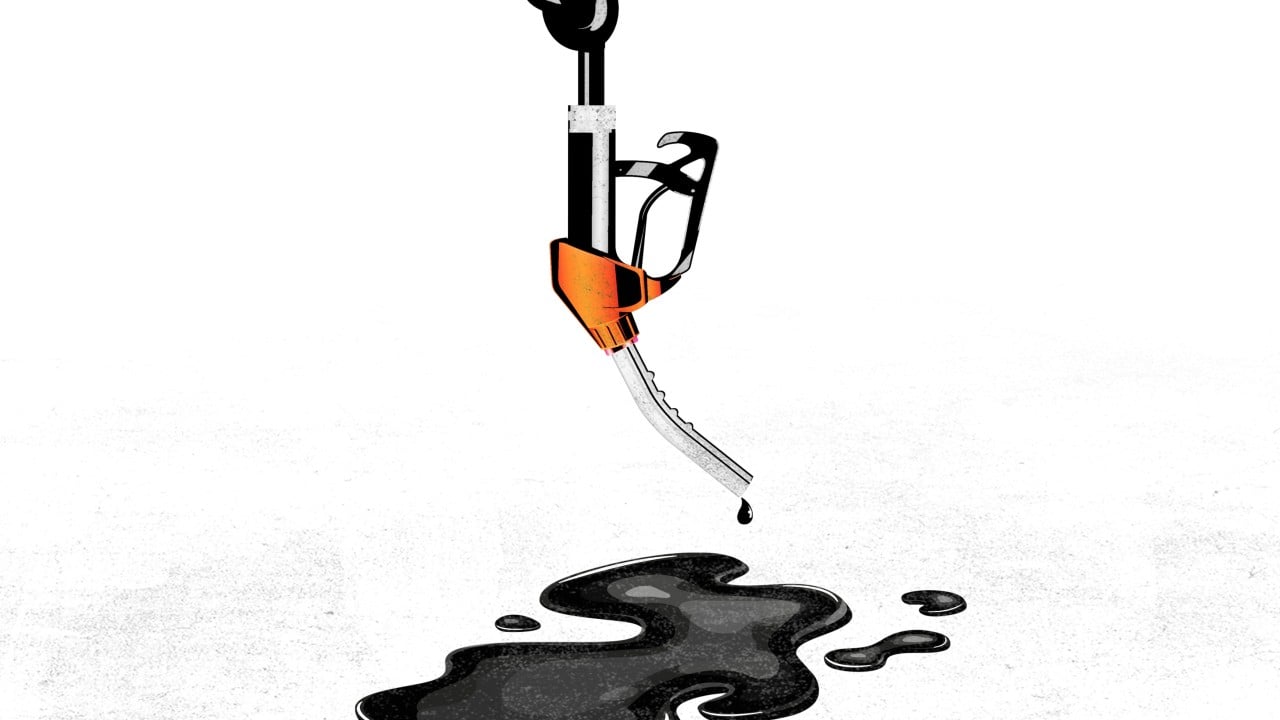
Consider the mechanics of a global oil shock. It isn't just about the price at the pump for a family in Ohio, though that is the political fallout. It is about the derivative markets. It is about the complex web of hedges that airlines, shipping giants, and manufacturers use to keep their costs predictable. When the threat of war looms, those hedges become prohibitively expensive. The friction in the machine increases. Suddenly, the "robust" economy looks like a house of cards leaning into a gale.
The silence from the big donor blocks is deafening.
In previous cycles, the Republican nominee could count on a steady, rhythmic drumbeat of support from the heavyweights of finance. Now, there is a hesitant pause. It’s the sound of a fund manager closing a ledger. They are realizing that the volatility that makes for good television makes for terrible portfolio management.
There is a psychological element to this divorce that goes beyond the numbers. Wall Street sees itself as the ultimate arbiter of value. For a long time, Donald Trump was seen as a "value add" because of his stance on regulation. But when the commander-in-chief begins to prioritize a personal brand of geopolitical brinkmanship over the stability of the global markets, he becomes a "value subtractor."
This isn't about ideology. It’s about the preservation of wealth.
Take a hypothetical board meeting at a mid-sized investment bank. The discussion isn't about whether Iran is a "bad actor"—everyone agrees on that. The discussion is about the 20% of the world’s oil that passes through a narrow stretch of water that Iran can effectively close with a few well-placed mines. If that passage shuts down, the global economy doesn't just slow. It stalls. For a banker, that isn't a foreign policy objective. It's a catastrophic failure of risk management.
The betrayal felt by the financial elite is rooted in a misunderstanding of the man they helped elect. They thought they were hiring a CEO who would run the country like a business. They realized, perhaps too late, that they hired a disruptor who views the market as a scoreboard for his own ego rather than an ecosystem to be protected.
The numbers tell a story of quiet exits. Capital is a coward. It flees at the first sign of a bullet, and right now, the air is thick with the sound of triggers being cocked.
When you look at the fundraising numbers, you see the shift in real-time. The massive, multi-million dollar infusions from the hedge fund kings are being replaced by smaller, more fragmented donations. The "Smart Money" is sitting on its hands. It is waiting to see if the smoke clears or if the fire spreads.
This tension creates a feedback loop. As Wall Street pulls back, the administration feels the need to double down on the very rhetoric that caused the retreat in the first place. It is a spiral of isolation. The president finds himself standing on a stage, touting the strength of the Dow, while the people who actually control the Dow are frantically rebalancing their portfolios into gold and Treasury bonds.
It is a lonely place to be.
We often talk about "The Market" as if it is a sentient being, a monolith that decides the fate of nations. In reality, it is just a collection of thousands of people like Sarah, the analyst, trying to make sure their clients don't lose their shirts. When those people stop believing in the stability of the system, the system stops working.
The war in Iran might never happen. It might remain a series of feints and parries, a shadow play of threats. But in the world of high finance, the threat is often just as damaging as the act. The uncertainty is the tax. The fear is the friction.
Wall Street didn't leave because of a change in heart. They left because the math stopped working. They realized that the man they thought was their greatest asset had become their most unpredictable liability.
The lights stay on late in the towers of the Financial District these days. People are running simulations. They are testing "What If" scenarios that involve blocked straits, scorched refineries, and a global recession triggered by a single miscalculation in the Persian Gulf. In those rooms, the slogans of the campaign trail carry no weight. There is only the hum of the cooling fans in the server rooms and the grim realization that the marriage is over.
The gold leaf is peeling off the pillars. Underneath, there is only the cold, hard stone of a bottom line that no longer includes the White House.
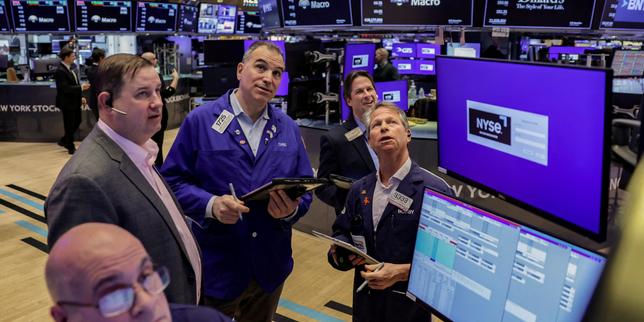
Whatever happens next won't be decided in a voting booth or on a debate stage. It will be decided in the quiet, panicked whispers of the trading floor when the first reports of smoke over the Gulf hit the wire.